


Why Foster Dogs: Benefits, Responsibilities, and Rewards
Fostering a dog is defined as providing temporary, home-based care for a shelter dog until a permanent adoptive family is found. This single act directly reduces shelter overcrowding, cuts euthanasia rates, and gives dogs a real shot at a healthy, adoptable life. If you are weighing whether to open your home to a dog in need, the evidence is clear: fostering works, and the rewards run in both directions.
Why foster dogs: the real impact on adoption rates
The numbers behind dog fostering are striking. Shelters with foster programs achieve a 68% average adoption rate, compared to 48% for shelters without them. When foster parents take the lead on adoption marketing, that rate climbs to 77%. That gap represents thousands of dogs who find homes each year specifically because a foster family stepped in.
Dogs in foster care also behave differently than dogs in kennels. Research shows that dogs in foster care show measurable behavioral improvement on 17 out of 21 measures in just seven days. Confidence increases, anxiety drops, and social skills sharpen. A calmer, friendlier dog is a more adoptable dog, and foster homes create exactly that environment.

| Metric | Shelter without foster program | Shelter with foster program |
|---|---|---|
| Average adoption rate | 48% | 68% |
| Foster-led adoption marketing | N/A | 77% adoption rate |
| Behavioral improvement (7 days) | Minimal | 17 of 21 measures improved |
Foster parents also act as the dog’s primary marketing team. Top foster families use detailed personality profiles and social media updates to reduce adoption time and return rates. A photo of a dog relaxing on a couch tells a prospective adopter far more than a kennel card ever could.
Pro Tip: Write a short daily log of your foster dog’s personality quirks, favorite toys, and progress milestones. This content becomes gold for the rescue’s adoption listings and social media posts.
What responsibilities does fostering actually require?
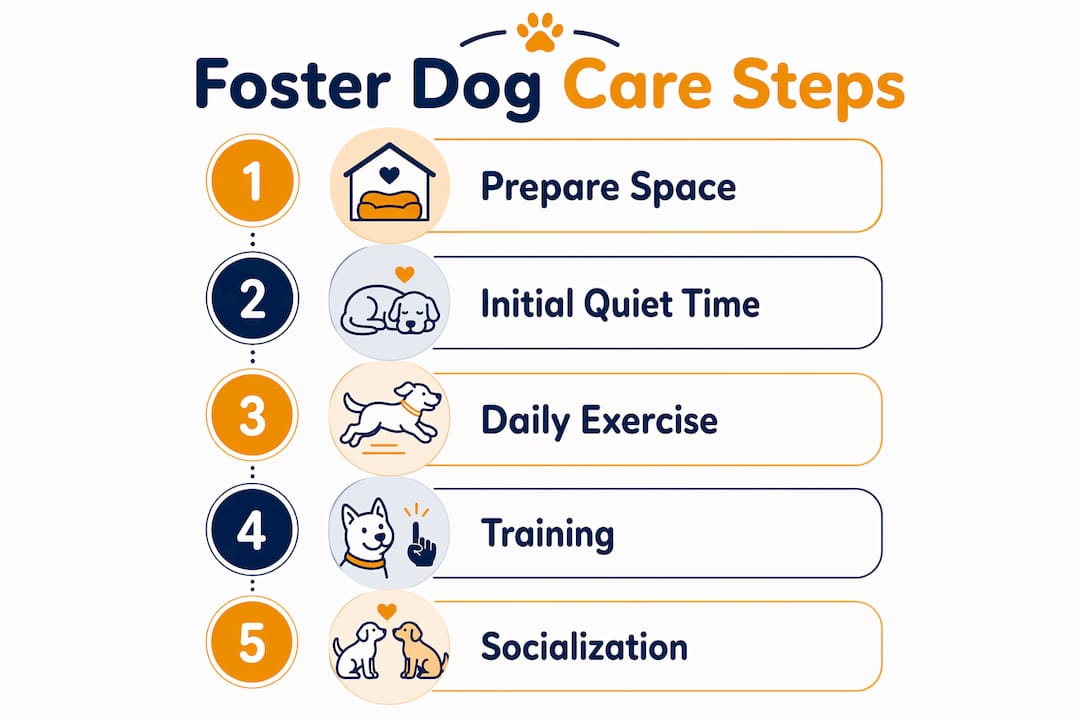
Fostering is not a passive role, but it is a manageable one. Most programs ask for about 2 hours daily for exercise, play, and socialization, adjusted based on the dog’s energy level. Beyond that, your core responsibilities fall into four areas:
- Daily physical care. Feeding, walking, and providing safe outdoor time. Large dogs typically stay in shelters for a median of 20 days before placement, so your home environment directly shortens that window.
- Behavioral support. Practicing basic commands, rewarding calm behavior, and gently exposing the dog to new people, sounds, and environments. You do not need to be a professional trainer. Consistent, humane training methods are enough to make a real difference.
- Health monitoring. Watching for changes in appetite, energy, or behavior and reporting them to the rescue. Most programs cover all veterinary costs, food, and supplies, so your financial exposure is minimal.
- Administrative support. Taking quality photos, writing accurate personality descriptions, attending adoption events, and communicating with potential adopters. This is where foster-managed adoption marketing accelerates timelines by weeks.
One practical detail that experienced foster parents emphasize: set up a quiet decompression zone for the dog when it first arrives. A crate or a gated room with minimal foot traffic gives the dog space to settle before meeting the full household. This single step speeds up house-training and reduces stress-related behaviors like barking or destructive chewing.
Pro Tip: Give a new foster dog at least 72 hours in its quiet zone before introducing it to other pets or children. The “3-3-3 rule” used by many rescue organizations, three days to decompress, three weeks to learn routines, three months to feel at home, is a reliable framework for managing expectations.
Why foster dogs instead of adopting or volunteering at a shelter?
Fostering occupies a unique space between full adoption and shelter volunteering, and that distinction matters. Fostering is a low-risk way to trial pet ownership, helping prospective adopters understand care demands without a lifelong commitment. If you have never owned a dog, or if you are returning to dog ownership after years away, fostering lets you test your lifestyle fit before signing adoption papers.
Shelter volunteering, by contrast, typically means a few hours per week walking dogs in a kennel environment. That work is valuable, but it does not give a dog the behavioral benefits of home life. Fostering does. And unlike adoption, you are not locked in if your circumstances change.
Here is how the three roles compare:
| Role | Time commitment | Financial cost | Impact on dog | Flexibility |
|---|---|---|---|---|
| Shelter volunteer | 2 to 4 hrs/week | None | Moderate | High |
| Foster parent | 2 hrs/day | Minimal (covered by rescue) | High | Moderate |
| Adopter | Full-time | Full cost | Permanent | Low |
The role of foster homes in adoption is also operationally critical for shelters. Fostering programs allow shelters to manage overcrowding through community involvement rather than physical expansion. Every dog placed in a foster home frees up a kennel space for an animal that would otherwise have nowhere to go. That is a direct, measurable contribution to animal welfare that volunteering alone cannot replicate.
For families thinking about adopting a dog, fostering first is one of the best ways to avoid the common mismatch between a family’s expectations and a dog’s actual needs.
What emotional and health benefits do foster parents gain?
The benefits of fostering dogs are not one-sided. Research confirms that fostering reduces human stress markers and improves well-being through oxytocin release and lowered cortisol. In practical terms, caring for a dog gives you a reason to move, a reason to get outside, and a source of uncomplicated companionship during the day.
“Fostering benefits both dogs and humans in a reciprocal way. Foster parents gain mental and physical health improvements while saving lives.” — Doggodigest
The daily routine of fostering, morning walks, training sessions, and evening play, creates structure that many people find grounding. This is especially true for retirees, remote workers, or anyone whose daily schedule lacks built-in physical activity.
The emotional challenge most people worry about is saying goodbye. It is real, and it should not be minimized. But most foster costs are covered by programs, and experienced foster parents consistently report that framing the goodbye as a success, not a loss, changes the emotional experience entirely. You are not losing a dog. You are completing a mission. Most foster parents return for another placement within weeks of their first goodbye.
The community dimension matters too. Foster networks connect you with rescue staff, veterinarians, trainers, and other foster families. That network becomes a genuine support system, especially when you are managing a dog with behavioral challenges or medical needs.
Key takeaways
Fostering a dog is the most direct way an individual can increase adoption rates, improve dog behavior, and gain the benefits of pet ownership without a permanent commitment.
| Point | Details |
|---|---|
| Adoption rates rise sharply | Shelters with foster programs reach 68% adoption rates versus 48% without them. |
| Behavioral gains are fast | Dogs show improvement on 17 of 21 behavioral measures within just seven days in foster care. |
| Time commitment is defined | Most programs require about 2 hours daily for exercise, play, and socialization. |
| Foster parents gain health benefits | Oxytocin release and lower cortisol are documented outcomes of human-animal interaction during fostering. |
| Fostering beats volunteering for impact | A foster home provides behavioral rehabilitation that kennel-based volunteering cannot replicate. |
What I have learned from watching foster programs work
I have spent years writing about animal welfare, and the single most underrated fact in dog rescue is this: the foster parent is the product manager of a dog’s adoption. Not the shelter. Not the rescue coordinator. You.
When a foster family writes a specific, honest description of a dog, shares a video of it playing fetch in the backyard, and answers a prospective adopter’s questions from lived experience, the adoption timeline shrinks dramatically. That is not sentiment. That is operational reality backed by data from organizations like Best Friends Animal Society.
What I tell anyone considering fostering is to stop waiting for the “right time.” There is no perfect moment to open your home to a dog in need. What matters is that you set up the environment correctly from day one, communicate openly with your rescue contact, and commit to the marketing side of the role as seriously as the care side.
The goodbye is hard the first time. It gets easier, not because you care less, but because you understand what you accomplished. That dog is in a permanent home because of you. That is not a small thing.
If you are on the fence, read about ethical adoption practices and the broader picture of how rescue networks operate. Understanding the system makes you a better foster parent from day one.
— Taylor
How Greenfieldpups can help you take the next step

Greenfieldpups is built for people who take pet ownership seriously, whether that means finding the right breed, connecting with a responsible breeder, or understanding the full picture of responsible dog adoption. The platform includes guides on ethical adoption, breed-specific care, and how to prepare your home for a new dog. If fostering has sparked your interest in eventually adopting, the family adoption guide on Greenfieldpups walks you through every stage of the process with practical, research-backed advice. Visit Greenfieldpups to explore resources that match where you are in your journey.
FAQ
Why foster dogs instead of just adopting one?
Fostering is a lower-commitment option that lets you experience dog ownership before making a permanent decision. It also directly helps shelters manage overcrowding and gives dogs behavioral improvements that increase their adoption chances.
How much time does fostering a dog take each day?
Most foster programs request about 2 hours daily for exercise, play, and socialization, though this varies based on the dog’s age, size, and energy level.
Who covers the costs of fostering a dog?
Most rescue organizations and shelters cover veterinary care, food, and supplies for foster dogs. Your primary contribution is time, space, and care.
Does fostering a dog help with training?
Yes. Dogs in foster homes receive consistent behavioral guidance that kennel environments cannot provide. Applying effective training techniques during the foster period directly improves a dog’s adoptability.
What happens if I want to keep my foster dog?
This is called a “foster fail,” and rescue organizations consider it a success. If you decide to adopt your foster dog, you work with the rescue to complete the standard adoption process.
Leave a Comment