


What Is Pet Matching? Your Guide to Finding the Right Pet
Pet matching is the process of pairing prospective owners with animals based on compatibility factors such as lifestyle, energy levels, living environment, and personality traits to build a lasting bond. Unlike browsing pet photos online, structured pet matching uses systematic assessments to reduce the risk of returns and rehoming. Platforms like OmniPawHub and Petfinder, along with shelter programs such as Friends of Little Elm Animal Support, have formalized this process into data-driven tools. The result is a higher rate of adoption success and a stronger connection between you and your future companion.
What is pet matching and how does it work?
Pet matching is defined as a structured compatibility process that evaluates both the prospective owner and the animal across multiple dimensions before a placement is made. The term “adoption matchmaking” is the recognized industry phrase used by shelters and platforms to describe this practice. Both terms refer to the same goal: reducing guesswork in pet selection.
Modern pet matching tools analyze over 15 compatibility factors and deliver top breed matches in under 60 seconds. That speed matters because it lowers the barrier for adopters who might otherwise skip the assessment entirely. Factors evaluated include energy level, space requirements, grooming needs, temperament, and family composition.
Lifestyle alignment between owner and pet is the single strongest predictor of a durable relationship. A high-energy Border Collie placed with a sedentary owner is not just a poor fit. It is a setup for behavioral problems, frustration, and eventual return to the shelter. Pet matching exists specifically to prevent that outcome.

What key factors do pet matching tools evaluate?
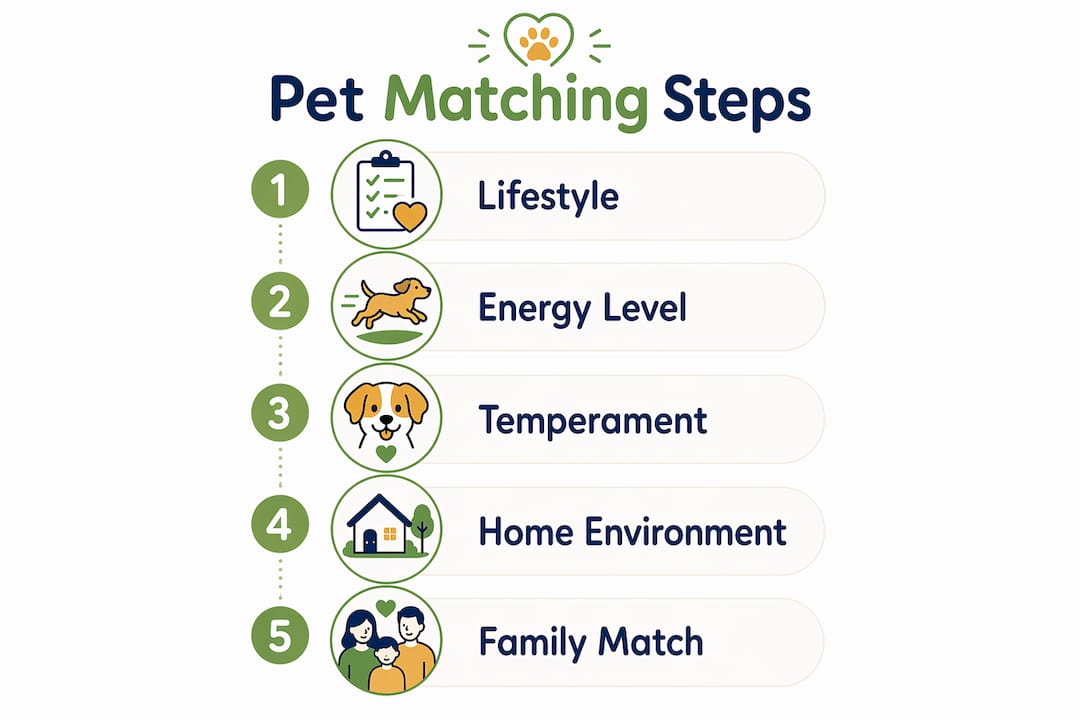
Pet compatibility platforms assess a structured set of criteria to generate a meaningful match score. The most common factors fall into five categories.
- Energy level — Does your daily activity match what the pet needs? A working breed like a Siberian Husky requires hours of physical and mental engagement each day.
- Living space — Apartment dwellers need lower-energy or smaller breeds. A Great Dane in a studio apartment creates stress for both owner and dog.
- Grooming commitment — Grooming can be required every 4–8 weeks for some breeds. That is a recurring time and financial cost many adopters underestimate.
- Family composition — Households with toddlers, elderly members, or other pets need animals with specific temperament profiles.
- Schedule and routine — A dog left alone for 10 hours daily needs a breed with lower separation anxiety, not a Velcro dog like a Vizsla.
Percentage-based compatibility scores (0–100%) help adopters understand exactly how well a pet fits their profile. These scores also flag specific risks, such as a temperament mismatch between a dominant dog and a household with small children.
| Compatibility factor | Why it matters |
|---|---|
| Energy level | Mismatched energy causes destructive behavior and owner burnout |
| Living space | Insufficient space leads to anxiety and physical health issues in pets |
| Grooming needs | Underestimated costs cause owner resentment and pet neglect |
| Family dynamics | Wrong temperament around children or other pets creates safety risks |
| Daily schedule | Prolonged isolation triggers separation anxiety in social breeds |
Pro Tip: When using a pet compatibility quiz, answer based on your actual daily routine, not the routine you wish you had. Platforms like OmniPawHub score your match against real behavioral data, so honest answers produce better results.
How do temperament and pet personality influence ideal matches?
Temperament is the most underrated factor in pet selection. Most adopters focus on breed appearance or size, but temperament mismatches are a leading cause of adoption failures. A dog that looks calm in a shelter kennel may be highly reactive at home.
Pet personality types fall into recognizable patterns. Writer Amy Shojai identifies archetypes such as “The Couch Potato,” “The Globetrotter,” and “The Born Leader.” Matching these personality types with the adopter’s own temperament improves long-term companionship quality. A highly social, extroverted owner who loves outdoor activities is a natural fit for a Labrador Retriever. A quieter, routine-oriented person may thrive with a Basset Hound or a calm senior dog.
Behavioral needs go beyond personality labels. Some dogs have strong prey drives that make them incompatible with cats or small animals. Others have noise sensitivities that make urban environments stressful. Sensory and emotional compatibility are just as real as physical compatibility.
- Social butterfly dogs (Golden Retrievers, Beagles) need frequent human interaction and do poorly in isolation.
- Independent thinkers (Chow Chows, Shibas) suit owners who respect boundaries and do not need constant affection.
- High-drive working breeds (Belgian Malinois, Border Collies) need owners who can provide structured mental challenges daily.
- Gentle giants (Bernese Mountain Dogs, Great Pyrenees) suit calm households with space and patience for slow maturation.
Pro Tip: Ask shelter staff to describe a dog’s behavior during feeding, play, and rest. Those three moments reveal more about true temperament than any single interaction in a meet-and-greet room.
What are the practical steps to use pet matching in adoption?
Applying pet matching principles to your adoption process takes honesty, research, and a willingness to follow the data even when it contradicts your first instinct.
- Complete a structured compatibility assessment. Use tools like OmniPawHub’s pet matchmaker or your local shelter’s intake quiz before you visit any animals. This sets a baseline before emotions take over.
- Audit your lifestyle honestly. List your daily routines, time availability, and realistic expectations. Include work hours, travel frequency, and exercise habits.
- Engage with shelter staff directly. Shelters like Friends of Little Elm Animal Support use proprietary behavioral assessments. Staff can tell you which animals passed socialization tests and which showed reactivity.
- Factor in age deliberately. Adult and senior pets often have predictable temperaments, may already be house-trained, and adapt faster than puppies. They are frequently overlooked but are excellent matches for many households.
- Consider fostering first. A two-week foster period reveals how a pet behaves in your specific home environment, with your specific schedule, around your specific family members.
| Approach | Best for | Key advantage |
|---|---|---|
| Online compatibility quiz | First-time adopters | Fast, data-driven breed shortlist |
| Shelter behavioral assessment | All adopters | Real temperament data from trained staff |
| Foster-to-adopt program | Uncertain adopters | Live trial before full commitment |
| Breed-specific rescue | Experienced owners | Predictable traits and rescue expertise |
The step-by-step adoption process for families in 2026 reinforces one consistent finding: adopters who complete a formal matching process before selecting a pet report higher satisfaction and fewer behavioral problems in the first year.
What common pitfalls should you avoid when finding the right pet?
The most expensive mistake in pet adoption is choosing with your eyes instead of your lifestyle. Appearance drives most impulse adoptions, and impulse adoptions drive most returns.
- Choosing a puppy for the wrong reasons. Puppies require intensive training, socialization, and supervision. An adult dog with a known history is often a more predictable and manageable choice.
- Ignoring energy and mental stimulation needs. Matching routine and energy levels predicts adoption success more reliably than breed or size alone. A bored dog is a destructive dog.
- Underestimating long-term costs. Grooming, veterinary care, training classes, and boarding add up fast. A Poodle mix may need professional grooming every six weeks for its entire 14-year life.
- Skipping the screening process. Adopters who bypass formal assessments are more likely to encounter temperament surprises that could have been identified in advance.
- Ignoring existing pets. A resident cat or dog has established territory and social dynamics. Introducing an incompatible animal disrupts both animals and strains the household.
Pro Tip: Before committing, bring every household member, including existing pets when possible, to a meet-and-greet. Reactions in that first meeting are data. Take them seriously.
Key takeaways
Pet matching is the most reliable method for reducing adoption failures and building lasting bonds between owners and companion animals.
| Point | Details |
|---|---|
| Definition of pet matching | A structured compatibility process evaluating lifestyle, temperament, energy, and environment before placement. |
| Compatibility scoring | Platforms use 0–100% scores across 15+ factors to flag risks and rank breed suitability. |
| Temperament over appearance | Behavioral and emotional compatibility predicts long-term success more reliably than breed or looks. |
| Age consideration | Adult and senior pets offer predictable temperaments and are often better matches than puppies. |
| Honest self-assessment | Accurate lifestyle reporting produces better quiz results and reduces the risk of a mismatch. |
Why I think most people approach pet adoption backwards
Most people find a pet they love and then try to justify the match. I have seen it happen dozens of times. Someone falls for a photo of a Husky puppy, adopts it into a 600-square-foot apartment, and then wonders six months later why the dog is anxious and destructive.
The data-driven tools available today, from OmniPawHub’s algorithm to shelter behavioral assessments, exist precisely to interrupt that emotional shortcut. They work. But only if you use them before you fall in love, not after.
The adopters I have seen succeed long-term are the ones who treated the matching process like a serious decision, not a formality. They answered quiz questions honestly. They asked shelter staff hard questions. They considered pet adoption benefits alongside real costs. And when the data pointed them toward a calm, middle-aged mixed breed instead of the flashy purebred puppy, they listened.
Human intuition matters too. A connection you feel during a meet-and-greet is real information. The best outcomes happen when that intuition is guided by solid compatibility data, not when it replaces the data entirely.
— Taylor
Find your perfect match with Greenfieldpups
Greenfieldpups connects prospective dog owners with reputable breeders and adoption listings across the United States. Whether you are using a pet compatibility quiz for the first time or you already know the breed you want, Greenfieldpups provides the resources to make a confident, informed decision.
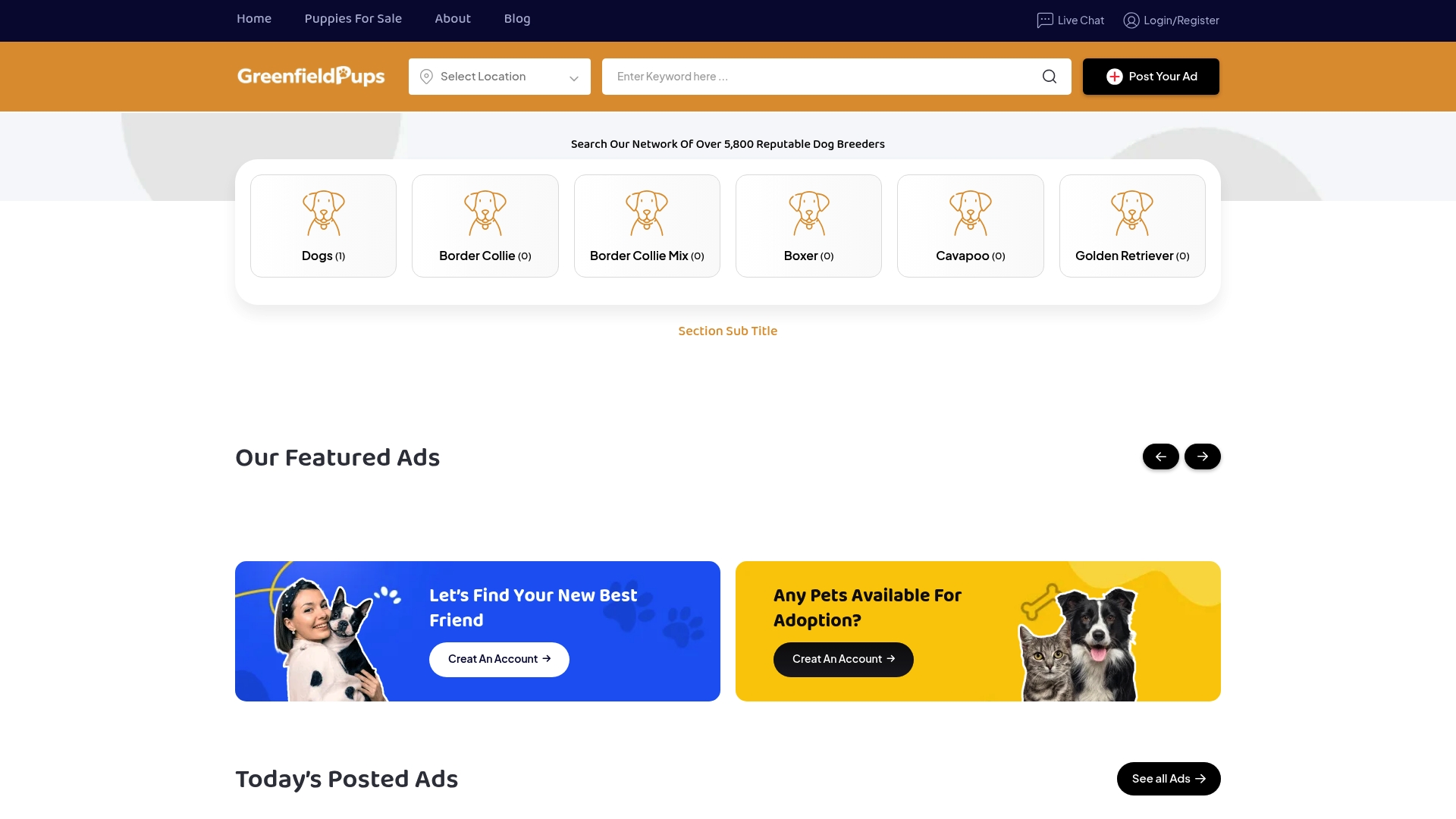
From guides on adoption matchmaking to detailed advice on choosing a responsible breeder, the platform covers every step of the process. Browse verified listings, read expert guides, and use Greenfieldpups to move from research to the right match with confidence.
FAQ
What is pet matching in simple terms?
Pet matching is a structured process that compares a prospective owner’s lifestyle, home environment, and personality with an animal’s temperament and needs to identify the most compatible fit.
How does a pet compatibility quiz work?
A pet compatibility quiz asks questions about your activity level, living space, schedule, and family composition, then scores your answers against animal profiles to produce a ranked list of compatible breeds or individual pets.
Is adult pet adoption better than getting a puppy?
Adult and senior pets often have established temperaments and may already be house-trained, making them more predictable matches for many adopters than puppies.
What factors matter most in pet adoption matching?
Energy level and daily routine compatibility are the strongest predictors of adoption success, followed by temperament, living space, and family dynamics.
Can I use pet matching tools before visiting a shelter?
Yes. Online tools like OmniPawHub’s pet matchmaker generate a shortlist of compatible breeds in under 60 seconds, giving you a data-based starting point before any in-person visit.
Leave a Comment