

Why Choose Shelter Pets: Benefits Every Family Should Know
Choosing shelter pets is one of the most life-changing decisions a family can make, and the reasons go far beyond sentiment. Shelter adoption saves animal lives, cuts your upfront costs significantly, and delivers health and emotional rewards that buying from a breeder rarely matches. Approximately 6.5 million animals enter U.S. shelters every year, but only 3.2 to 4.1 million are adopted. That gap means millions of animals face uncertain futures. Understanding the full picture helps you make a decision you will never regret.
Why choose shelter pets: the life-saving case for adoption
Shelter adoption is defined as the process of taking legal ownership of an animal from a public shelter, rescue organization, or humane society rather than purchasing from a breeder or pet store. The distinction matters because the two paths produce very different outcomes for animals nationwide.
The scale of the problem is hard to ignore. Over 6.5 million animals enter U.S. shelters each year, creating a surplus of roughly 2.4 to 3.3 million unadopted animals annually. That surplus directly drives euthanasia rates. Shelters run out of space, and animals without adopters run out of time.
The math on individual impact is striking:
- 334,000 dogs were euthanized in 2024 because of shelter overcapacity alone
- If just 6% more pet seekers chose adoption, experts project the euthanasia crisis would effectively end
- Every adoption frees a kennel space, allowing shelters to rescue another animal from the street or an abusive situation
When you adopt, you do not just save one animal. You create a chain reaction. The shelter can take in another dog or cat that would otherwise have no safe place to go. That is the role of shelters in the broader animal welfare system, and your single decision feeds directly into it.
How does shelter adoption compare financially to buying from a breeder?

The cost difference between adopting and buying is substantial, and it favors adoption at almost every stage.
Adoption fees typically range from $30 to $500, compared to $2,000 to $5,000 for a purebred dog from a breeder. That price gap alone is significant. What makes adoption even more cost-effective is what comes included in that fee.
| Cost factor | Shelter adoption | Breeder purchase |
|---|---|---|
| Initial price | $30–$500 | $2,000–$5,000+ |
| Spay/neuter | Usually included | Separate cost ($200–$500) |
| Vaccinations | Usually included | Separate cost ($100–$300) |
| Microchipping | Usually included | Separate cost ($50–$75) |
| Genetic health testing | Not applicable | Often extra ($500–$2,000) |
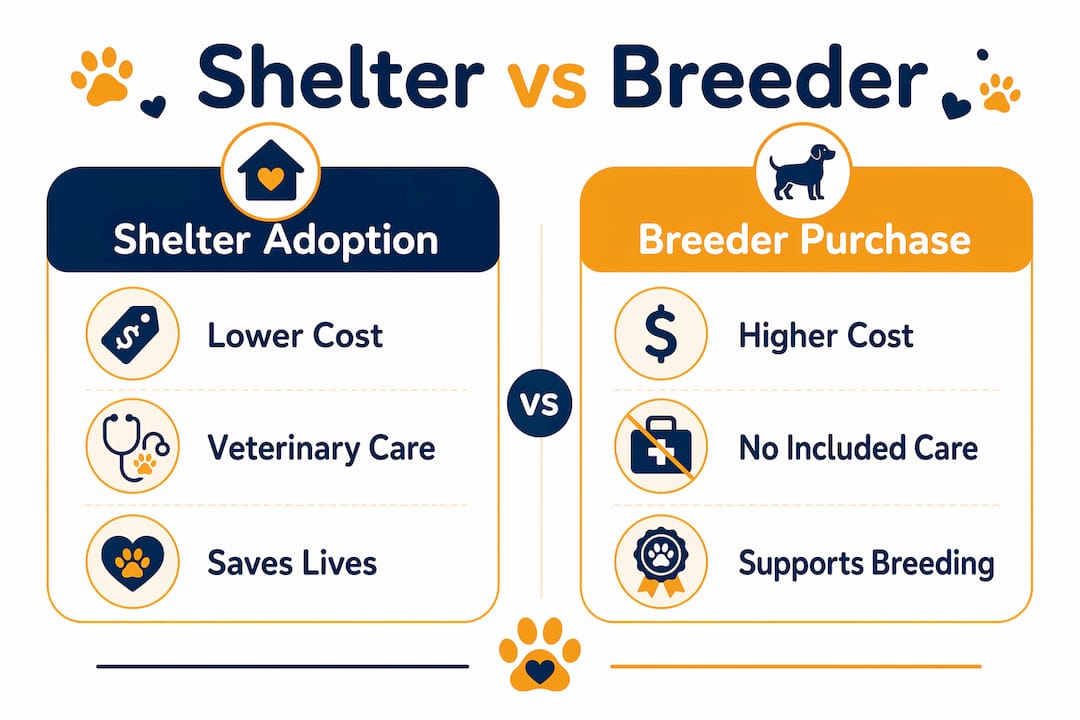
Shelters provide veterinary care and vaccinations before any animal goes home. That means you walk in the door with a pet that is already spayed or neutered, vaccinated, and microchipped. A breeder puppy often requires all of those services within the first few weeks of ownership, adding hundreds of dollars to your real first-year cost.
The long-term health picture also favors shelter pets. Mixed breed animals benefit from hybrid vigor, a genetic advantage that results from greater genetic diversity. Purebred dogs are selectively bred for appearance and specific traits, which concentrates genetic weaknesses. Mixed breeds in shelters tend to carry fewer hereditary conditions, which translates to lower lifetime veterinary bills.
Pro Tip: Ask your shelter for a full medical history of any animal you are considering. Most shelters document every vaccine, treatment, and behavioral note, giving you a head start on your new pet’s health records.
What ethical impact does adopting a shelter pet have?
Adoption is not just a personal choice. It is a market signal that directly affects how animals are bred and sold across the country.
Choosing adoption disrupts demand for puppy mills and unethical breeders. Puppy mills operate as volume businesses. They produce as many animals as buyers will purchase. When fewer people buy, production slows. Your decision to adopt rather than shop sends a financial message that the market actually responds to.
The Humane Society of the United States estimates that tens of thousands of puppy mills operate across the country, many with minimal oversight. Pet stores that sell puppies source a large percentage of their inventory from these facilities. Buying from a pet store, even with good intentions, often funds the same system you would want to avoid.
“Adopting not only saves a life but actively combats unethical breeding by reducing market demand for puppy mills.” — The Spruce Pets
The ethical reasons to adopt extend beyond individual animals. Responsible pet ownership at scale changes what breeders produce and how they operate. Small individual actions aggregate into system-wide pressure. When adoption rates rise, shelters become less overwhelmed, rescue organizations gain more resources, and the entire animal welfare infrastructure strengthens.
Are shelter pets harder to train or bond with?
This is the most common fear prospective adopters raise, and the evidence does not support it.
Many shelter pets are surrendered because of owner life changes, not behavioral problems. Job relocations, divorces, new babies, and housing restrictions are the most common surrender reasons. These animals often arrive at shelters already house-trained, leash-trained, and comfortable around people.
Here is what you can realistically expect when you bring a shelter pet home:
- The adjustment period. Most dogs and cats need two to four weeks to decompress and show their true personality. Do not judge behavior in the first week.
- The trust-building phase. Consistent routines, calm handling, and patience build confidence faster than any training program. Shelter staff can tell you what works for each specific animal.
- The loyalty payoff. Shelter pets often show unique loyalty and affection once they feel secure. Veterinary experts consistently observe this transformation in rescue animals.
- The training baseline. Many shelter dogs already know basic commands. Shelters and rescue organizations frequently work with volunteers and trainers to socialize animals before adoption.
The bond that forms with a rescue animal is genuinely different. The emotional connection formed through rescuing a pet delivers a distinct form of mental and emotional well-being that owners consistently describe as more meaningful than they expected. In fact, 84% of pet owners report positive mental health impact from their animals, including what researchers call a “helper’s high” from the act of rescue itself.
Pro Tip: Before finalizing your adoption, spend time with the animal in a quiet room at the shelter. Behavior in a kennel environment often looks very different from behavior in a calm, one-on-one setting.
How to choose the right shelter pet for your family
Picking the right animal is a process, not an impulse. Shelters use comprehensive vetting and behavior assessments to match animals with adopters, and that process requires patience from your side too.
Start by honestly assessing your household:
- Activity level. A high-energy Border Collie mix needs daily vigorous exercise. A senior Basset Hound is a better fit for a quieter home.
- Space. Large breeds need room to move. Many medium and small breeds thrive in apartments if exercised regularly.
- Children and other pets. Ask shelter staff which animals have been tested with kids or other dogs. Most shelters document this clearly.
- Time commitment. Puppies require intensive training and supervision. Adult dogs often slot into routines faster and with less disruption.
Shelter staff are your best resource. They observe these animals every day and know personality quirks that no adoption profile can fully capture. Tell them your lifestyle honestly, and let them guide you toward the right match. Breed-specific rescues are another strong option if you have a particular breed in mind. These organizations specialize in one breed and can match you with an animal whose temperament and needs are already well-documented.
The adoption process itself typically includes an application, a home check, and a meet-and-greet. Expect it to take days or weeks, not hours. That screening process protects both you and the animal.
Key takeaways
Shelter adoption saves lives, cuts costs, and builds bonds that last a lifetime. Every adoption removes one animal from overcrowding and sends a clear signal against unethical breeding.
| Point | Details |
|---|---|
| Adoption saves lives directly | Each adoption frees shelter space and prevents euthanasia caused by overcrowding. |
| Cost advantage is significant | Adoption fees of $30–$500 include spay/neuter, vaccines, and microchipping that breeders charge separately. |
| Mixed breeds carry health benefits | Hybrid vigor gives shelter pets fewer inherited conditions and lower lifetime vet costs. |
| Most shelter pets are already trained | Many animals are surrendered for owner life changes, arriving house-trained and socialized. |
| Adoption fights unethical breeding | Choosing adoption reduces demand for puppy mills and supports responsible animal welfare practices. |
What I have learned from watching families adopt shelter pets
I have spent years watching families walk into shelters nervous and walk out transformed. The hesitation is always the same: “What if something is wrong with it?” The reality I have observed is almost always the opposite.
The animals that surprise people most are the ones who had the hardest starts. A dog that spent six months in a kennel, overlooked by dozens of visitors, often becomes the most devoted companion in the house. There is something in the rescue experience that seems to register with these animals. They settle in, they attach, and they give back in ways that catch new owners completely off guard.
What I think most people underestimate is the effect on themselves. The mental health benefits of pet ownership are well-documented, but the specific lift that comes from knowing you pulled an animal out of a difficult situation adds a layer that buying from a breeder simply cannot replicate. You did something. That matters.
My honest advice: do not wait for the perfect animal. Go to the shelter with your criteria, talk to the staff, and trust the process. The right match is usually not the one you pictured. It is the one that picks you.
— Taylor
Ready to take the next step with Greenfieldpups?
Whether you are leaning toward adoption or still weighing your options, Greenfieldpups is built to help you make an informed, confident decision.
Greenfieldpups connects pet seekers with adoption resources, ethical breeders, and detailed guides across the United States. If you want to understand the full spectrum of your options, the responsible dog breeding guide breaks down what ethical breeders do differently and how to spot the ones worth trusting. You can also explore the adopt not shop breakdown for a side-by-side look at the financial, ethical, and emotional case for shelter adoption. Whatever path you choose, Greenfieldpups gives you the tools to choose it well.
FAQ
Why are shelter pets better than breeder pets?
Shelter pets cost significantly less, often arrive vaccinated and spayed or neutered, and benefit from hybrid vigor that reduces inherited health conditions. Adoption also removes an animal from overcrowding and reduces demand for unethical breeding operations.
What is included in a typical shelter adoption fee?
Adoption fees ranging from $30 to $500 typically cover spay or neuter surgery, core vaccinations, and microchipping. These services would cost several hundred dollars more if purchased separately after a breeder purchase.
Are shelter pets harder to train than puppies from breeders?
No. Many shelter pets arrive already house-trained because they were surrendered by previous owners for life reasons rather than behavioral problems. Adult shelter dogs often require less intensive training than breeder puppies.
How do I know if a shelter pet is right for my family?
Talk to shelter staff honestly about your home, activity level, and household members. Shelters conduct behavior assessments and can match animals to your lifestyle. Spending one-on-one time with a pet before committing gives you a much clearer picture than a kennel visit alone.
Does adopting a shelter pet really reduce puppy mill operations?
Yes. Adoption reduces market demand for commercially bred animals. Puppy mills produce based on buyer demand, so every adoption instead of a purchase shrinks the market that funds unethical breeding practices.
Leave a Comment