

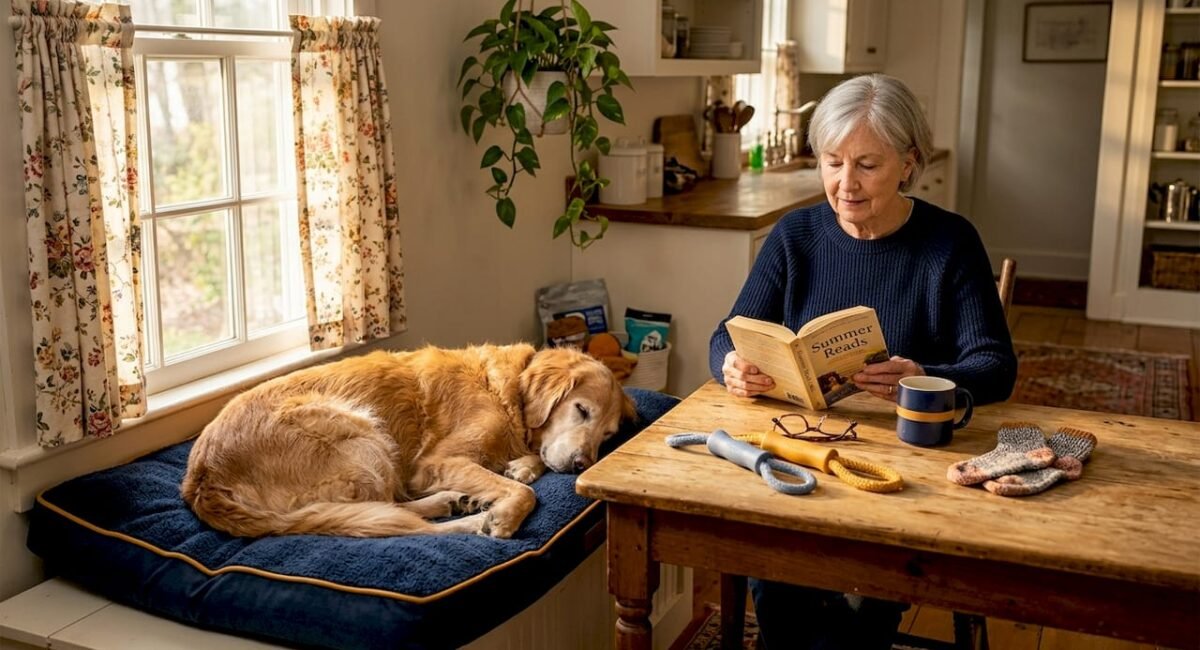
Why Choose Senior Dog Adoption: Benefits and Rewards
Most people walk into a shelter and head straight for the puppies. That impulse is understandable, but it means a lot of extraordinary dogs get overlooked. Only 2% of adopters choose senior pets, despite the fact that older dogs often bring exactly what adopters say they want: calm energy, a predictable personality, and a dog that fits into real life without months of chaos. If you’re weighing your adoption options, the reasons to choose senior dog adoption are far more compelling than most people realize.
Table of Contents
- Key takeaways
- Why senior dog adoption deserves a second look
- Behavioral advantages you won’t get from a puppy
- Health and nutrition: what senior dog care actually looks like
- Lifestyle compatibility: finding your perfect match
- The emotional rewards of choosing an older dog
- My honest take on why so many people are wrong about this
- Find your senior dog match through Greenfieldpups
- FAQ
Key takeaways
| Point | Details |
|---|---|
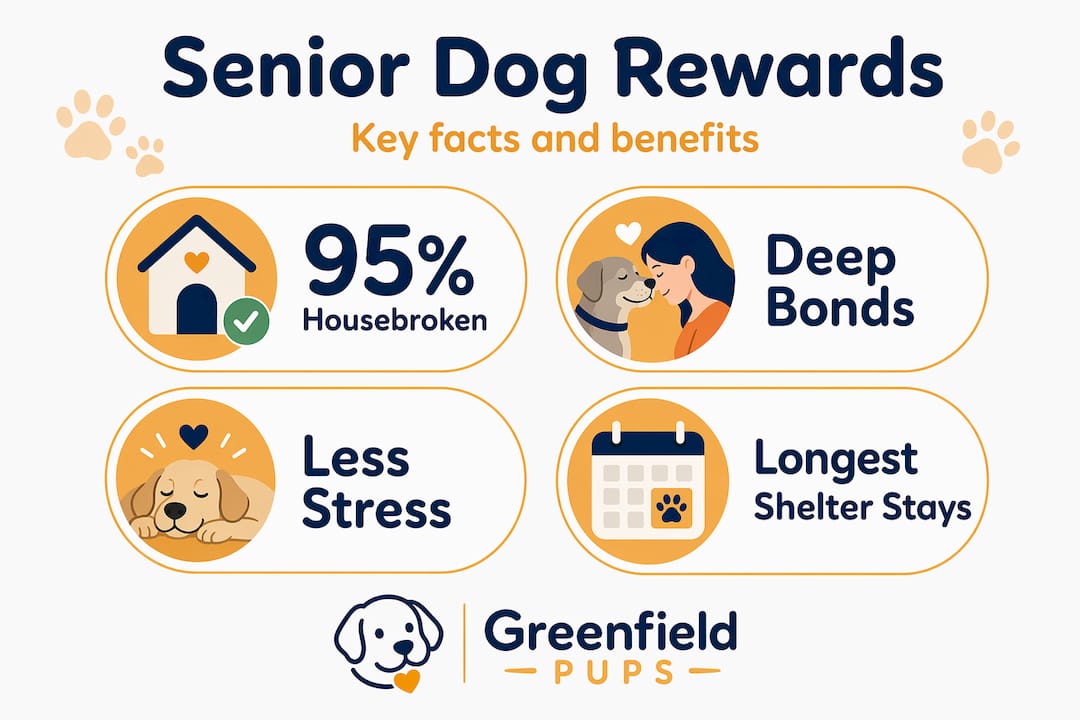
| Senior dogs skip the chaos | Most are already housebroken and leash trained, meaning faster acclimation for you and less stress at home. |
| Personality is predictable | What you see is what you get with an older dog, which makes finding a true lifestyle match much easier. |
| Tailored nutrition matters | Senior dog diets should be customized to individual health needs, not just labeled “senior formula.” |
| Financial risk is often lower | Many rescues cover upfront vet care and waive adoption fees, reducing your out-of-pocket costs significantly. |
| Bonding happens fast | Senior dogs form deep, lasting connections, often faster than puppies, when given consistent routine and patience. |
Why senior dog adoption deserves a second look
The case for senior dog adoption starts with a simple but powerful question: what do you actually want in a dog? If you answered something like “a calm companion who fits my routine and doesn’t destroy my furniture,” you just described most senior dogs perfectly.
The adoption bias toward puppies is real, but it’s mostly driven by perception rather than experience. Energy-level compatibility and known health history are among the top factors adopters say matter most to them, and older dogs deliver both. You can meet a seven-year-old Labrador, spend thirty minutes with her, and know exactly what you’re getting. Try predicting the adult personality of a twelve-week-old puppy, and you’re mostly guessing.
Senior dogs also tend to spend the longest time in shelters. That’s a painful reality, and it means choosing an older dog has a direct, meaningful impact. Senior pets need homes, and choosing one is one of the highest-impact decisions you can make as an adopter.
Behavioral advantages you won’t get from a puppy
Here’s something most first-time adopters don’t realize until they’ve lived it: puppies are genuinely hard. The biting, the accidents, the 2 a.m. whining, the weeks of teaching basic commands. It’s a lot. Senior dogs skip almost all of that.
Senior pets acclimate to home settings faster than puppies or kittens because most already understand how household life works. They’ve lived with humans. They know what a leash is, what “sit” means, and that the couch belongs to you (or maybe to both of you).
The specific behavioral benefits of adopting senior dogs include:
- Already housebroken. The majority of senior dogs are fully housebroken, which removes one of the most exhausting parts of new pet ownership.
- Leash manners in place. No pulling you down the sidewalk or lunging at squirrels on day one.
- Lower destructive behavior. The chewing-everything phase is long behind them.
- Genuine focus during training. Older dogs often learn faster because they have more impulse control and less distraction than puppies.
- Predictable temperament. Their personality is fully formed, so you can match the dog to your actual life.
That last point matters more than people acknowledge. With a senior dog, the shelter can tell you clearly: “This dog is great with kids but prefers being the only pet,” or “She’s calm in apartments and loves a quiet evening.” That level of honest matching is almost impossible with a young puppy.
Pro Tip: When visiting a shelter, ask staff which senior dogs they’d personally take home. Staff spend the most time with these animals and can guide you toward dogs whose personalities genuinely fit your lifestyle.
Adopting a senior dog is especially worth considering if you’re a first-time owner. The reduced early stress from skipping the puppy phase often makes the experience more enjoyable and sustainable from the start.
Health and nutrition: what senior dog care actually looks like
There’s a common fear that adopting an older dog means signing up for expensive vet bills and constant medical drama. That fear isn’t entirely unfounded, but it’s far more manageable than most people expect, especially when you know what to look for and where to adopt from.
Senior dogs do have specific health considerations. Arthritis, dental disease, and kidney concerns are more common in older animals. But knowing those risks upfront is actually an advantage. You’re not surprised three years in when a condition develops. You can plan, budget, and work with your vet proactively.
Here’s a breakdown of common senior dog health areas and what they mean for care:
| Health area | What to watch for | Practical action |
|---|---|---|
| Joint health | Stiffness, reluctance to climb stairs | Low-impact walks, orthopedic bedding, vet-prescribed supplements |
| Kidney function | Increased thirst, changes in urination | Regular bloodwork, adjusted protein intake |
| Dental health | Bad breath, difficulty chewing | Annual cleanings, dental chews approved by your vet |
| Weight management | Obesity increases joint and organ strain | Portion control, activity tailored to energy level |
| Cognitive function | Confusion, altered sleep patterns | Mental enrichment, consistent routine |
On nutrition specifically: no official one-size-fits-all senior dog food formula exists. Two dogs labeled “senior” can have completely different nutritional needs depending on their breed, weight, and health history. Understanding how nutrition supports senior dog immune health is one of the most practical things you can do after adoption. Work with your vet to build a diet plan that fits your specific dog, not just the bag that says “for older dogs.”
Pro Tip: Ask your vet about bloodwork at the first post-adoption appointment. A baseline panel lets you track changes over time and catch issues like kidney disease or thyroid imbalance early, when they’re far easier to manage.
The financial picture gets even more favorable when you choose the right rescue. Organizations like Muttville in San Francisco do vet care and fee waivers upfront, covering surgeries, wellness checks, and even two weeks of food before a dog goes home. That kind of pre-adoption care reduces adopter financial risk significantly and means you’re inheriting a dog whose health has already been assessed and addressed.
Lifestyle compatibility: finding your perfect match
One of the most underrated senior dog adoption advantages is how well older dogs fit into different living situations. The assumption that seniors are only for retired people sitting quietly at home is simply wrong.
Senior dogs vary widely in energy level. A five-year-old Border Collie mix still needs real exercise and mental stimulation. A ten-year-old Basset Hound might be thrilled with two leisurely walks a day and a warm spot on the couch. The key is matching the individual dog to your life, not assuming all older dogs are the same.
Sniff walks exercise senior dogs’ brains even when physical energy is lower, which is worth knowing. A 20-minute walk where your dog gets to sniff freely provides more mental enrichment than a brisk 40-minute march where she’s rushed the whole time. That’s a genuinely manageable exercise commitment for most people.
Consider how senior dogs can fit a variety of lifestyles:
- Families with children. Many senior dogs have lived with kids before and are patient, gentle, and far less likely to knock over a toddler in a burst of puppy energy.
- Apartment dwellers. Lower activity needs and smaller behavioral demands make many senior dogs excellent apartment companions.
- Busy professionals. A dog that sleeps contentedly through a workday is a very different experience from one that needs near-constant stimulation.
- First-time owners. The lifestyle match over chronological age principle matters most here. A calm, trained older dog builds confidence in new owners faster than a chaotic puppy.
- Multi-pet households. Some seniors have lived with other dogs or cats and integrate smoothly when introductions are done thoughtfully.
The guiding principle when you consider senior dogs is this: focus on personality and energy level first, age second. A good shelter or rescue will help you match based on what your daily life actually looks like.
The emotional rewards of choosing an older dog
There is something specific about the bond that forms with a senior dog. It’s harder to explain than “they’re already trained,” but adopters who’ve done it describe it consistently. It feels like the dog knows.
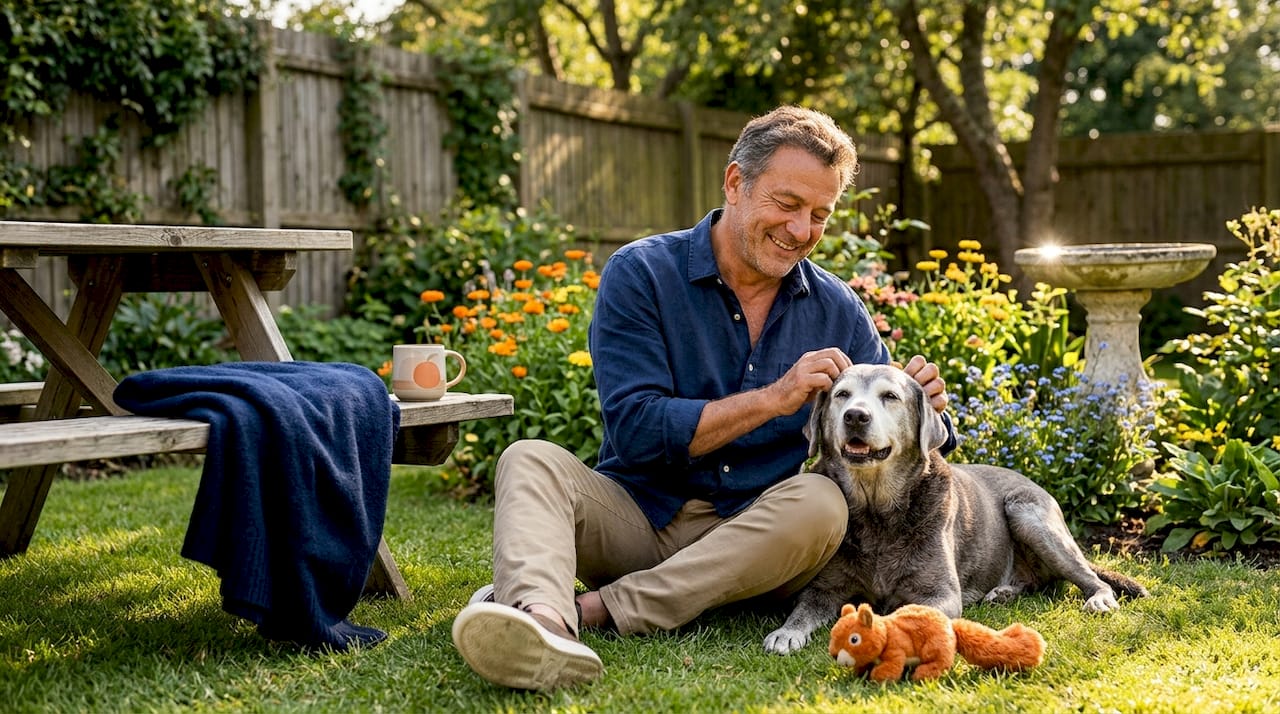
Whether or not that’s literally true, the relational dynamic is different. Senior dogs often arrive with a kind of settled gratitude. They’re not running in ten directions at once. They’re present. They pay attention to you in a way that puppies, burning off energy and exploring everything, simply don’t.
Bonding with a senior dog accelerates through stable, predictable routines rather than just time passing. Feeding at the same time, walking the same route, settling down together in the evenings. Consistency builds trust fast with older animals who may have experienced disruption in their past.
A few myths still hold back potential adopters, so here’s what the evidence actually shows:
- “They won’t bond with me.” False. Senior dogs bond deeply and quickly. The idea that only puppies can form strong attachments has no basis in animal behavior research.
- “You won’t have enough time together.” A seven-year-old medium-sized dog can reasonably have seven to ten more years ahead. That’s not a short chapter.
- “They’ll just be sick all the time.” Pre-adoption vet care through reputable rescues addresses existing conditions, and many senior dogs are in excellent health.
“Adopting a senior dog might be the best decision you ever make. They ask for so little and give back so much.” — PetSmart Charities
The benefits of adopting senior dogs aren’t just practical. They include the particular satisfaction of giving an animal a second chance, and the honest, uncomplicated companionship that older dogs tend to offer once they feel safe.
My honest take on why so many people are wrong about this
I’ve watched countless people walk past senior dogs in shelters to reach the puppy kennel, and every time I think about the dog they’re leaving behind, I feel the loss of it.
In my experience, the fear around senior dog adoption is mostly projection. People imagine themselves in the dog’s position and think, “An old dog must want to be with someone who knew them when they were young.” Dogs don’t work like that. What they want is consistency, kindness, and a person who shows up. Senior dogs, more than any other, know how to meet you where you are.
What I’ve learned after seeing so many of these adoptions play out: the people who worry most about the time they’ll have with an older dog often end up being the most devoted owners. That awareness keeps them present. They don’t take the relationship for granted.
My practical advice is to avoid the adoption mistakes that derail even well-intentioned adopters. Give a senior dog two weeks before you judge the fit. The first few days in a new home are disorienting for any animal. The dog you’ll have at day 14 is closer to the real dog than the one you saw on day one.
Age is almost never the right filter. Personality, energy level, and lifestyle fit are. When you get those right, the age of the dog barely enters your mind.
— Taylor
Find your senior dog match through Greenfieldpups

If this has moved you closer to choosing an older dog, the next step is knowing where to start and how to do it right. Greenfieldpups has built resources specifically for adopters who want to make informed, confident decisions. Whether you’re ready to act now or still researching your options, the complete adoption guide for 2026 walks you through every step of the process, from evaluating rescues to preparing your home. You can also explore the adoption health and happiness resource to understand the broader rewards of bringing any dog home. And for anyone who wants a vet’s perspective woven into their decision-making, the guide on veterinary guidance for adoption is worth a read before you visit your first shelter.
FAQ
Why should I choose senior dog adoption over a puppy?
Senior dogs are typically already housebroken, leash trained, and have predictable temperaments, making the transition into your home significantly easier than raising a puppy from scratch.
Are senior dogs harder to bond with?
No. Older dogs form deep attachments and often bond faster than puppies when given a consistent routine and calm environment, according to animal behavior experts.
What health costs should I expect when adopting a senior dog?
Costs vary, but many rescues cover significant upfront vet work and waive adoption fees entirely. Work with your vet to establish a baseline health panel and customized nutrition plan shortly after adoption.
Can senior dogs live with kids or other pets?
Yes, many senior dogs have prior experience with children and other animals. A good rescue will tell you exactly what home environment suits each individual dog.
Is senior dog nutrition different from regular adult dog food?
Significantly. No universal senior dog formula exists, so diet should be tailored to your dog’s specific health conditions, weight, and age-related concerns with guidance from your veterinarian.
Leave a Comment