

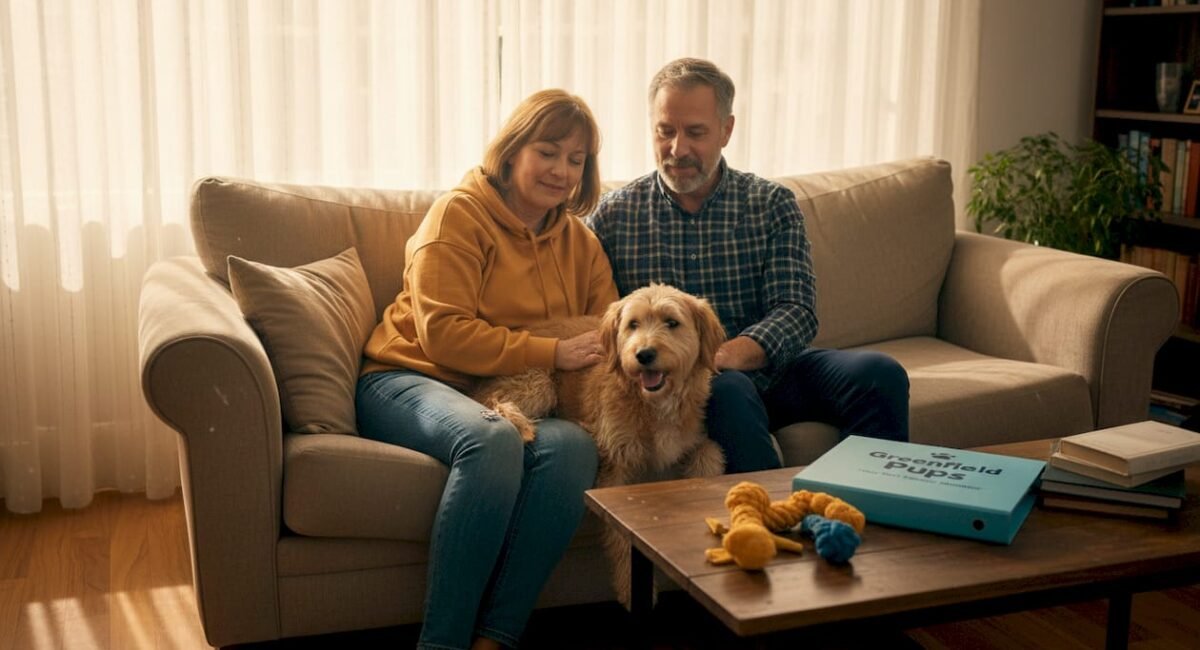
Why screening dog adopters leads to better matches
Adopting a dog feels like an act of pure love, but love alone doesn’t guarantee a lasting match. Nearly 78% of adopters encounter behavioral challenges after bringing a dog home, and a troubling one in five dogs is eventually returned to a shelter. Screening isn’t designed to judge you or make adoption feel like a job interview. It’s a tool, designed thoughtfully, to make sure the dog you choose actually fits your lifestyle, your home, and your experience level. When it works well, screening benefits every party involved.
Table of Contents
- The realities of dog adoption: Why problems happen
- What screening looks for: The science and the process
- How screening boosts adoption success for pets and people
- Common myths about screening: Finding the right balance
- The uncomfortable truth: What most adopters and shelters overlook
- Find your best match with trusted guidance
- Frequently asked questions
Key Takeaways
| Point | Details |
|---|---|
| Screening prevents mismatches | Careful screening helps avoid returns by matching dogs to suitable adopters. |
| Focus on evidence-based criteria | Not all screening questions matter equally—seek out practices backed by research. |
| Structured processes improve success | Adoptions are most successful when screening and support go hand-in-hand. |
| Adopters play a role too | Honest self-assessment by adopters leads to better matches and happier homes. |
The realities of dog adoption: Why problems happen
Every year, millions of families across the country open their hearts and homes to dogs. The numbers are staggering: U.S. shelters process approximately 4.1 million dog adoptions annually, and while that reflects enormous compassion, it also reveals a system under pressure. Because not every placement sticks. A significant portion of behavioral surrenders, close to 28%, could be reduced with better initial matching and more thoughtful screening at the point of adoption.
So what actually goes wrong after adoption day? The challenges are remarkably consistent across regions and dog breeds. Common post-adoption behavioral problems include:
- House soiling or regression in housetraining
- Leash pulling, reactivity, or difficulty on walks
- Separation anxiety, especially in shelter dogs adjusting to quiet homes
- Resource guarding around food, toys, or sleeping spaces
- Excessive barking or destructive chewing when understimulated
These aren’t random occurrences. They’re often predictable when you know the dog’s history, energy level, and needs. A high-drive working breed placed with a sedentary first-time owner almost always struggles. A dog with known separation anxiety placed with someone who works 12-hour shifts is set up to fail before it even begins.
“The issue isn’t that adopters don’t care. It’s that caring isn’t a substitute for compatibility.” — Dr. Emily Weiss, animal behavior researcher
This perspective matters because one-fifth of adopted dogs are returned to shelters, a statistic that reflects real heartbreak on both sides. For the dog, repeated displacement causes stress, fear, and behavioral deterioration. For the adopter, the experience can be emotionally exhausting and may discourage future adoption attempts.
What’s worth noting is that overall satisfaction among adopters remains high. Most people who adopt do love their dogs and want things to work out. The gap isn’t motivation; it’s preparation and fit. Understanding your lifestyle before choosing a dog is part of any healthy dog adoption journey. Screening helps bridge that gap by giving shelters and adopters a shared language to discuss compatibility honestly before the placement is finalized.
The reality is this: good intentions without structured guidance lead to reactive placements. And reactive placements lead to returns, behavioral deterioration, and demoralized adopters who might not try again.
What screening looks for: The science and the process
Now that we’ve seen the stakes, let’s break down what screening actually involves. When you apply to adopt a dog from a shelter or rescue organization, the adoption application isn’t arbitrary. It’s a structured tool meant to surface potential red flags and identify strengths that support a lasting placement. But not every question on that application carries equal weight.
A recent review found that only 8 of 37 common screening criteria used by shelters actually have scientific support for predicting adoption success. That’s a striking gap. It means shelters are often operating on assumption and tradition rather than data. The result can be processes that feel unnecessarily invasive to applicants without delivering better outcomes.
Here’s a practical breakdown of what screening typically covers and how each area ranks in terms of evidence:
| Screening criterion | Evidence-based? | Why it matters |
|---|---|---|
| Past pet surrender history | Yes | Prior surrenders correlate with higher return risk |
| Motivation for adopting | Yes | Impulsive decisions are linked to early returns |
| Home environment safety check | Yes | Fencing, hazards, and space affect animal safety |
| Renting vs. owning home | Weak | Landlord approval matters more than ownership status |
| Income level | No | Financial ability ≠ quality of care |
| Number of people in household | Weak | Household size alone doesn’t predict outcomes |
| Prior experience with dogs | Yes | Experience level helps match appropriate breeds |
| Yard size | Weak | Exercise habits matter more than yard dimensions |
This table illustrates something important: some criteria shelters use heavily, like income level or whether you rent, have little to no scientific backing. Meanwhile, things like the applicant’s motivation, their history with previous pets, and their specific experience level are genuinely predictive.
Effective screening focuses on:
- Honest motivation: Are you adopting because you genuinely want this dog, or because your children begged you over the weekend?
- Lifestyle compatibility: Do you run five miles a day, or prefer quiet evenings on the couch? Both are valid, but they call for different dogs.
- Past pet history: Have you successfully cared for a dog before? If a previous dog was surrendered, can you explain the circumstances honestly?
- Home setup: Is your living environment safe and appropriate for the animal you’re choosing?
Pro Tip: Before you even start your application, write down three things you genuinely cannot compromise on in a dog and three challenges you know you’re not equipped to handle. Share that list with the shelter. It opens an honest conversation and actually speeds up the matching process.
Understanding what good screening looks like also helps you recognize when the process goes too far. When you’re choosing a responsible dog breeder or working with a shelter, the questions asked should feel like a two-way conversation about fit, not an interrogation about your worth as a human being.
How screening boosts adoption success for pets and people
After mapping out what screening involves, let’s see how it truly benefits everyone involved. The data here is compelling. Research comparing standard adoption processes with structured, preference-based matching shows that structured interactions increase adoptions by 2.49 times, moving success rates from 23.3% all the way to 39.2%. That’s not a marginal improvement. That’s a transformation.
What makes structured screening so effective? Several interconnected mechanisms work together:
- Better initial compatibility: When an adopter describes their routine and energy level, a trained counselor can steer them toward dogs with matching temperaments, not just the cutest face in the kennel.
- Reduced emotional mismatch: Adopters who go through structured assessments feel more prepared and less blindsided by behavioral challenges.
- Shorter adjustment periods: Dogs placed through thoughtful matching often settle into their new homes faster because the environment actually suits them.
- Fewer early returns: When compatibility is prioritized from the start, adopters are more likely to push through early challenges rather than give up.
- Stronger human-animal bond: Research consistently shows that people who felt well-matched to their pet report higher satisfaction and stronger emotional bonds one year post-adoption.
Here’s a side-by-side comparison of what adoption looks like with and without structured screening:
| Factor | Without structured screening | With structured screening |
|---|---|---|
| Adoption success rate | ~23% | ~39% |
| Return likelihood | Higher | Significantly lower |
| Adopter preparedness | Often low | Markedly improved |
| Behavioral challenges | Frequently unexpected | Anticipated and planned for |
| Bond strength at 12 months | Variable | Consistently stronger |
The numbers tell a clear story. Structured screening isn’t an obstacle for adopters. It’s actually what gets more dogs into permanent homes.
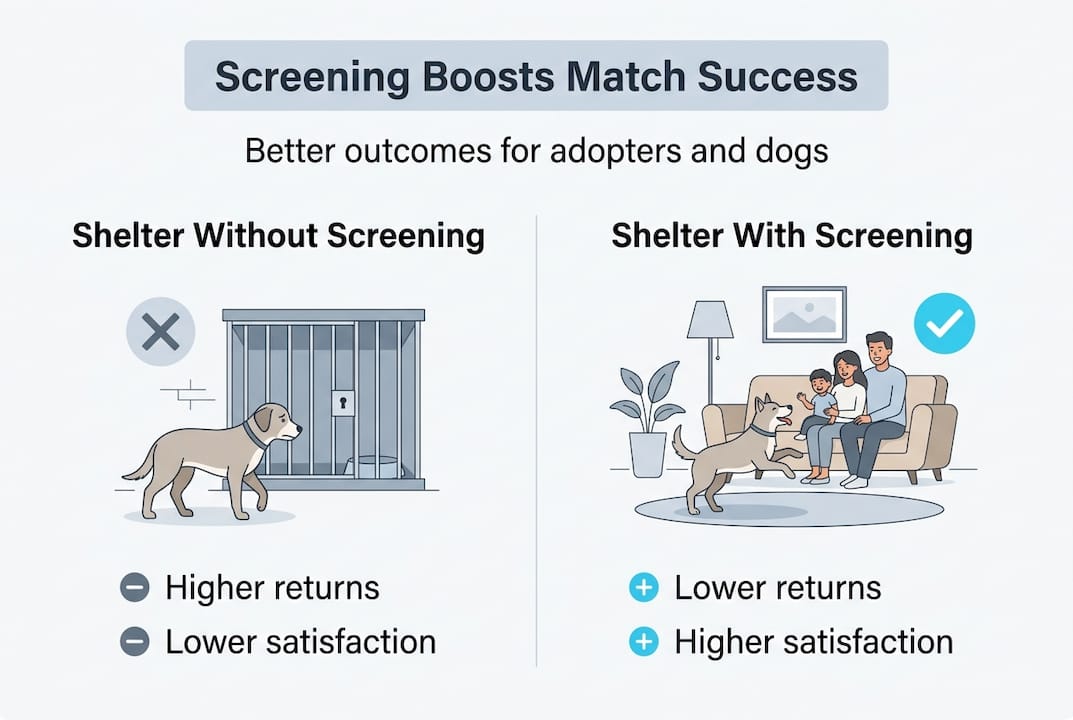
What can you expect during a quality screening process? A good shelter or rescue will walk you through a brief lifestyle interview, allow you to interact with shortlisted dogs in a calm, structured setting, ask open-ended questions rather than pass/fail ones, and follow up after placement to offer support. That last element, post-placement contact, is often the most underrated part of the whole process.

When you’re finding reputable breeders or working with a shelter, a thorough process signals that the organization cares about outcomes, not just turnover. Organizations that rush adoptions to clear space often see higher return rates within the first 30 days.
Common myths about screening: Finding the right balance
Quick facts and misunderstandings reveal why some may feel hesitant about screening. The biggest myth? That screening is a form of gatekeeping, designed to decide whether you “deserve” a dog. This framing does real damage to adoption rates and discourages people who would make excellent pet owners from even applying.
Let’s clear up the most persistent misconceptions:
- Myth: You need to own your home to adopt. Renting doesn’t disqualify you. Landlord approval matters, but ownership status alone has no meaningful predictive value.
- Myth: Shelters are judging your parenting or lifestyle. Effective screening isn’t about values; it’s about fit. A single person who works from home might be a better match for a high-anxiety dog than a large family that’s rarely home.
- Myth: More questions equals better outcomes. As we saw earlier, only 8 of 37 criteria have scientific backing. Longer applications don’t automatically produce better placements.
- Myth: If you’ve ever returned a dog, you can’t adopt again. Context matters enormously. A previous return due to an unavoidable life crisis is very different from a pattern of impulsive decisions.
- Myth: Strict screening means fewer adoptions. In fact, thoughtful screening increases adoption rates, as the structured interaction data clearly shows.
The real problem isn’t that screening exists. It’s when screening becomes excessive, punitive, or based on criteria that have no evidentiary basis. Screening should feel like a conversation. When it feels like a courtroom, something has gone wrong.
Pro Tip: If a question on an adoption application feels unfair or unclear, ask the shelter to explain the reasoning behind it. Good organizations will welcome that conversation. Those that can’t explain their criteria may be worth reconsidering.
As an adopter, you can prepare for screening by being genuinely honest rather than trying to give “right” answers. Counselors are trained to read overcorrection. Honesty about your limitations, your schedule, your experience with dogs, actually helps the process move faster. You can also read dog adoption advice ahead of time to understand what questions are typically asked and why.
The goal of any screening process should be to match the right dog to the right home. Not to filter out imperfect humans, because no such thing exists.
The uncomfortable truth: What most adopters and shelters overlook
Here’s something most articles on this topic won’t say directly: the screening process fails not because shelters are too strict or too lenient, but because both sides, adopters and organizations alike, tend to avoid the harder conversation.
Adopters often walk in focused on the dog they want rather than the dog they can actually handle. They’ve already fallen in love with a photo. The screening process becomes something to get through rather than something to genuinely engage with. That internal resistance is understandable, but it’s where mismatches are born.
Shelters, on the other hand, sometimes treat checklists as a substitute for genuine dialogue. A completed form with all the “right” answers gets approved, even when a conversation might have revealed meaningful concerns. The checklist approach feels thorough, but it misses the nuance that makes placement decisions accurate.
What’s almost universally underdeveloped is post-adoption support. The placement day is treated as the finish line, when it’s actually the starting line. The first three months after adoption are the highest-risk period for returns, and most organizations offer little structured support during that window. This is where resources like adoption journey guidance can make a real difference, giving adopters practical tools when challenges inevitably arise.
The most successful adoptions share one trait: honest, two-directional dialogue before and after placement. That means adopters showing up with realistic self-awareness and shelters meeting them with curiosity rather than judgment.
Find your best match with trusted guidance
Screening is only the first step. Once you understand what makes a good match, the real work is finding the right dog and the right support to make that relationship thrive from day one.
At Greenfield Pups, we connect prospective adopters with dogs from responsible breeders across the United States, making it easy to browse by breed, location, and size. Our available dog listings let you explore hundreds of options with full breed profiles so you can evaluate compatibility before you even make contact. We also provide practical resources on tips for responsible breeders to help you ask the right questions and spot the right qualities in any adoption or purchase experience. Whether you’re a first-time adopter or an experienced dog owner, we’re here to support a placement you’ll both love for years.
Frequently asked questions
Why do shelters have strict adoption requirements?
Strict requirements help shelters identify genuine red flags, including past surrenders and impulsive motives, that are statistically linked to failed placements, increasing the likelihood of a lasting adoption.
Does matching the right dog to the right person really reduce returns?
Yes. Structured screening and preference-based matching are directly linked to reducing the 20% return rate seen in general shelter populations by preventing the most common mismatches before they happen.
Do all adoption screening questions have scientific backing?
No. Research shows that only 8 of 37 criteria commonly used in adoption screenings are supported by scientific evidence, which means many shelters rely on assumptions rather than data.
How can I make the screening process easier as an adopter?
Prepare honest, specific answers about your lifestyle and experience level, ask questions about any criteria that feel unclear, and treat the process as a collaborative conversation designed to help you, not judge you.
Leave a Comment