

Selling Puppies Workflow: A Step-by-Step Breeder Guide
A selling puppies workflow is the end-to-end process breeders use to market litters, qualify buyers, complete adoption procedures, and manage all required paperwork from first inquiry to final pickup. Without a structured puppy sales process, even experienced sellers lose buyers to slow responses, unclear contracts, and disorganized handoffs. Platforms like BreederBuddy and Puppies.com have built entire software ecosystems around this problem, which tells you how common the breakdown is. This guide walks you through every phase of how to sell puppies responsibly, covering tools, marketing, adoption steps, and post-sale support that turns one-time buyers into long-term referral sources.
What essential tools do you need to start your selling puppies workflow?
The right setup prevents the most common failure points in the puppy sales process before they happen. You need four categories of resources in place before you take a single inquiry.
Listing platforms and software. A multi-channel listing strategy is the baseline for reaching serious buyers. An annual membership on platforms like Puppies.com runs approximately $199.99 for up to 40 listings, which makes it cost-effective for small breeders running two or three litters per year. BreederBuddy adds buyer management, waitlist tracking, and automated communication on top of marketplace exposure. Together, these tools cover both visibility and operations.
Buyer intake forms. A standardized application collects living situation, experience with the breed, household members, and references. This is not optional paperwork. It is the data that lets you score and tag buyers accurately so the right puppy goes to the right home.
Pricing and deposit policy. Set your price per breed, define your deposit amount, and decide whether deposits are refundable before you post a single ad. Deposit practices at farms like LoneStar Farms and Prancing Pony Farm show that non-refundable deposits with final payment due before pickup or shipping is the industry standard. Buyers expect this structure. Ambiguity here causes disputes.
Veterinary documentation. Prepare health certificate templates, vaccination records, and deworming logs before the litter arrives. Having these ready as fillable documents means you are not scrambling at pickup time.
| Tool category | Recommended option | Primary function |
|---|---|---|
| Marketplace listing | Puppies.com | Broad buyer reach, up to 40 listings |
| Breeder management software | BreederBuddy | Waitlists, automation, buyer profiles |
| Contract and e-signature | Digital contract platform | Legally binding agreements, record-keeping |
| Health documentation | Vet-prepared templates | Vaccination, deworming, health certificates |
How should you execute marketing and buyer management?
Effective puppy marketing strategies require more than posting photos on social media. The hybrid sales model that combines marketplace visibility with direct branded communication gives you the broadest reach while keeping pricing control and buyer relationships in your hands. Here is how to execute each layer.

Multi-channel advertising. Your personal website or landing page anchors your brand. Marketplace listings on platforms like Puppies.com drive discovery. Social media, particularly Facebook and Instagram, supports visual storytelling and community building. Each channel serves a different stage of the buyer journey, so running all three simultaneously is not redundant. It is necessary.
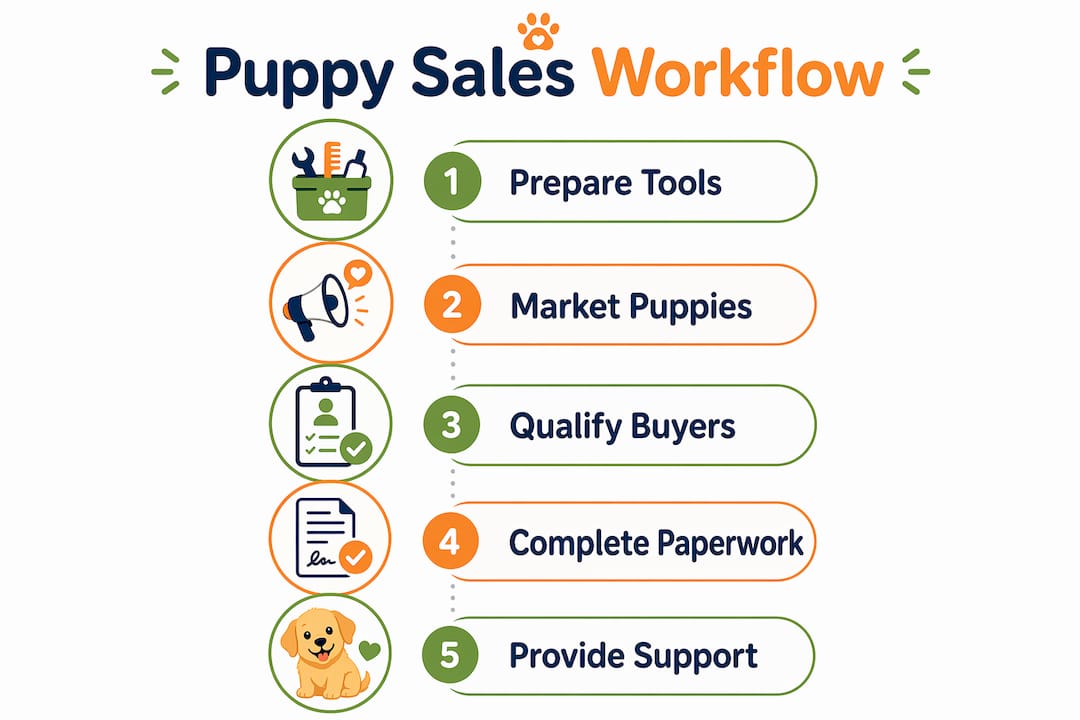
Waitlist management. A clean intake pipeline using standardized buyer scoring and tagging inside BreederBuddy or a comparable tool prevents the chaos of managing 40 inquiries in your email inbox. Tag buyers by breed preference, timeline, and household type. Score them by application quality. When a litter arrives, you match puppies to buyers in minutes instead of days.
Automated milestone communication. Automating emails tied to milestones like pregnancy confirmation, birth announcements, and selection day keeps buyers engaged without requiring you to write individual messages for every update. The key is personalizing the template with the buyer’s name, their reserved puppy’s details, and specific next steps. Generic blasts erode trust. Personalized automation builds it.
Migrating buyers from marketplace to direct. Hybrid models require careful migration of serious buyers from marketplace listings to your direct communication channels. Once a buyer submits an application, move them to your email list and buyer portal. This protects your relationship from platform policy changes and keeps your pricing narrative consistent.
Pro Tip: Set up three automated email sequences before your next litter: one triggered by application submission, one by pregnancy confirmation, and one by birth. Each sequence should contain two to three emails spaced three to five days apart. This alone eliminates most of the “any updates?” messages that consume breeder time.
What is the step-by-step adoption and paperwork process?
The adoption phase is where most informal sellers lose control of the sale. A structured process protects both you and the buyer. Follow these steps in order.
-
Verify buyer profile. Review the completed application against your scoring criteria. Confirm references if your policy requires it. Document your decision so you have a record if a placement is ever questioned.
-
Issue the purchase contract. Digital contracts must include purchase price, health guarantees, return policies, and spay/neuter agreements where applicable. Use an e-signature tool so both parties have a timestamped, legally binding copy. The contract is also an operational trigger. Once signed, it activates your internal checklist for preparing the puppy’s documentation packet.
-
Collect the deposit. Send a payment link immediately after the contract is signed. Non-refundable deposits lock in the placement and filter out uncommitted buyers. Confirm receipt in writing and state the final payment deadline clearly.
-
Prepare the health and documentation packet. This packet should include vaccination records, deworming history, microchip registration details, and the signed health certificate from your vet. A digital buyer portal that consolidates all of these documents in one shareable link reduces pickup-day confusion significantly.
-
Collect final payment and confirm pickup. Final payment is due before the puppy leaves your care. Confirm the pickup date, time, and location in writing. Send the buyer a preparation checklist covering what to bring, what to expect, and what the puppy’s current routine looks like.
| Adoption stage | Key action | Output |
|---|---|---|
| Profile verification | Review application and score buyer | Approved or waitlisted status |
| Contract signing | Issue and e-sign purchase agreement | Binding contract with operational checklist |
| Deposit collection | Send payment link post-signature | Confirmed placement, payment record |
| Documentation prep | Compile health records and microchip info | Buyer portal or physical packet |
| Final payment and pickup | Collect balance, confirm logistics | Completed sale with full paper trail |
How can post-sale support reduce returns and build referrals?
Treating the puppy sale as an onboarding experience rather than a transaction is the single most effective change a small breeder can make to reduce returns and generate referrals. The first 90 days after pickup are when buyers are most anxious and most likely to make decisions that lead to returns.
A structured check-in schedule removes that anxiety before it becomes a problem. Contact buyers at 24 hours, 7 days, 14 days, 30 days, and 90 days post-pickup. Each touchpoint has a specific purpose. The 24-hour check-in confirms safe arrival and addresses immediate questions. The 7-day check-in covers feeding, sleep, and early training observations. The 14-day check-in addresses any behavioral concerns before they escalate. The 30-day check-in confirms the first vet visit and vaccination schedule. The 90-day check-in closes the formal support window and opens the door to referrals.
What you include in each message matters as much as the timing. Share puppy training resources at the 7-day mark when buyers are starting to work on basic commands. Send a nutrition guide for puppies at the 14-day mark when feeding questions peak. Vet visit reminders at 30 days show buyers you are invested in the puppy’s long-term health, not just the sale.
Pro Tip: Create a shared digital folder or portal link for each buyer that contains their contract, health records, feeding schedule, and your check-in message archive. Buyers who can access everything in one place contact you with fewer panicked questions and leave better reviews.
Scheduled check-ins at key intervals also give you early warning on placements that are struggling. A buyer who mentions the puppy is not eating at the 7-day check-in is someone you can coach before the situation becomes a return request. Early intervention is far less costly than a returned puppy.
Key takeaways
A structured selling puppies workflow covering tools, marketing, contracts, and post-sale check-ins produces fewer returns, stronger buyer relationships, and more referrals than any single tactic alone.
| Point | Details |
|---|---|
| Set up tools before listing | Have your platform memberships, intake forms, and contract templates ready before taking inquiries. |
| Use a hybrid marketing model | Combine marketplace listings with direct communication channels to maximize reach and retain pricing control. |
| Treat contracts as operational triggers | A signed contract should activate your documentation checklist, not just sit in a folder. |
| Schedule post-sale check-ins | Contact buyers at 24 hours, 7 days, 14 days, 30 days, and 90 days to reduce returns and build loyalty. |
| Automate milestone communications | Personalized automated emails tied to pregnancy and birth milestones keep buyers engaged without adding to your workload. |
Why most breeders overcomplicate this and what actually works
I have reviewed dozens of breeder setups over the years, and the pattern is consistent. Sellers who struggle are not missing information. They are missing structure. They know they should follow up with buyers. They know they should have a contract. They just do not have a system that makes those things happen automatically.
The breeders who run the smoothest operations are not necessarily the most experienced. They are the ones who built a repeatable process and stuck to it. They use BreederBuddy or a comparable tool not because it is fancy software, but because it removes the decision fatigue of managing 30 buyer conversations simultaneously. They send the same onboarding email sequence to every buyer not because it is impersonal, but because consistency is what builds trust at scale.
The transparency piece is underrated. Buyers who receive a clear contract, a documented health record, and a scheduled check-in at 24 hours post-pickup almost never become problem cases. The ones who return puppies or leave negative reviews are almost always buyers who felt uninformed at some point in the process. Clear communication is not just good customer service. It is your best defense against disputes.
My honest advice: start with the paperwork. Get your contract, your deposit policy, and your health documentation template in order before you worry about marketing. A buyer who finds you through a great Instagram post but hits a wall of disorganization at the contract stage will not complete the sale. Build the back end first, then drive traffic to it.
— Taylor
How Greenfieldpups helps you manage your puppy sales process
Greenfieldpups gives individual breeders and casual sellers the tools and visibility to run a professional puppy sales process without the overhead of a large operation. Whether you are listing your first litter or refining an existing workflow, the platform connects you with serious buyers across the United States through targeted breed searches and featured ad placements.
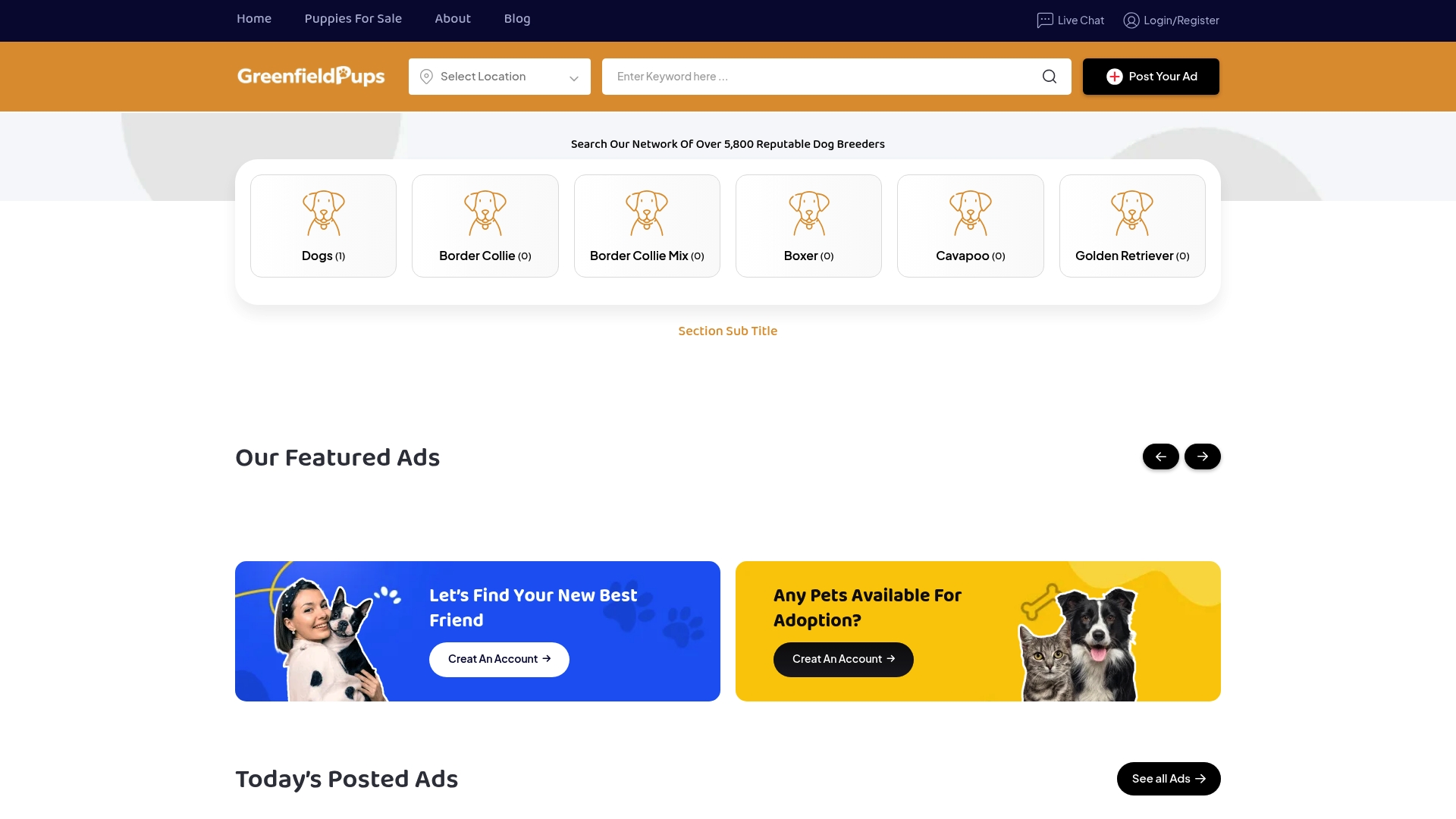
The breeder listing guide on Greenfieldpups walks you through optimizing your ads for maximum exposure on top marketplaces, so your listings reach buyers who are actively searching for your breed. You will also find responsible seller tips covering digital marketing strategies, buyer communication best practices, and documentation guidance tailored for individual sellers. Start your listing on Greenfieldpups and put a structured, trustworthy sales process behind every puppy you place.
FAQ
What does a selling puppies workflow include?
A selling puppies workflow covers every step from listing and marketing through buyer qualification, contract signing, payment collection, documentation, and post-sale support. The goal is a repeatable process that produces consistent, trustworthy outcomes for every litter.
How much does it cost to list puppies on a marketplace?
Platforms like Puppies.com charge approximately $199.99 per year for up to 40 listings, making them cost-effective for small breeders. Costs vary by platform and listing tier.
Should deposits be refundable when selling puppies?
Non-refundable deposits are the standard practice among established breeders, as shown by operations like LoneStar Farms and Prancing Pony Farm. They confirm buyer commitment and protect the seller if a buyer withdraws after a puppy is reserved.
How do I reduce puppy returns after a sale?
Structured post-sale check-ins at 24 hours, 7 days, 14 days, 30 days, and 90 days post-pickup give buyers coaching and resources at the moments they need them most, which significantly reduces returns.
What should a puppy sales contract include?
A puppy sales contract should cover the purchase price, health guarantees, return policy, spay or neuter requirements, and microchip details. Use an e-signature tool so both parties hold a timestamped, legally binding copy.
Leave a Comment