

Dog Breeder Listing Guide: Get Noticed on Top Marketplaces
You post your litter online, wait a week, and get two inquiries — both from people who ghost you. Meanwhile, another breeder in your state sells out every litter within days. The difference usually isn’t the dogs. It’s the listing. Knowing which platforms to use, what documents to upload, and how to structure your ad can mean the difference between a full waiting list and an empty inbox. This guide walks you through the top U.S. pet marketplaces, what you need before you list, how to create listings that convert, and the mistakes that quietly cost breeders credibility and sales every single day.
Table of Contents
- Understanding the pet marketplace landscape
- What you need before listing your dogs
- Step-by-step: Listing your dogs on major pet marketplaces
- Mistakes to avoid and how to stand out
- Insider perspective: What most dog breeder guides miss
- Ready to list? Find more resources and buyers
- Frequently asked questions
Key Takeaways
| Point | Details |
|---|---|
| Choose trusted platforms | AKC Marketplace, GoodDog, PuppySpot, and DiggityDOG are top choices for breeder reputation and buyer trust. |
| Prepare thorough documentation | Health records, breed registration, and transparent profiles make your listings stand out and reduce rejection risk. |
| Follow platform rules closely | Each marketplace has unique requirements—missing steps or documents leads to fewer views and lost inquiries. |
| Update and engage regularly | Frequent listing updates and quick responses keep your listing at the top and signal professional credibility. |
Understanding the pet marketplace landscape
Before you write a single word of your listing, you need to know where you’re listing and why that choice matters. The U.S. pet marketplace space has grown dramatically, and not all platforms deliver the same kind of buyer. Some attract serious, research-driven families. Others pull in impulse shoppers who will negotiate price before asking a single health question.
The top U.S. pet marketplaces for dog breeders include AKC Marketplace, GoodDog, PuppySpot, and DiggityDOG, each with specific listing requirements emphasizing health testing and ethical standards. These are not casual classified sites. They screen breeders, require documentation, and actively promote listings that meet their ethical benchmarks.
Here’s a quick comparison of the major platforms:
| Platform | Buyer type | Listing control | Key requirement |
|---|---|---|---|
| AKC Marketplace | Breed-focused, informed | High | AKC registration, H.E.A.R.T program |
| GoodDog | Health-conscious families | High | Genetic panels, ethical frequency |
| PuppySpot | Convenience-driven buyers | Low (broker model) | 100+ point screening, vet verification |
| DiggityDOG | Ethics-first adopters | Medium | Structural health testing, independent review |
Beyond these four, you have three broader channel options to consider:
- Third-party marketplaces (AKC, GoodDog, DiggityDOG): Built-in audience, credibility signals, but platform rules apply
- Custom breeder websites: Full branding and SEO control versus marketplaces’ built-in audience but mixed buyer quality; social media is free but carries low credibility
- Social media: Zero cost, wide reach, but almost no trust infrastructure and difficult to filter serious buyers from tire-kickers
Pro Tip: Don’t put all your eggs in one basket. The most successful breeders use a combination of one or two verified marketplaces plus a simple custom site that reinforces their brand. Browse the marketplace listings on Greenfield Pups to see how other breeders in your region structure their presence.
The platform you choose signals something to buyers before they even read your listing. A presence on AKC Marketplace tells a buyer you’ve cleared a meaningful bar. A listing only on Facebook tells them… not much. That trust gap is real, and it directly affects the quality of inquiries you receive. You can also explore the online store option and the deep-dive blog for additional guidance on building your online presence as a breeder.
What you need before listing your dogs
Once you know your platform options, it’s time to gather and organize everything you’ll need to list with confidence. Showing up to the listing process unprepared is one of the most common reasons breeders get rejected or receive poor-quality inquiries.
AKC Marketplace requires breeders to be part of the Breeder of Merit or Bred with H.E.A.R.T programs, focusing on health testing, socialization, and 100% AKC registration using the Breeder Toolkit. That means your paperwork pipeline needs to be set up before your litter arrives, not after.
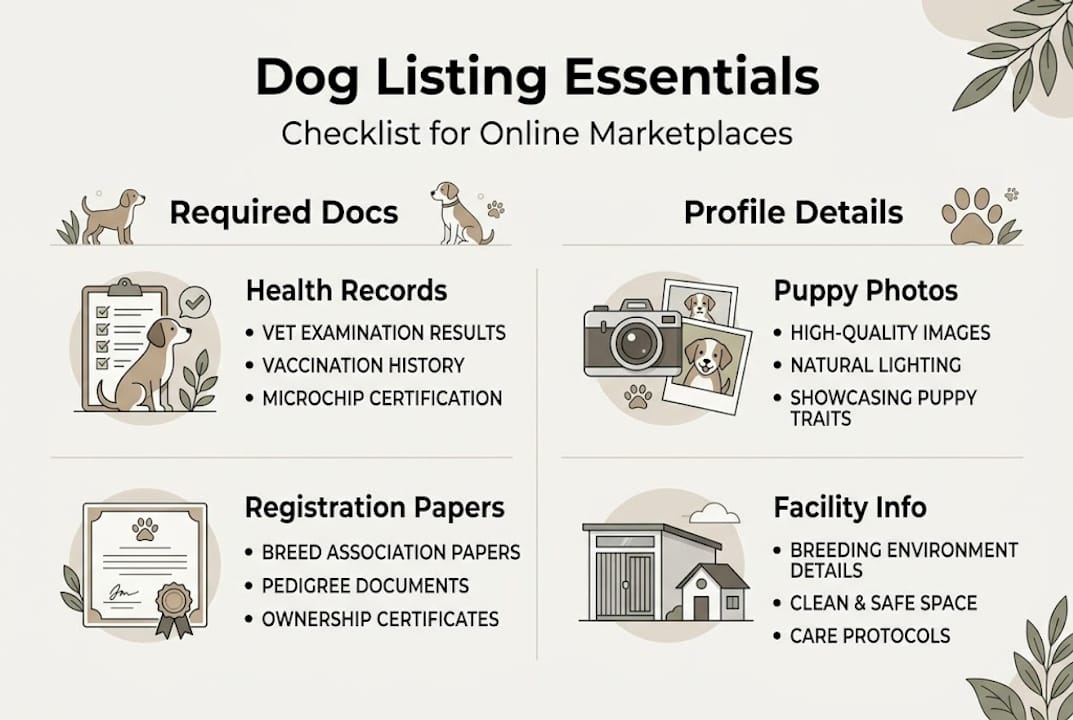
GoodDog verifies breeders through health testing, ethical frequency, puppy socialization, and transparency. Listings with genetic panel uploads receive significantly more inquiries, which is a pattern every serious breeder should pay attention to.
Documents and materials you need to prepare:
- Government-issued ID confirming your identity and business address
- Breed registration certificates for both the sire and dam, issued by AKC or the relevant breed club
- Health testing results specific to your breed, such as OFA hip and elbow evaluations, CAER eye exams, or cardiac clearances
- Genetic panel results from a certified lab like Embark or Wisdom Panel, covering breed-relevant conditions
- Vaccination and deworming records for each puppy in the litter, signed by a licensed veterinarian
- Proof of clean, appropriate housing including photos or inspection reports if required by the platform
- Breeder program enrollment documentation such as AKC H.E.A.R.T or Bred with Merit certificates
Statistic callout: Listings that include complete documentation and professional photos generate 3.7 times more inquiries than incomplete listings. That single number should motivate you to treat your listing prep as seriously as your breeding program itself.
Photos deserve their own focus. Clear, well-lit images of each puppy individually, plus shots of your facility, the dam with her litter, and any health testing equipment or certificates you can show, all build visual trust. Blurry smartphone photos taken in poor lighting actively hurt your credibility. If photography isn’t your strength, it’s worth spending an afternoon with good natural light and a clean background.

For a detailed breakdown of what responsible breeders include in their profiles, check out these responsible dog breeder tips and the reputable breeder checklist that buyers themselves use when evaluating listings.
Step-by-step: Listing your dogs on major pet marketplaces
With your credentials and documents ready, you’re set to start the listing process. But each platform takes its own approach, and skipping steps on any of them can delay or kill your listing entirely.
AKC Marketplace
- Enroll in the Bred with H.E.A.R.T program or achieve Breeder of Merit status through AKC. This requires documented health testing, continuing education, and a commitment to AKC registration.
- Register your litter using the AKC Breeder Toolkit, which allows you to prepay registrations and streamline the process for buyers.
- Upload health testing documentation for both parents directly to your breeder profile.
- Create individual puppy listings with photos, available dates, and pricing.
- Respond to buyer inquiries through the AKC messaging system within 24 hours to maintain listing visibility.
GoodDog
- Apply through GoodDog’s breeder verification process, which includes a review of your health testing practices, breeding frequency, and socialization methods.
- Upload genetic panel results for both parents. This step significantly boosts your listing’s performance in their algorithm.
- Complete your breeder profile with a detailed description of your program, your goals, and your puppy placement process.
- List available puppies with expected dates, deposit requirements, and any breed-specific health guarantees.
PuppySpot
PuppySpot operates differently from the others. You don’t create a listing directly. Instead, you apply to become a partner breeder. PuppySpot uses a 100-point screening process including annual reviews, vet verification, and health commitments. Breeders do not list directly but partner for curated placements. This means less control over your listing but access to a large, purchase-ready buyer pool. If you value volume and logistics support over branding control, PuppySpot is worth considering.
DiggityDOG
- Apply for membership and submit documentation of structural health testing and ethical breeding practices.
- DiggityDOG requires documented structural health testing, ethical practices, and independent listing reviews before approval.
- Once approved, create your listing with full health documentation visible to buyers.
- Participate in their community standards to maintain active listing status.
Pro Tip: Never skip the veterinarian confirmation stage on any platform. A vet-signed health certificate is not just a formality. It’s one of the most powerful trust signals a buyer sees, and platforms use it to rank and feature listings more prominently.
For a clear explanation of what licensing means in practice, the licensed breeder explanation on Greenfield Pups breaks it down in plain terms.
“The platforms that attract the most responsible buyers are the ones that make it hardest to list. That friction is a feature, not a bug.”
Mistakes to avoid and how to stand out
Even with your listings live, the difference between passing and thriving is in the details and the discipline. Many breeders do the hard work of getting approved and then quietly undermine their own listings through avoidable errors.
Common mistakes that cost breeders credibility:
- Incomplete health files: Missing one OFA result or a lapsed vaccination record can trigger platform flags or buyer skepticism
- Outdated listing information: A puppy listed as “available” that was placed three weeks ago destroys trust instantly
- Poor photo quality: Blurry, dark, or cluttered photos signal carelessness, even if your breeding program is excellent
- Overbreeding red flags: Platforms actively reject overbreeding patterns, require USDA and state licensing for commercial sellers, and flag stale listings or mismatched photos as trust issues
- Ignoring USDA licensing: If you sell across state lines or above certain volume thresholds, federal licensing is not optional. Operating without it can result in platform removal and legal exposure
“Mismatched photos and documents are one of the fastest ways to lose a serious buyer. If your listing shows a golden retriever puppy but your health records are for a different litter, buyers notice — and they walk away without telling you why.”
What separates standout listings from average ones:
- Update your listing every 7 to 10 days, even if nothing has changed. Fresh activity signals to both platforms and buyers that you’re engaged and responsive.
- Show your health data transparently. Don’t make buyers ask for OFA scores. Post them in the listing itself.
- Respond to every inquiry within 12 hours. Platforms like GoodDog track response rates and use them in ranking algorithms.
- Include a brief, honest description of your breeding philosophy. Buyers who connect with your values become your best referrals.
- Use your veterinarian guidance to create a health summary document you can share with every serious inquiry.
Pro Tip: Write your listing description from the buyer’s perspective. Instead of “Dam has OFA Good hips,” try “Both parents have been cleared for hip dysplasia through OFA, so your puppy starts life with the best genetic foundation we can give them.” Same information, far more compelling.
Insider perspective: What most dog breeder guides miss
Most guides on breeder listings focus entirely on the setup phase. Get your documents, pick a platform, post your photos, done. But the breeders who consistently attract serious, qualified buyers understand that a listing is a living thing. It needs ongoing attention, updates, and refinement.
The credibility signal that matters most isn’t your initial documentation upload. It’s the pattern of behavior buyers can observe over time: consistent health testing, updated photos with each litter, prompt responses, and transparent communication. Verified platforms like AKC and GoodDog reward this behavior with better placement. Comprehensive media and documentation can boost inquiries by 3.7 times, but only if that content stays current.
There’s also a real tension between broker platforms and direct listings that most guides gloss over. Broker platforms like PuppySpot offer speed and logistics but less direct breeder control. Direct directories emphasize ethics and health over volume. Neither is wrong, but choosing based only on convenience often leaves breeders feeling disconnected from their buyers and unable to build the kind of reputation that generates referrals.
The breeders who thrive long-term treat their online presence as a brand, not a classified ad. A custom site paired with one or two verified marketplaces gives you traffic and credibility without sacrificing control. Explore website alternatives insights to understand how breeders are balancing these channels in 2026.
Ready to list? Find more resources and buyers
Building a strong listing takes preparation, but you don’t have to figure it out alone.
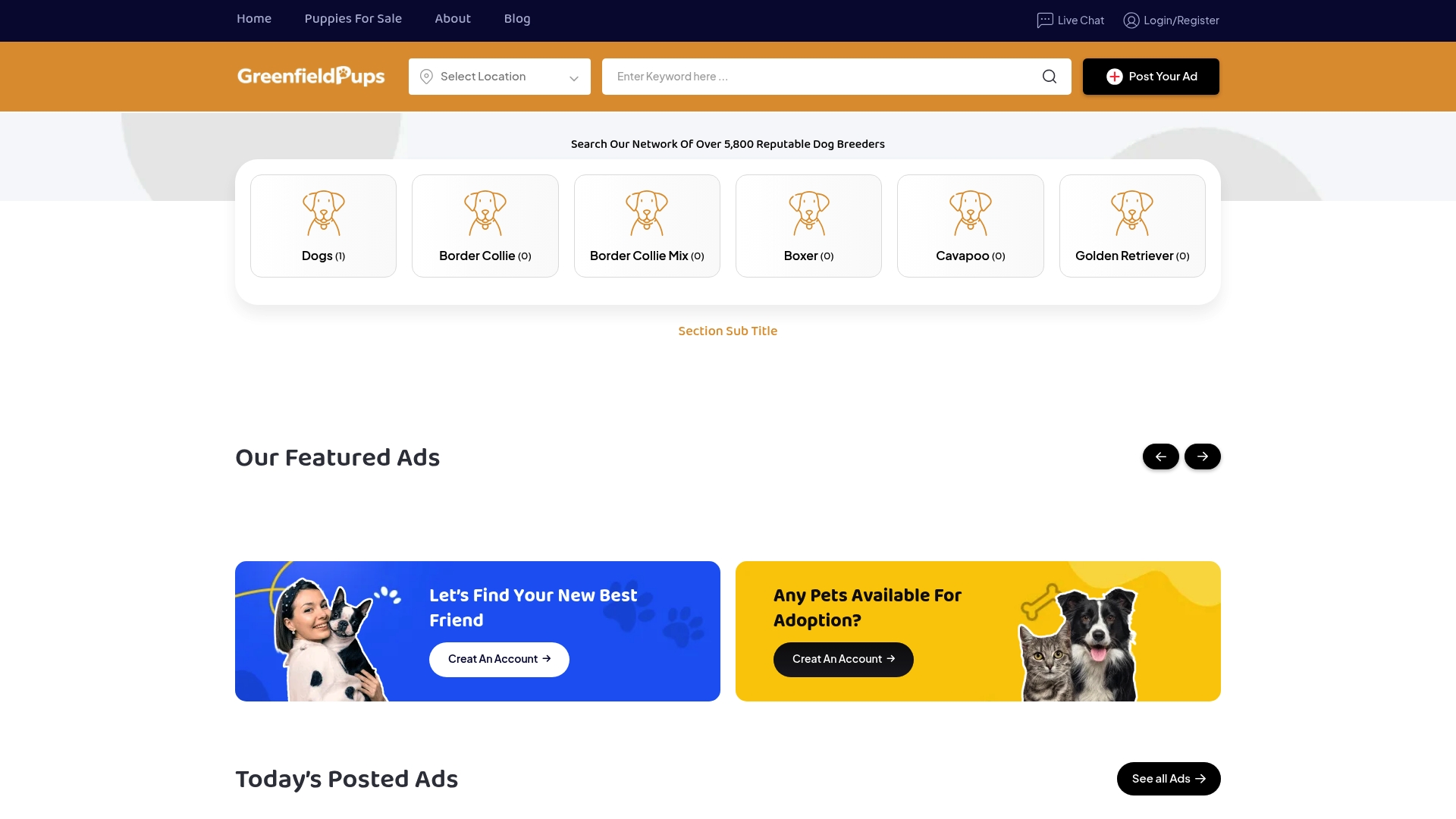
Greenfield Pups connects breeders with buyers across the United States through a straightforward, affordable platform designed for both new and experienced breeders. Whether you’re ready to start your listing today or still refining your approach, you’ll find practical support at every step. Browse our listing tips to strengthen your current ads, or follow the step-by-step guide to build a listing strategy that attracts the right buyers from day one. Your next great match is closer than you think.
Frequently asked questions
Which dog breeder marketplaces are most trusted by buyers?
AKC Marketplace, GoodDog, PuppySpot, and DiggityDOG are widely regarded for their ethical standards and health requirements, making them the go-to platforms for buyers who prioritize responsible sourcing.
What documents are required to list dogs on AKC Marketplace or GoodDog?
AKC Marketplace requires enrollment in Breeder of Merit or Bred with H.E.A.R.T programs, health testing records, and 100% AKC registration, while GoodDog verifies breeders through health testing, ethical breeding frequency, and genetic panel uploads.
What causes a breeder listing to be rejected or flagged?
Platforms reject listings for overbreeding, missing USDA or state licensing, stale content, or mismatched photos and health documentation. Keeping everything current and consistent is the most reliable way to stay in good standing.
Is it better to have my own website or just use marketplaces?
Marketplaces give you immediate access to a large, purchase-ready audience, but custom websites offer full branding and SEO control that marketplaces cannot match. The strongest strategy combines both channels rather than choosing one exclusively.
Leave a Comment