


How to create a pet ad that attracts buyers and good homes
Posting a dog ad and getting zero serious responses is one of the most frustrating experiences for pet owners and breeders alike. You put time into writing the listing, upload a photo, and then wait, only to hear from scammers or people who clearly did not read a word you wrote. The problem is rarely the dog. It is almost always the ad itself. This guide walks you through every stage of creating a dog listing that connects your pet with the right home, whether you are a breeder selling puppies, a rescue coordinator, or an owner rehoming a beloved family dog.
Table of Contents
- What you need before writing a pet ad
- Structuring your pet ad: Hook, story, and details
- Showcasing your pet: Visual best practices
- Responsible communication: Handling inquiries and documentation
- Why balanced pet ads lead to better outcomes
- Take your pet ad further: Trusted resources for dog sales and adoptions
- Frequently asked questions
Key Takeaways
| Point | Details |
|---|---|
| Lead with personality | Start your ad with a compelling description that showcases the dog’s temperament and charm. |
| Use clear photos | Show your pet in calm, open environments to increase appeal and visibility. |
| Be honest yet positive | Frame challenges accurately but highlight the pet’s potential for success in the right home. |
| Provide documentation | Breeders should offer papers, health records, feeding guides, and guarantees for buyer confidence. |
| Screen and communicate | Always respond politely and screen applicants to ensure the best match for your pet. |
What you need before writing a pet ad
Before writing an ad, it is essential to gather all necessary information and set clear goals. Rushing into ad creation without preparation is the number one reason listings fall flat. Think of it like building a house without a blueprint. The structure might look fine from a distance, but it will not hold up to scrutiny.
Start by collecting every basic fact about your dog. Buyers and adopters need specific information to determine whether this pet fits their life. Here is a checklist of what to gather:
- Age (exact or approximate)
- Breed (purebred or mix, with your best guess)
- Sex and spay or neuter status
- Weight and approximate adult size if still growing
- Vaccination and health records
- Microchip information if applicable
- Known allergies or medical conditions
- Behavioral traits: energy level, socialization, training history
- Compatibility: good with kids, other dogs, cats
For breeders, documentation goes even further. You will need registration papers, a feeding schedule, genetic test results, and your health guarantee or return policy ready to share before anyone even asks.
| Information type | Owner rehoming | Breeder selling |
|---|---|---|
| Age and sex | Required | Required |
| Spay or neuter status | Required | Required |
| Vaccine records | Strongly recommended | Required |
| Pedigree or registration | Optional | Required |
| Genetic health testing | Rarely available | Recommended |
| Health guarantee | Not typical | Expected |
| Feeding instructions | Helpful | Required |
If you are rehoming your pet, you also need to be honest with yourself about why. Potential adopters will ask, and a vague or defensive answer raises red flags. The Nevada Humane Society recommends being honest and compassionate about the reason for rehoming while softening any restrictions in the listing to focus on fit rather than blanket prohibitions. For example, instead of writing “No kids,” consider phrasing it as “Best suited for a calm, adult-only home.” This reframe invites the right people in rather than sounding like a warning sign.
Pro Tip: Write down your dog’s three most charming quirks before you start the ad. These small, specific details, like the way she always brings you a shoe when you get home, are the exact details that make strangers fall in love with a pet through a screen.
For deeper guidance on the rehoming process, our dog rehoming guide walks through the emotional and logistical steps involved in finding your pet a new home responsibly.
Structuring your pet ad: Hook, story, and details
Once materials are ready, the next step is structuring your ad to capture attention and communicate the right details. Most ads start with something like “3-year-old male Lab mix, neutered, up to date on shots.” That is not an ad. That is a receipt. It tells you what the dog is, but not who the dog is.
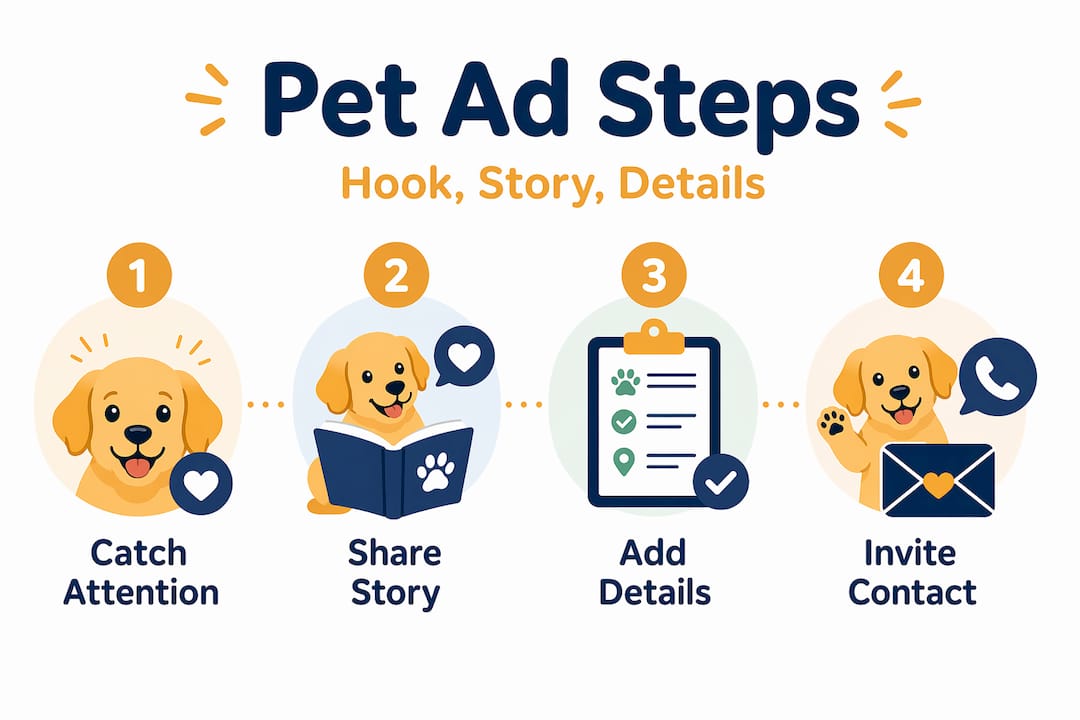
The best-performing dog listings lead with personality, not stats. Best Friends Animal Society’s guidance on pet profiles is clear: start with a show-stopping first sentence that hooks the reader, avoid leading with age, rank, and serial number, include positive framing for challenges, and end with a strong call to action. This structure works because it mirrors the way we talk about pets in real life. Nobody introduces their dog by saying, “This is a six-year-old, 45-pound, spayed female.” They say, “This is Bella, she will absolutely steal your sandwich and look completely innocent about it.”
Here is a numbered breakdown of the ideal ad structure:
- Hook sentence. Open with the dog’s biggest personality trait or a vivid image. (“Remy has never met a stranger he did not immediately befriend.”)
- Short story. Two to four sentences about the dog’s life, quirks, and habits. Make it real and specific.
- Positive framing of challenges. If the dog needs slow introductions to other dogs or is better with older children, say so warmly. (“Maggie is selective about her dog friends and does best as an only pet or with a calm, confident companion.”)
- Practical details. Age, breed, weight, spay or neuter status, vaccine status, and compatibility notes.
- Call to action. End with something inviting. (“Message us with any questions, we love talking about this dog.”)
“Lead with the dog’s personality, not just age, breed, and sex. A great first sentence hooks readers before they even get to the facts.” — Best Friends Animal Society pet profile guidance
| Ad element | Weak version | Strong version |
|---|---|---|
| Opening line | “5-year-old female, spayed” | “Daisy greets every morning like it is the best day of her life” |
| Story | “She is sweet and loves attention” | “She curls up at your feet while you watch TV and sighs dramatically when dinner is late” |
| Challenge framing | “No small children” | “Thrives in a calm home with kids over 10 who respect her space” |
| Call to action | “Contact us if interested” | “We would love to answer your questions and find her the perfect fit” |
Pro Tip: Read your ad out loud before posting. If it sounds like a police report, rewrite it. If it sounds like you are describing a friend, you are on the right track.
For more detailed guidance on ad structure, visit our dog advertising tips page. You can also explore our adoption workflow guide if you are navigating the full placement process from start to finish.
Showcasing your pet: Visual best practices
With your ad text structured, visuals now play a critical role in grabbing attention and inspiring positive responses. In a feed full of listings, a great photo is the difference between a scroll-past and a click.
Here are the key principles for capturing compelling pet photos and videos:
- Shoot in natural light. Outdoors in open shade or near a bright window works best. Flash makes eyes glow and washes out details.
- Get down to their level. A photo taken from above makes dogs look smaller and less engaging. Crouch down and shoot eye-level.
- Use a calm, open setting. Avoid cluttered backgrounds, stressful environments, and anything that distracts from the dog.
- Show their face clearly. Expressions communicate personality. A relaxed, happy face tells a story in a split second.
- Highlight unique features. If your dog has unusual markings, a distinct coat color, or an endearing physical trait, capture it.
- Shoot video. A short clip of the dog playing, cuddling, or interacting with family members shows behavior that a photo cannot.
The ASPCA’s guidance on pet presentation is direct: show the pet clearly and avoid hiding them behind bars or in confined spaces. This matters because potential adopters and buyers form an emotional connection through visuals. A dog photographed through a crate door or in a dim shelter run is at a serious disadvantage, regardless of how wonderful that dog actually is.
For breeders, both puppies and adult dogs should be photographed in clean, bright spaces with enough room to show their body structure and expression. Group photos of a litter are charming and show socialization, but individual shots are what buyers use to pick a specific puppy.
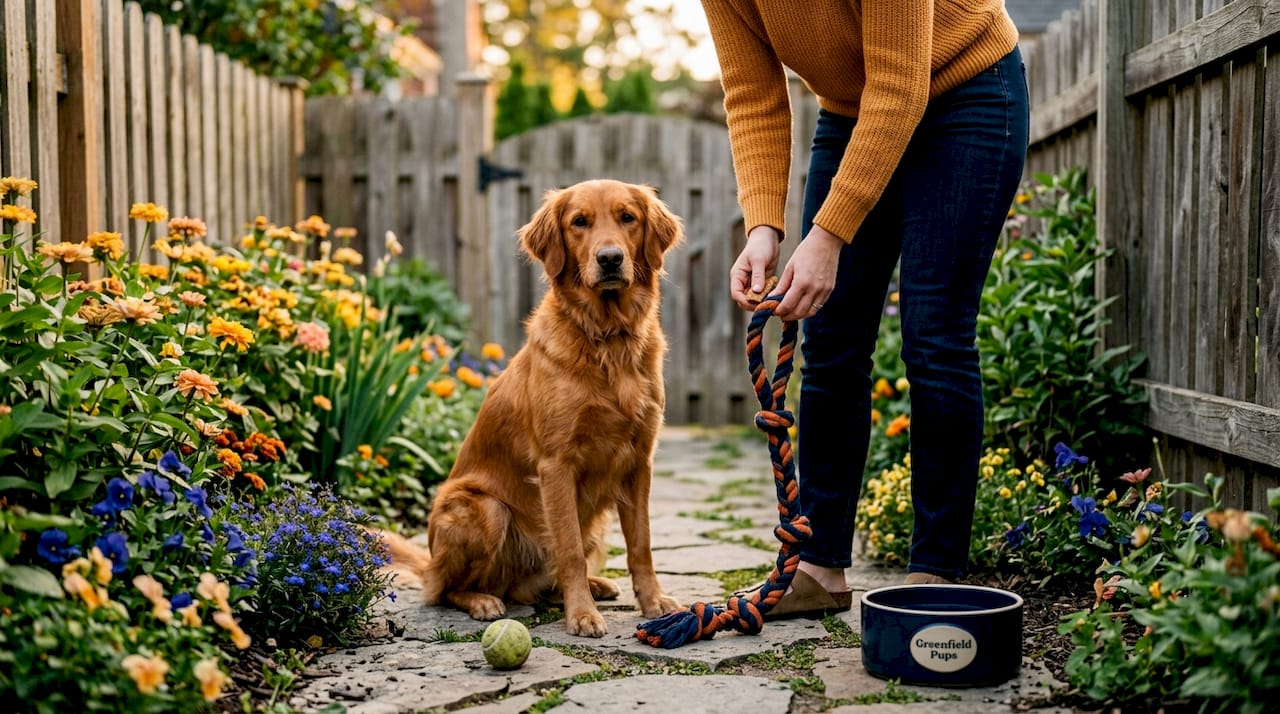
Pro Tip: Take at least 20 photos and 2 short videos before choosing your final images. People spend more time viewing photos than reading text, so invest the time upfront. Use the sharpest, most expressive images you have. Delete anything blurry, poorly lit, or unflattering.
To see examples of what works in dog listings, check out our boost pet sales tips resource for visual and written strategies that drive results.
Responsible communication: Handling inquiries and documentation
Once your ad generates interest, handling contact and documentation ensures safe and successful placement or sale. This stage is where many otherwise good ads fall apart. Slow responses, vague answers, and missing paperwork send serious buyers and adopters elsewhere fast.
Here is how to handle the inquiry process professionally:
- Respond within 24 hours to every message, even if only to acknowledge receipt and set expectations for a follow-up.
- Ask screening questions early. Find out about the household, lifestyle, prior pet ownership, and what they are looking for in a dog.
- Share documentation proactively. Do not wait to be asked. Providing vaccine records and health information upfront signals you are organized and trustworthy.
- Schedule a meet-and-greet before finalizing anything, whether in person or via video call.
- Confirm the transition plan. Both parties should agree on timing, transport, and what items will transfer with the dog.
For breeders specifically, the AKC has laid out clear expectations. Responsible breeders should willingly give contact information, encourage questions from buyers, and ensure they are placing puppies in good-fit homes. Buyers, in turn, should look for breeders who provide complete documentation and engage openly throughout the process.
The documents you should have ready for every sale or placement include:
- Vaccine and health records
- Registration or pedigree paperwork
- Feeding schedule and food brand currently used
- Behavior notes and training history
- Health guarantee and return policy (for breeders)
- Genetic test results, if performed
According to AKC’s responsible breeding guide, breeders who register their litters take on the responsibility of providing all of these materials to new owners. This is not optional if you want to build a reputation and avoid future disputes.
| Document | Purpose | Who needs it |
|---|---|---|
| Vaccine records | Proves current health protection | All buyers and adopters |
| Registration papers | Confirms purebred lineage | Buyers of registered breeds |
| Health guarantee | Protects both parties | Breeder sales |
| Genetic test results | Shows inherited health risks | Serious buyers of health-tested lines |
| Feeding instructions | Ensures smooth dietary transition | All new owners |
For a closer look at how screening leads to better matches for both dogs and families, read our resource on screening adopters.
Why balanced pet ads lead to better outcomes
There is a tendency in the pet listing world to split into two camps. One camp focuses entirely on emotional storytelling, crafting beautiful narratives about a dog’s personality without mentioning health records, compatibility concerns, or screening requirements. The other camp goes full operational mode, listing every fact and document without a single sentence that makes you feel anything.
Both approaches fail. Not dramatically, but consistently. The emotional-only ad attracts people who fall in love with the story but are not the right fit. The data-only ad repels exactly the kind of compassionate, engaged owner you want to attract.
We have seen this play out across thousands of listings. The ads that generate the best outcomes, meaning fewer failed placements, more satisfied adopters, and stronger reputations for breeders, combine both approaches without compromise. They lead with personality and then back it up with paperwork, screening, and honest communication.
Special needs dogs are the clearest example of why this balance matters. An ad that only lists limitations (“not good with cats, needs medication twice daily, can’t be left alone”) makes the dog sound like a burden. An ad that opens with the dog’s resilience and joy, then honestly explains the care requirements in a supportive tone, attracts the right person who wants exactly that dog.
Responsiveness matters just as much as the ad itself. A beautifully written listing that goes unanswered for three days loses the serious buyer to someone else. Transparency about the dog’s quirks, paired with prompt and warm communication, is the combination that closes placements successfully. Our rehoming guidance digs deeper into this balance for owners navigating difficult transitions.
Take your pet ad further: Trusted resources for dog sales and adoptions
Creating a great ad is just the beginning of the process. To maximize your results and ensure responsible pet placements, consider these next steps and resources.
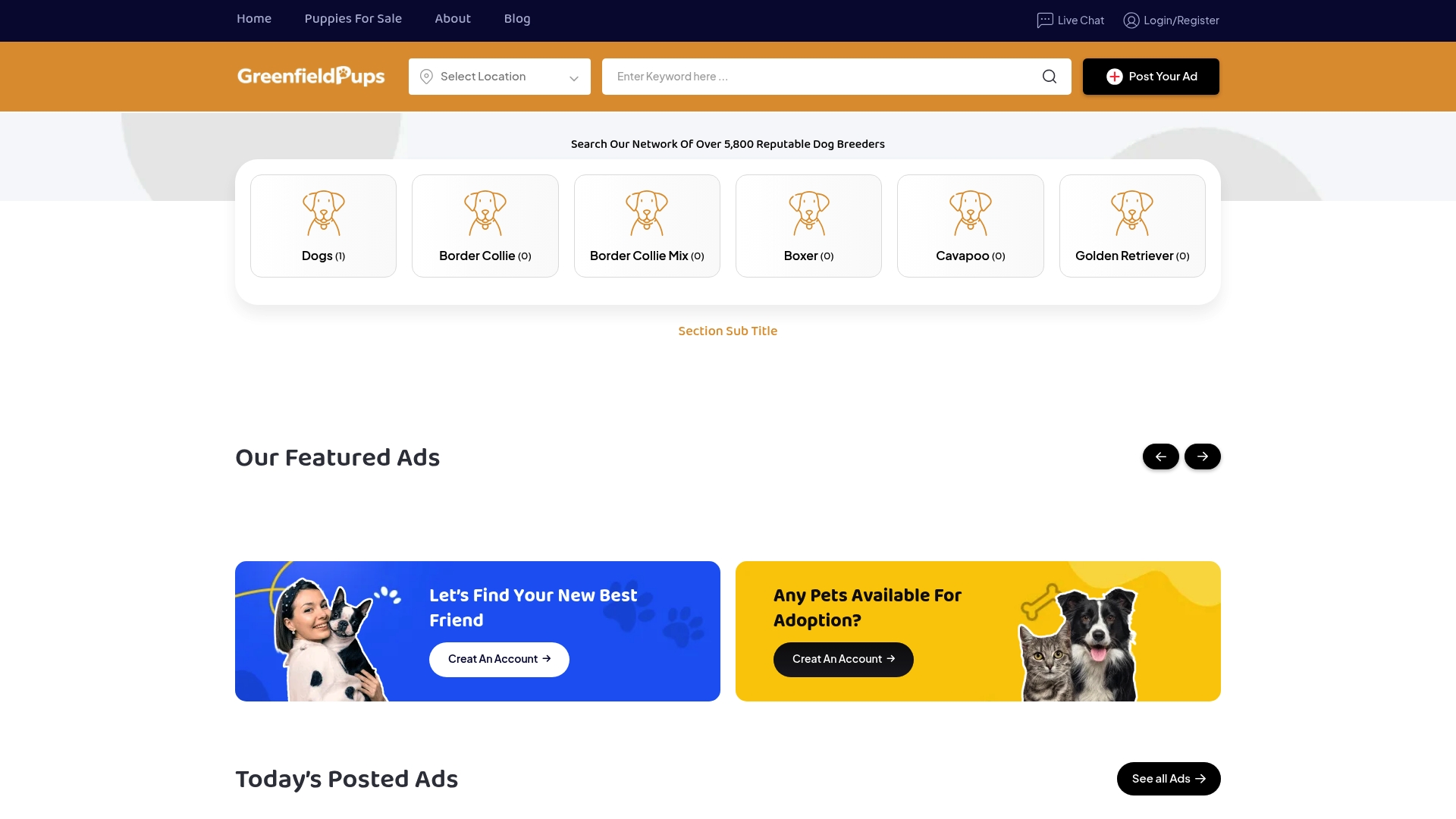
At Greenfield Pups, we connect breeders, owners, and adopters across the United States through a marketplace designed to make the process clear, ethical, and effective. Whether you are a breeder building a reputation or a pet owner finding your dog a new home, we offer tools to help your listing reach the right audience. Our breeder ethics guide covers the responsibilities that come with selling dogs professionally. If you are on the adopter side, our pet adoption benefits resource explains what to expect through the adoption process. And if you want your listing to stand out, explore how featured pet ads can dramatically increase your visibility and attract serious, qualified inquiries faster.
Frequently asked questions
What details should I include in a pet ad to attract serious adopters or buyers?
Highlight the pet’s personality first, share a brief and specific story, then add practical details like age, breed, and compatibility notes. End with a warm call to action that invites questions rather than filtering people out.
How should I handle special needs or challenges in my pet ad?
Frame challenges in terms of the right home rather than blanket exclusions. For example, the Nevada Humane Society advises replacing “No kids” with something like “Best suited for a calm, adult-only home,” which communicates the same need while staying inviting.
What photos work best in pet ads for dogs?
Show the dog clearly in open, calm settings using natural light and eye-level angles. The ASPCA recommends avoiding photos behind bars, and including images that highlight the dog’s personality and unique physical traits.
What documents should breeders provide when selling puppies?
Breeders should provide registration papers, vaccine and health records, feeding instructions, a health guarantee, return policy details, and genetic test results when available. The AKC responsible breeding guide outlines all of these as standard expectations for registered litters.
Should I encourage questions from potential adopters or buyers?
Absolutely. Being open to questions builds trust and leads to better matches. The AKC advises that responsible breeders actively welcome questions and provide full contact information so buyers feel confident throughout the process.
Leave a Comment