

The Role of Photos in Dog Listings: A Seller’s Guide
Photos are the single most influential factor in whether a potential buyer contacts you about a dog listing. Before a buyer reads your breed description, health history, or price, they have already decided whether your listing is worth their time. 65% of potential adopters view a dog’s photo online before making any inquiry. That number tells you everything about where your energy should go. The role of photos in dog listings is not decorative. It is the difference between a listing that gets calls and one that gets ignored.
What types of photos have the greatest impact in dog listings?
Not all dog photos perform equally. Face-focused photos that clearly show a dog’s eyes, expression, and personality traits rank highest in buyer appeal. Buyers make emotional decisions first. A photo that captures a dog mid-yawn, tilting its head, or gazing directly at the camera creates an instant connection that a stiff, posed shot never will.
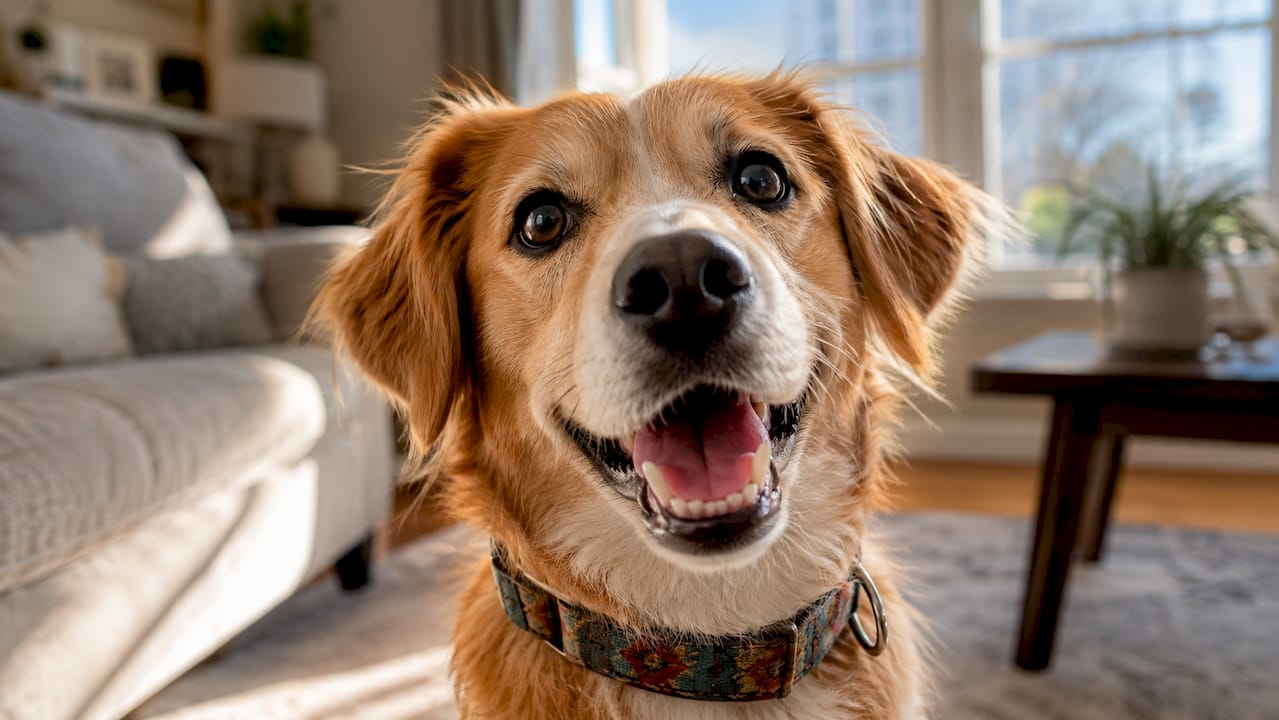
Full-body shots serve a different but equally important purpose. They show the dog’s size, coat condition, and overall build. A buyer considering a Golden Retriever or a French Bulldog wants to see proportions, not just a face. Pair a strong face shot with a clear full-body image and you have already answered two of the buyer’s first questions.
Lifestyle and personality photos outperform clinical portraits in every measurable way. A dog playing in a yard, resting on a couch, or interacting with a child tells a story. That story is what buyers are actually buying. Lifestyle photography in relatable, real-world settings creates the social proof needed to convert browsers into serious buyers.
- Face close-up: Captures expression, eye contact, and personality
- Full-body shot: Shows size, coat, and physical condition
- Lifestyle photo: Dog in a natural setting, playing or relaxing
- Interaction shot: Dog with a person or another animal, showing temperament
- Action photo: Mid-movement shots that convey energy and health
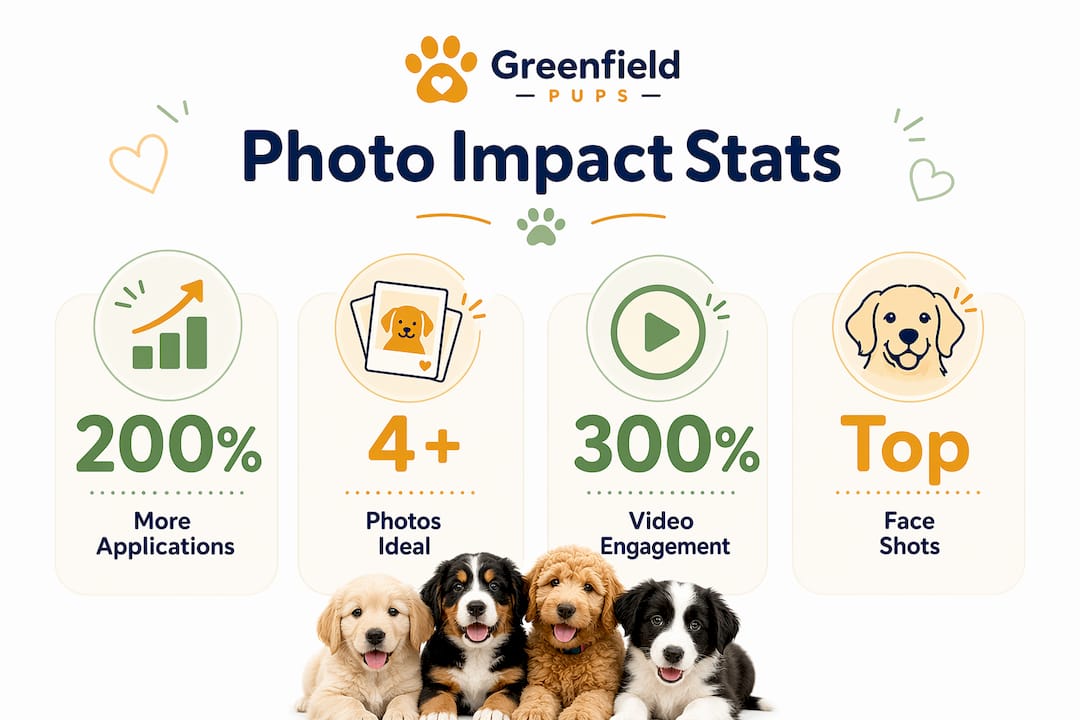
Statistic callout: Pet content generates up to 2.5 times more engagement than standard branded content. Video content drives 300% more engagement than static images. If your listing platform supports video, use it.
Pro Tip: Add a short 15-second video clip of the dog walking, playing, or responding to its name. Video answers questions that photos cannot, and it builds buyer confidence faster than any written description.
How many photos should you include in a dog listing?
The data on photo quantity is clear and worth taking seriously. Increasing photos from one to four correlates with a 200% increase in applications. That is not a marginal improvement. It means a listing with four well-chosen photos can generate three times the interest of a listing with a single image.
The reason is simple: more photos reduce buyer hesitation. Each additional image answers a question the buyer has not yet asked out loud. One photo leaves gaps. Four photos close them.
Variety matters as much as quantity. Four nearly identical shots of a dog sitting on the same couch add almost nothing. Four photos that each show a different angle, setting, or mood give the buyer a complete picture of the dog’s appearance and temperament. Think of it as building a case. Every photo should add a new piece of evidence.
| Number of photos | Expected impact on buyer interest |
|---|---|
| 1 photo | Baseline. Minimal engagement, high drop-off rate |
| 2–3 photos | Moderate improvement. Buyers get more context |
| 4+ photos | Strongest results. Applications increase by up to 200% |
| Video added | Engagement increases threefold over static images alone |
Avoid redundant images. If you have three shots of the dog sitting in the same spot, cut two of them. Replace them with a face close-up, a lifestyle shot, or an action photo. Each image slot is valuable real estate. Use it deliberately.
How to photograph dogs for listings: practical techniques that work
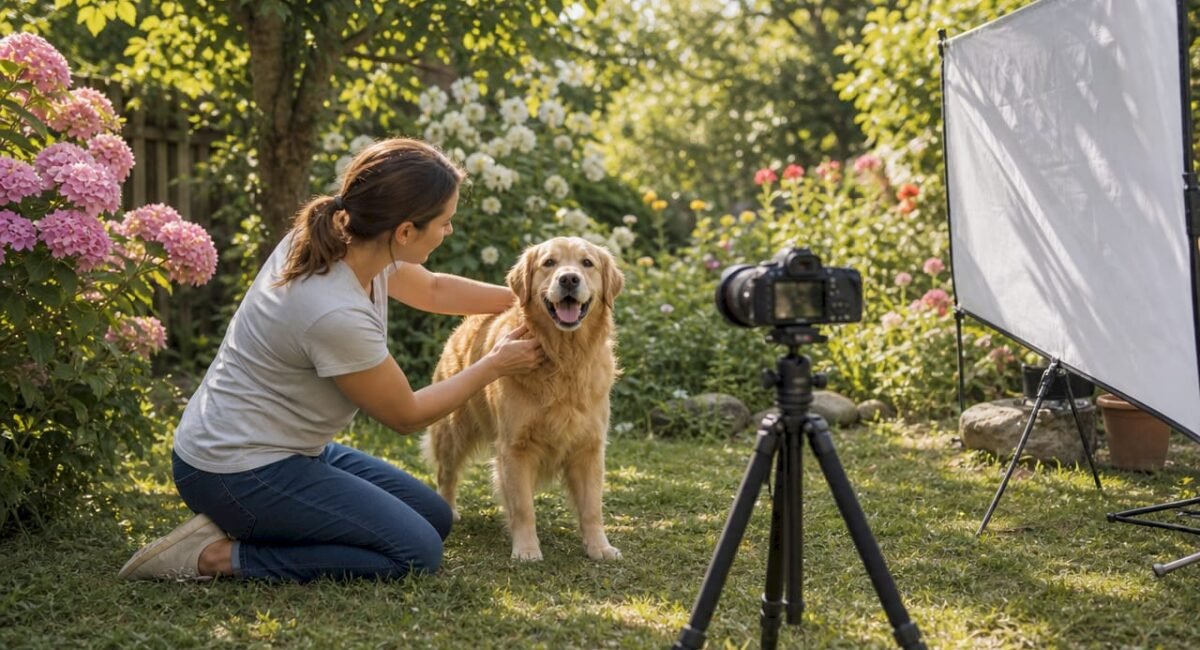
Good dog photography does not require a professional camera. It requires patience, the right light, and an understanding of how dogs behave in front of a lens. The best photos for dog listings come from sellers who treat the photoshoot as preparation, not an afterthought.
Use natural light, not flash
Natural, indirect light is the most forgiving and flattering source for dog photography. Shoot near a window or outside in open shade. Direct sunlight creates harsh shadows that flatten features and wash out coat color. Flash causes red-eye and startles nervous dogs, which shows in the resulting image.
Let the dog decompress first
Decompressing a dog in a calm environment before the photoshoot produces images that better convey true temperament. A stressed dog looks stressed in photos. Buyers notice. Give the dog 20–30 minutes to settle in the space before you pick up the camera. Let it sniff around, relax, and behave naturally. The photos you get after that wait will be dramatically better.
Shoot at the dog’s eye level
Get down on the floor. Photos taken from above make dogs look small and submissive. Eye-level shots create connection and presence. They also capture the dog’s face more accurately, which is the most important element in any listing photo.
Special techniques for black dogs
Black dogs require specific lighting techniques to avoid losing facial features in shadow. Without proper setup, a black dog can appear as a featureless dark shape. Use a light-colored background, shoot in bright but diffused light, and position the dog so light falls directly on its face. A slightly overexposed shot often works better than a correctly exposed one for very dark coats.
Pro Tip: Use treats and a squeaky toy to get the dog’s attention and ears up. A helper who can make sounds just off-camera while you shoot gives you a much better chance of capturing that alert, engaged expression buyers respond to.
- Shoot in the morning or late afternoon for the softest outdoor light
- Use a light or neutral background to make the dog’s features stand out
- Take at least 30–50 shots per session and select the best 4–6
- Avoid busy backgrounds that distract from the dog
- Check dog accessories styling if you want to add a simple bandana or collar that photographs well
How do photos influence buyer psychology and trust?
The science behind why good photos work is well established. Positive interactions with dogs in photos trigger the release of oxytocin and dopamine in the viewer. This creates a halo effect, linking feelings of warmth and trust directly to your listing. The buyer does not consciously experience this process. They simply feel good about the dog and, by extension, about you as the seller.
High-resolution photos signal professionalism and attention to care. A blurry or pixelated image does the opposite. It suggests carelessness, and buyers transfer that impression to how you care for your dogs. Photo quality in pet listings is a proxy for seller credibility.
“A photo is not just a picture of a dog. It is a signal about the seller’s standards, the dog’s environment, and the level of care the animal has received.”
Lifestyle photos carry an additional layer of trust. When a buyer sees a dog relaxed on a couch or playing in a fenced yard, they are not just seeing the dog. They are seeing evidence of a safe, comfortable environment. That context reduces skepticism and increases perceived value. Buyers who feel confident in what they see ask fewer questions and move faster toward a decision.
The impact of images on dog ads extends beyond the first click. Strong photos keep buyers on the listing longer, which increases the likelihood they will reach out. Weak photos cause immediate drop-off, regardless of how strong the written description is.
Key takeaways
Strong photos are the highest-return investment a dog seller or breeder can make in any listing, directly determining buyer interest, trust, and application rates.
| Point | Details |
|---|---|
| Photo quantity drives applications | Four or more photos increase applications by up to 200% compared to a single image. |
| Face shots perform best | Close-up photos showing the dog’s face and expression rank highest in buyer engagement. |
| Lifestyle photos build trust | Images of dogs in real-world settings create social proof and reduce buyer hesitation. |
| Lighting and patience are non-negotiable | Natural light and a calm, decompressed dog produce photos that accurately reflect temperament. |
| Video multiplies engagement | Adding video to a listing drives 300% more engagement than static images alone. |
What I have learned from watching listings succeed and fail
Sellers consistently underestimate how much a single bad photo costs them. I have seen listings for genuinely healthy, well-socialized dogs sit untouched for weeks because the only photo was a dark, blurry shot taken in a kennel run. Meanwhile, a listing for a similar dog with four bright, personality-filled photos generates inquiries within hours.
The mistake I see most often is treating the photoshoot as a chore to get through quickly. Sellers grab their phone, snap a few shots while the dog is distracted or stressed, and post whatever comes out. The result is a listing that communicates the opposite of what the seller intends. Buyers do not see a healthy dog. They see a seller who did not try.
The sellers who consistently move dogs quickly share one habit: they invest time before the shoot. They let the dog settle. They find good light. They take dozens of shots and choose the best four. That process takes maybe an hour. The payoff is a listing that works while you sleep.
Generic or posed photos also underperform in ways sellers rarely track. A dog sitting perfectly still against a blank wall looks like a stock image. It conveys nothing about personality. Buyers want to feel something. Give them a photo that makes them smile or say “look at that face,” and you have done your job. The visual appeal in dog ads is not about perfection. It is about authenticity captured in good light.
— Taylor
Greenfieldpups helps your listing stand out from the first photo
Greenfieldpups connects dog breeders and sellers with serious buyers across the United States, and photo quality is central to how top listings perform on the platform. Sellers who follow breeder listing best practices consistently attract more inquiries and close faster.

Greenfieldpups provides resources on responsible breeding practices and listing optimization so sellers can present their dogs with confidence. Whether you are posting your first listing or your fiftieth, the platform gives you the tools to reach buyers who are ready to act. Post your listing on Greenfieldpups and let your photos do the work.
FAQ
How many photos should a dog listing include?
Four or more photos produce the strongest results. Listings with four photos receive up to 200% more applications than listings with a single image.
What is the best type of photo for a dog listing?
Close-up photos that clearly show the dog’s face and expression rank highest in buyer appeal. Pair face shots with full-body and lifestyle images for maximum impact.
Does video help a dog listing perform better?
Video content drives 300% more engagement than static images. Even a short 15-second clip of the dog in motion significantly increases buyer interest.
How do I photograph a black dog for a listing?
Use a light-colored background, shoot in bright but diffused natural light, and position the dog so light falls directly on its face. Slightly overexposing the shot helps prevent facial features from disappearing into shadow.
Why do lifestyle photos outperform posed shots in dog listings?
Lifestyle photos show the dog in a real-world setting, which creates social proof and signals a safe, comfortable environment. Buyers respond to context, not just appearance, and lifestyle images reduce skepticism faster than any written description can.
Leave a Comment