

Dog breeder roles: Ethics, responsibilities, and best practices
Responsible dog breeders and puppy mill operators may both sell puppies, but they operate in entirely different worlds. One invests years learning genetics, funds extensive health testing, and turns away buyers who aren’t the right fit. The other stacks dogs in wire cages, skips veterinary care, and ships puppies sight-unseen with no regard for health or temperament. Understanding this contrast matters whether you’re a breeder working to elevate your program or a buyer trying to make a responsible choice. This guide breaks down what ethical breeders actually do, what the law requires, and why the gap between good breeders and bad ones is wider than most people realize.
Table of Contents
- What does a dog breeder actually do?
- Health testing and breeding protocols: The backbone of responsible breeding
- Legal and ethical frameworks: Licensing, standards, and enforcement
- Screening puppy buyers: Why it matters for lasting matches
- The uncomfortable truth: Why ethical breeding is harder than it looks
- Next steps: Connect with trusted breeders and resources
- Frequently asked questions
Key Takeaways
| Point | Details |
|---|---|
| Breeder responsibilities | Dog breeders must go beyond selling puppies by focusing on breed improvement, health, and ethical standards. |
| Health testing protocols | Mandatory health screens and nutritional support are vital for responsible breeding and puppy welfare. |
| Legal requirements | Federal USDA licensing, inspections, and standards define breeder legitimacy and ethical compliance. |
| Buyer screening | Proper screening, contracts, and education help match puppies and families for lifelong success. |
| Ethical challenges | Ethical breeders face complex challenges from regulations, enforcement gaps, and rising demand but must prioritize welfare. |
What does a dog breeder actually do?
Most people picture a breeder as someone who simply pairs two dogs and sells the puppies. The reality is far more involved, and far more demanding. Breeding responsibly means managing genetics, health, temperament, nutrition, legal compliance, and buyer relationships, all at once.
Responsible dog breeders aim to improve the breed by selecting dogs without kennel blindness, studying pedigrees, genetics, and breed standards. That last phrase, “without kennel blindness,” is critical. Kennel blindness means a breeder can’t objectively evaluate their own dogs’ faults. Ethical breeders actively seek outside expert opinions to avoid this trap.
Here’s what goes into the day-to-day work of a responsible breeder:
- Studying pedigrees to identify genetic risks that may show up in offspring, including hereditary diseases that skip generations
- Evaluating temperament through structured testing, excluding dogs that show fear, anxiety, or aggression from breeding programs
- Following breed standards set by registries like the AKC to maintain type, function, and health across generations
- Conducting full health screenings before any breeding decision is made (more on this in the next section)
- Whelping and raising litters with full-time supervision, socialization programs, and proper nutrition for both dam and puppies
- Maintaining detailed records of every litter, health test, and placement
The types of dog breeders range from hobby breeders producing one or two litters a year to large-scale operations. Ethical practice, however, isn’t determined by scale. It’s determined by intention and follow-through.
“Breeding is not just about producing puppies. It’s about producing the right puppies and placing them with the right people. Every corner cut today becomes a problem that someone else has to live with tomorrow.”
Pro Tip: Avoid fad breeding trends like intentionally producing double merle dogs or extreme physical traits that cause health problems. These may attract short-term buyers, but they create long-term suffering and seriously damage your reputation.
Health testing and breeding protocols: The backbone of responsible breeding
A breeder who skips health testing isn’t just cutting costs. They’re gambling with the wellbeing of every puppy they produce and every family that adopts one. Health testing is the single most effective thing a breeder can do to reduce heritable disease in their lines.
Breeders must conduct health screenings before breeding covering OFA hips (Excellent, Good, or Fair are acceptable), elbows (Normal rating required), eyes through annual CAER exams, thyroid function, cardiac evaluations, and DNA tests for breed-specific genetic issues. Each breed carries its own disease risks, so DNA panels must be breed-specific, not generic.
Here’s a step-by-step breakdown of a responsible pre-breeding health protocol:
- Hip and elbow evaluation through the Orthopedic Foundation for Animals (OFA) or PennHIP, ideally completed after age two when skeletal maturity is confirmed
- Annual CAER eye exam conducted by a board-certified veterinary ophthalmologist to detect progressive retinal atrophy and other inherited eye conditions
- Cardiac evaluation by a board-certified cardiologist, especially critical for breeds prone to dilated cardiomyopathy or mitral valve disease
- Thyroid panel to screen for autoimmune thyroiditis, which is hereditary and affects immune function long-term
- DNA tests for breed-specific conditions like degenerative myelopathy, exercise-induced collapse, von Willebrand disease, or MDR1 drug sensitivity
- Brucellosis testing for both sire and dam before every breeding, without exception
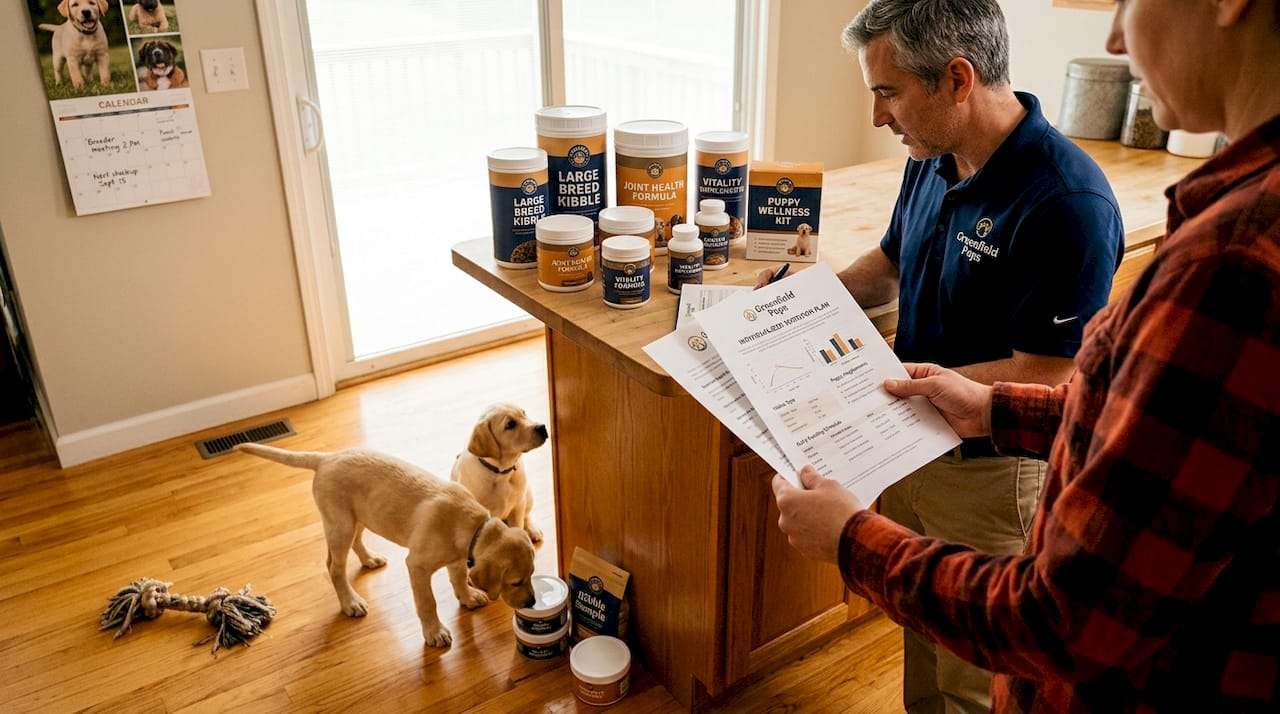
On the nutrition and care side, breeding bitch nutrition requires specialized management including 29% protein and 17% fat pre-pregnancy, along with veterinary-guided supplementation using probiotics, omega oils, folic acid, and calcium. This isn’t optional. Poor maternal nutrition directly affects puppy birth weight, immune development, and long-term neurological health.
| Protocol | Required | Recommended |
|---|---|---|
| OFA hip and elbow evaluation | Yes | Repeat every 2 years |
| CAER eye exam | Yes, annually | Done by specialist |
| Cardiac evaluation | Yes | Yearly for at-risk breeds |
| DNA breed-specific panel | Yes | Full panel, not partial |
| Brucellosis test | Yes, before each breeding | Both sire and dam |
| Thyroid panel | Yes | OFA-certified lab |
| Probiotics and omega supplementation | Recommended | Yes, from 4 weeks pre-whelp |
| Whelping supervision | Yes | 24-hour monitoring |
Breeders who use veterinarian-guided nutrition plans consistently produce healthier, more robust litters. This is not an area where generic kibble recommendations cut it.
Pro Tip: Document every health screen using the OFA/CHIC databases, which are publicly searchable. This transparency builds trust with buyers and protects your reputation if questions about a dog’s health history arise years later.
Legal and ethical frameworks: Licensing, standards, and enforcement
Beyond health testing, breeders operate within a legal framework that most buyers don’t fully understand, and that some breeders try hard to work around.
USDA licensing is mandatory for any breeder with more than four breeding females who sells dogs sight-unseen, meaning through the internet, phone, or mail without the buyer physically visiting. USDA standards cover housing dimensions, sanitation, food and water access, veterinary care, and exercise requirements. Inspections are unannounced, though in practice they are infrequent.
The enforcement picture is deeply troubling. In 2025, the USDA documented 680 violations at licensed facilities covering illness without veterinary care, no access to clean water, and pest infestations, but took no meaningful action in the vast majority of cases. The ASPCA has repeatedly called for stronger enforcement mechanisms, including Goldie’s Act, which would require the USDA to act on documented violations.
The 2026 Humane Society “Horrible Hundred” report names 100 breeders with documented violations including blocked inspections, dogs found dead from cold and neglect, and kennels with rusting, hazardous structures. This is not a fringe problem.
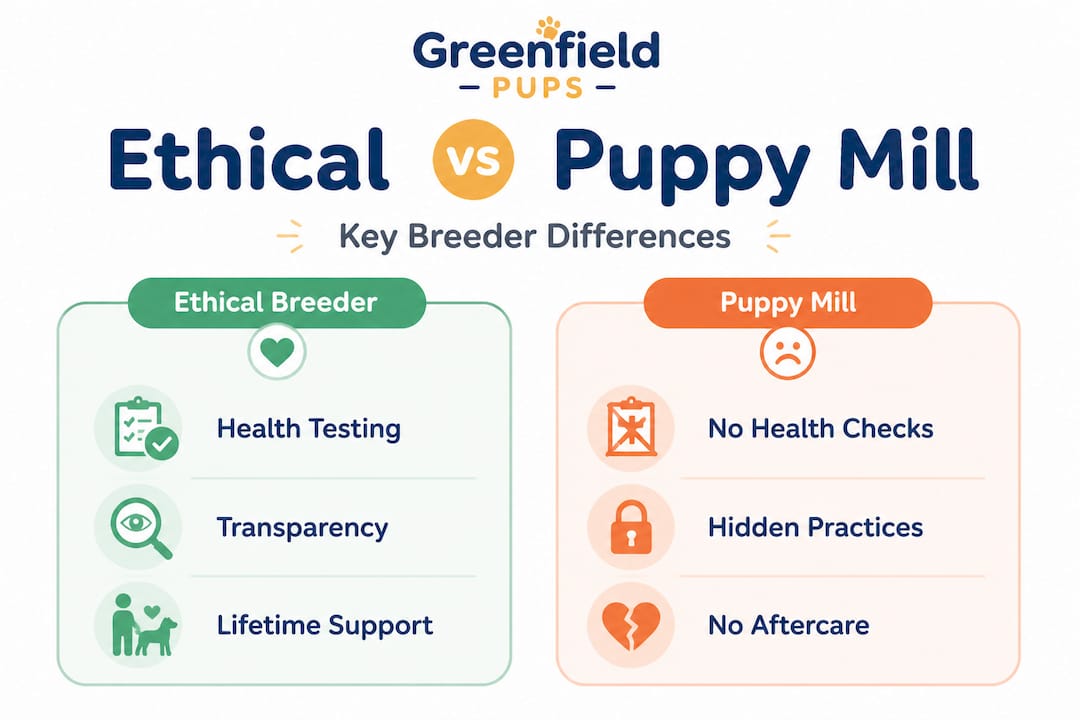
Here’s a direct comparison between ethical breeders and puppy mills:
| Standard | Ethical breeder | Puppy mill |
|---|---|---|
| USDA licensing | Compliant and transparent | Often unlicensed or non-compliant |
| Veterinary care | Routine, documented | Sporadic or absent |
| Housing conditions | Clean, spacious, enriched | Overcrowded, unsanitary |
| Health testing | Comprehensive pre-breeding | Rarely performed |
| Buyer screening | Yes, with contracts | No screening, cash sales |
| Lifetime support | Offered and honored | Nonexistent |
| Breeding frequency | Thoughtful, planned | Continuous, profit-driven |
Understanding USDA licensed breeder requirements is one of the most practical things buyers can do before committing to a purchase. Verification is simpler than most people think.
To verify a breeder’s legal standing and ethical practices, check for these steps:
- Search the USDA’s Animal Care database for inspection reports and violation history
- Ask for the breeder’s USDA license number directly and confirm it’s current
- Request copies of health test results from OFA or CHIC databases
- Visit the facility in person before any financial commitment
- Ask for references from previous buyers and veterinarians
The ethical obligations that go beyond legal minimums are where true character shows. Responsible breeders don’t breed a female every heat cycle. They don’t retire dams at five or six years old after exhausting their reproductive capacity. They don’t breed solely for demand-driven coat colors or size extremes. The commitment is to the breed, not the profit margin.
Screening puppy buyers: Why it matters for lasting matches
Placing a puppy is not a transaction. It’s a decision that affects that dog’s entire life, which could be 10 to 15 years. The best breeders treat buyer screening as seriously as they treat health testing.
Puppy buyers must be screened, with contracts including health guarantees and lifetime return clauses, and buyers must receive thorough education on breed pros and cons before committing. This requirement exists because breed mismatches are one of the leading causes of dogs being surrendered to shelters. A high-energy herding breed placed with a sedentary family, or a large guarding breed placed in a studio apartment, is a setup for failure on both sides.
Here’s how a thorough buyer screening process works:
- Initial application asking about living situation, activity level, prior dog ownership, and family composition
- Follow-up interview, often by phone or video, to discuss breed traits honestly including both strengths and challenges
- Reference check with a current veterinarian if the buyer has prior pets
- Home visit or photos to assess the environment the puppy will live in
- Contract review with the buyer before any deposit is accepted, covering all terms clearly
Common contract clauses that responsible breeders include are worth knowing:
- Lifetime return policy requiring the buyer to return the dog to the breeder rather than surrender to a shelter under any circumstance
- Spay/neuter agreements for pet-quality placements without show or breeding rights
- Health guarantee covering genetic conditions for a defined period, typically two to five years
- Feeding and care requirements for the puppy’s first year
- Right of first refusal if the buyer must rehome the dog at any point
Breeders who work with screening dog adopters systematically report fewer returns, happier buyers, and better outcomes for the dogs themselves. The short-term inconvenience of a thorough process pays off every time.
Pro Tip: Always provide written breed information covering the realistic pros and cons before any buyer commits. A buyer who understands the full picture is far less likely to struggle with the dog later. Transparency at placement is your best tool for lifetime owner satisfaction.
After the puppy goes home, the breeder’s role doesn’t end. Reputable breeders answer questions about training and health, maintain contact with buyers, and genuinely care how their dogs are doing five years after placement. That relationship is part of what you’re paying for when you work with an ethical breeder. Resources like finding reputable breeders help buyers understand what that relationship should look like before they ever sign a contract.
The uncomfortable truth: Why ethical breeding is harder than it looks
Here’s something most breeding guides won’t say directly: the system makes it genuinely hard to do this right.
Enforcement gaps mean that rule-breaking breeders face almost no consequences. The USDA documented hundreds of violations but took little meaningful action, which means ethical breeders compete in a marketplace against operations that cut every cost a responsible breeder carries. Health testing for a single dog can run $500 to $1,500. Full-time whelping care means lost sleep and real labor costs. Buyer screening takes time that a volume seller never spends.
The AKC and ASPCA represent genuinely different viewpoints here. AKC focuses on breed preservation and purebred improvement through responsible breeding. ASPCA and HSUS focus on welfare failures and systemic cruelty that persists because of weak regulation. Both perspectives are grounded in real evidence. The honest position is that both are right about different parts of the same problem.
Fad demand makes it worse. When a breed goes viral because of a movie or social media trend, the pressure to produce puppies fast overwhelms any ethical framework. Ethical breeders who waitlist buyers for a year get bypassed by buyers who want a puppy now from whoever has one. That demand funds the worst operations.
What we’ve seen consistently is that breeders who build lasting reputations focus on three things: transparency about their dogs’ limitations as well as their strengths, genuine vet partnerships that go beyond annual checkups, and a commitment to core best breeding practices even when no one is watching. Reputation in breeding is slow to build and fast to lose. The breeders who are still respected at 20 years in are the ones who treated every single placement as a reflection of everything they stand for.
Next steps: Connect with trusted breeders and resources
Understanding what separates ethical breeders from the rest is the first step. Knowing where to turn next is just as important.
Greenfield Pups connects buyers and breeders across the United States through a platform built for transparent, informed decisions. Whether you’re a breeder ready to list your program or a buyer starting your search, the tools here support responsible outcomes. Start by reviewing the full breakdown of breeder types to understand what kind of breeder or buyer relationship fits your situation. Then use our step-by-step resource on how to find reputable breeders to approach your search with confidence. For breeders looking to strengthen their programs, our guide on responsible breeding practices covers everything from health testing to buyer education in practical detail.
Frequently asked questions
What health tests should dog breeders perform before breeding?
Breeders should conduct OFA hip and elbow evaluations, annual CAER eye exams, thyroid panels, cardiac evaluations, and DNA screens specific to the breed’s known genetic risks.
Are dog breeders required to have a license in the United States?
USDA licensing is mandatory for breeders with more than four breeding females who sell dogs sight-unseen, with standards covering housing, sanitation, veterinary care, and exercise.
How do breeders ensure puppies go to the right homes?
Responsible breeders screen buyers thoroughly, use written contracts with health guarantees and lifetime return clauses, and educate buyers on realistic breed expectations before any commitment is made.
What distinguishes ethical breeders from puppy mills?
Ethical breeders follow strict health, welfare, and legal standards consistently, while puppy mills documented in the 2026 Horrible Hundred report show violations including neglect, blocked inspections, and dangerous housing conditions.
What ongoing responsibilities do breeders have after a puppy is adopted?
Reputable breeders offer lifetime support, remain available for health and training questions, and honor lifetime return policies so no dog they produce ever ends up in a shelter.
Recommended
- Responsible dog breeding: Best practices for healthy, ethical pups – greenfield
- Top tips for choosing a responsible dog breeder – greenfield
- Types of dog breeders: What every pet buyer should know – greenfield
- Licensed Dog Breeders Explained: What You Need to Know – greenfield
- Dog Rescue Training: Keys to Success for Owners & Handlers 2025 – iPupPee
Leave a Comment