


Proven dog advertising tips to boost sales and build trust
The dog marketplace in the U.S. has never been more crowded. Thousands of breeders are competing for the attention of a shrinking pool of motivated buyers, and a basic photo with a price tag no longer moves puppies. Small, strategic changes to how you advertise can dramatically improve not just how many inquiries you get, but the quality of those inquiries. The tips below are backed by real campaign data, proven digital marketing principles, and the day-to-day realities of selling dogs online in 2026.
Table of Contents
- 1. Leverage social media for visual impact and engagement
- 2. Harness the power of email marketing for lead nurturing
- 3. Build trust with transparency and authentic storytelling
- 4. Invest in smart digital advertising for rapid growth
- 5. Boost organic search with SEO and marketplace visibility
- A breeder’s perspective: What actually works in dog advertising
- How Greenfield helps breeders succeed
- Frequently asked questions
Key Takeaways
| Point | Details |
|---|---|
| Use engaging visuals | High-quality social media content attracts and engages serious buyers. |
| Nurture leads with email | Consistent updates and educational content keep buyers interested until they’re ready. |
| Transparency builds trust | Openness about breeding practices and health records sets you apart. |
| Paid advertising delivers results | Google and Facebook Ads can rapidly increase leads and sales with a smart budget. |
| Optimize for search | Effective SEO and marketplace profiles drive passive, ongoing inquiries. |
1. Leverage social media for visual impact and engagement
Every breeder knows that puppies are naturally photogenic. But most sellers stop there, posting a single snapshot and hoping buyers will find them. The truth is that Instagram and Facebook are essential for showcasing puppies with high-quality photos, videos, litter updates, training tips, and live Q&A sessions to engage potential buyers. Visual storytelling goes far beyond a snapshot. A short video of a puppy’s personality, a behind-the-scenes look at your facility, or a post documenting a litter’s first week of life all create emotional connection that static text simply cannot replicate.
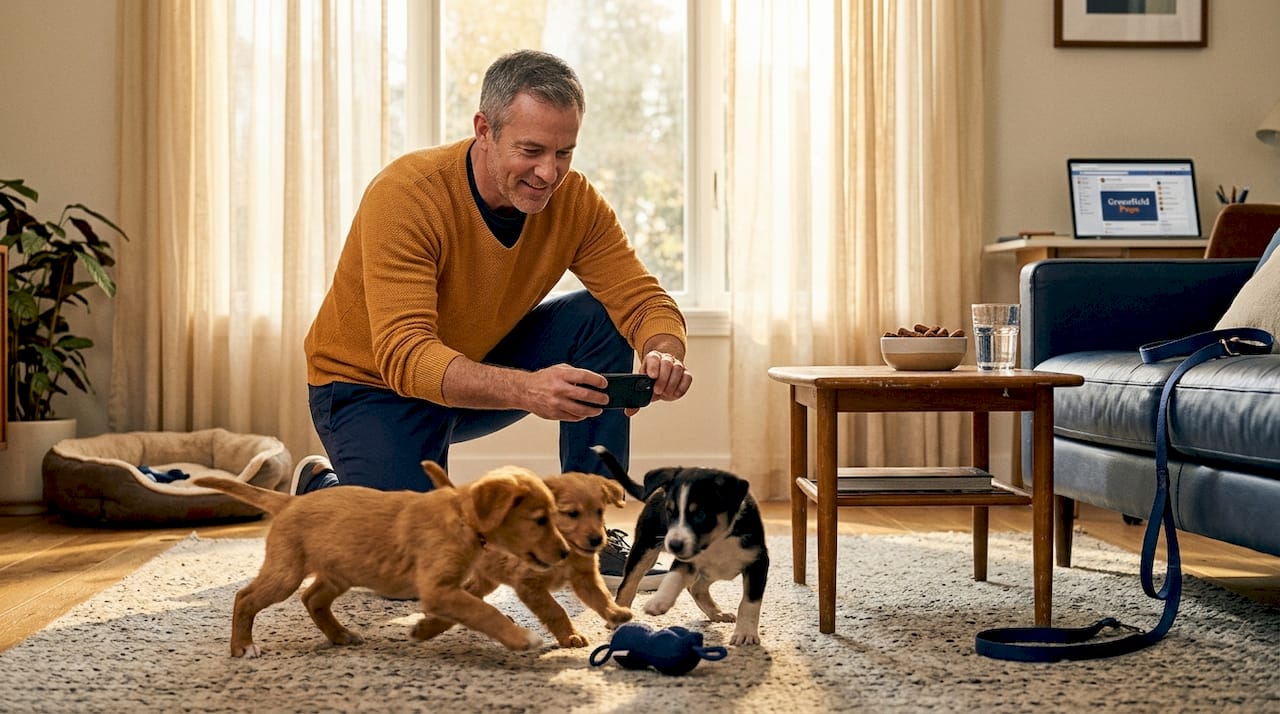
Video content consistently outperforms photos in reach and engagement on both Facebook and Instagram. Reels, in particular, receive roughly three times the organic reach of standard photo posts on Instagram. That means breeders who make even simple smartphone videos of their dogs are automatically putting themselves in front of more people, for free.
Here are practical social media content ideas that drive real results:
- Short video introductions for each available puppy, showing temperament and energy level
- Weekly “litter update” stories documenting growth milestones from birth to eight weeks
- Educational posts on breed characteristics, care tips, and what buyers should expect
- Client testimonials posted as photo captions or short video clips
- Behind-the-scenes tours of your kennel or home setup to build credibility and show care standards
- Breed comparison content to help undecided buyers choose the right dog for their lifestyle
Pro Tip: Go live on Facebook or Instagram at least once per litter cycle. A 15-minute live session where you answer buyer questions, show the puppies, and walk through your health testing process builds more trust than ten static posts. Save the replay so new followers can watch it later.
Getting social right is just one part of your visibility strategy. Pairing it with a strong listing on top marketplaces ensures your puppies appear where serious buyers are actively searching.
2. Harness the power of email marketing for lead nurturing
Social media is great for awareness, but most buyers don’t purchase the first time they see a puppy. They browse, compare, ask questions, and then come back weeks later. If you have no way to stay in touch between that first inquiry and the final decision, you lose them. Email marketing nurtures leads with newsletters on litter updates, promotions, and educational content to keep your brand top-of-mind. It costs very little, and it works.
Here is a simple blueprint for setting up a basic email campaign for your breeding business:
- Choose an email platform. Free tiers on platforms like Mailchimp or ConvertKit work fine for most breeders starting out. These tools let you organize your contacts, schedule sends, and track open rates.
- Build your list. Add a simple sign-up form to your website or social bio. Offer something of value in exchange, such as a free puppy care guide or a first-look invite for upcoming litters.
- Segment your contacts. Separate people who inquired about a specific breed from those who signed up for general updates. Targeted emails always outperform generic blasts.
- Create a welcome sequence. Send a three-email series to new subscribers: introduce yourself and your program, share your health testing approach, and invite them to visit or ask questions.
- Send regular litter updates. When a new litter is born, email your list immediately. Include photos, expected availability dates, and a clear call to action for reserving a puppy.
- Follow up after purchase. A check-in email at the one-week and one-month mark after a puppy goes home strengthens your reputation and often generates referrals and reviews.
Breeders who commit to responsible breeding best practices have the richest content to share in email campaigns. Health testing results, certifications, and detailed puppy socialization protocols all give you interesting, credible material that buyers genuinely want to read.
Pro Tip: Send litter announcement emails on Tuesday or Wednesday morning between 9 a.m. and 11 a.m. local time. These days and hours consistently produce the highest open rates for small business email campaigns, often exceeding 30 percent.
3. Build trust with transparency and authentic storytelling
Buyers searching for a dog in 2026 are more informed and more cautious than ever before. They have read about puppy mills. They know to ask about health clearances. They look for red flags. Transparency builds trust: sharing your breeding philosophy, health documentation, encouraging visits, and collecting reviews are all proven ways to differentiate your program from sellers who hide behind a price and a cute photo.
Documents and stories you should share openly in your listings, social profiles, and website include:
- Health clearances for both sire and dam, such as OFA hip and elbow ratings or CERF eye certifications relevant to your breed
- Vaccination and deworming records for each puppy, updated to the date of sale
- A written breeding philosophy explaining why you breed, what goals drive your pairings, and what you look for in buyers
- Socialization logs showing what environments and stimuli puppies have been exposed to during their critical development window
- Testimonials and reviews from past buyers, including photos of their dogs at six months, one year, and beyond
- A clear, fair contract that outlines your health guarantee, return policy, and spay/neuter expectations
One of the most powerful tools you have is social proof. A single genuine review can do more for a buyer’s confidence than a dozen marketing claims. Here is an example of the kind of feedback that moves buyers from curious to committed:
“We were nervous about buying a puppy online, but seeing all the health test results and reading other families’ experiences made us feel confident. Our Golden is now 18 months old and is everything they promised. We’d do it again without hesitation.” — Sarah M., Colorado
Helping buyers understand what to look for in a breeder is also part of your job. Pointing them toward resources like choosing a responsible dog breeder actually strengthens your credibility because it shows you welcome scrutiny. Educated buyers who understand what every pet buyer should know are also far easier to work with throughout the process.
4. Invest in smart digital advertising for rapid growth
Organic reach and word-of-mouth are valuable, but paid digital advertising can compress your sales timeline dramatically when done right. Real-world data makes this clear. A Google Ads campaign for a dog breeder produced a 900% increase in click-through rate, reached over 20,000 new potential buyers, and cut invalid clicks by 60 percent. On the social side, the Puppy Dreams ad campaign ran on a $9,000 budget and generated 48 in-person leads and $118,000 in sales.
| Ad platform | Typical cost per click | Best for | Reach type |
|---|---|---|---|
| Google Search Ads | $1.50 to $4.00 | Active searchers ready to buy | High intent, local and national |
| Facebook/Instagram Ads | $0.50 to $2.00 | Interest-based audience targeting | Broad awareness and retargeting |
| YouTube Pre-roll Ads | $0.10 to $0.30 | Video storytelling and breed education | Brand building and top-of-funnel |
Key insight: Google Ads target buyers who are already searching for puppies by breed. Facebook Ads target buyers by interest and behavior, which means you can reach people who have been looking at dog content but haven’t yet searched by breed. Both work best when you run them together with a coordinated message.
A $500 per month budget split between Google Search Ads and Facebook retargeting is enough for most small breeders to see measurable results within four to six weeks. The critical factor is sending all ad traffic to a specific landing page, not your homepage, that matches the exact breed and message in your ad. Pair your paid efforts with strong classified listings so buyers who click through find a polished, credible profile waiting for them.
5. Boost organic search with SEO and marketplace visibility
Paid ads deliver speed, but organic search builds momentum that keeps paying off long after your ad budget runs out. A real-world SEO case study for Golden Meadows Retrievers showed that strategic keyword targeting combined with UX improvements doubled organic contact form submissions. No ongoing ad spend required after the initial setup work.
Here is a comparison of paid versus organic advertising for breeders:
| Factor | Paid advertising | Organic SEO + marketplace |
|---|---|---|
| Time to first results | Days to weeks | Two to six months |
| Ongoing cost | Continuous budget needed | Mostly time investment after setup |
| Sustainability | Stops when budget stops | Grows over time with updates |
| Buyer intent | High (search ads) | High (search-based discovery) |
| Trust factor | Moderate (labeled as ad) | Higher (seen as natural result) |
Key SEO terms to target and where to use them:
- Use breed-specific keywords like “Golden Retriever puppies for sale in Texas” in your page titles, listing headlines, and first 100 words of any description
- Include location keywords in your profile bio, about section, and image file names
- Add alt text to every puppy photo describing the breed, color, and your location
- Write detailed breed FAQs on your website or listing page to capture long-tail search traffic from curious buyers early in their research phase
Your marketplace listing guide is one of the best starting points for getting both your SEO and marketplace presence dialed in at the same time. A fully optimized listing with complete information, great photos, and keyword-rich descriptions consistently outranks incomplete ones in both search engines and on-platform discovery tools.
A breeder’s perspective: What actually works in dog advertising
Here is something the marketing guides won’t usually tell you directly: the flashiest campaign rarely wins. Breeders who spend hundreds per month on graphic design and paid ads but haven’t documented their health testing will lose buyers to a competitor with a simpler ad and a transparent program every single time. Buyers are good at detecting authenticity, and they will walk away from polished content that feels empty.
The most common mistake we see is breeders chasing volume. Getting 500 inquiries per month sounds great until you realize most of them are casual browsers who will never commit, and you spend hours responding to each one. The goal should be qualified inquiries. Those come from accurate, detailed listings and educational content that pre-screens buyers before they even reach out.
Tracking matters enormously. Most breeders can’t tell you which channel brought their last five buyers. That’s a problem. Use a simple spreadsheet to ask every buyer where they first found you. After three litters, you’ll have clear data showing whether your Facebook investment is actually producing sales or just likes.
The breeders who consistently fill litters without drama are the ones who have built repeatable systems: an updated listing on a trusted platform, a simple email sequence, monthly social content, and a review-collection habit after every sale. Commit to ethical breeding best practices publicly and loudly. That content feeds every channel you advertise on, and it attracts exactly the kind of buyer who will send you referrals for years.
Don’t overcomplicate it. Pick two or three channels, execute them consistently, and measure results honestly. Adjust based on data, not trends.
How Greenfield helps breeders succeed
Ready to put these strategies into action? Greenfield Pups provides a direct path from strategy to results.
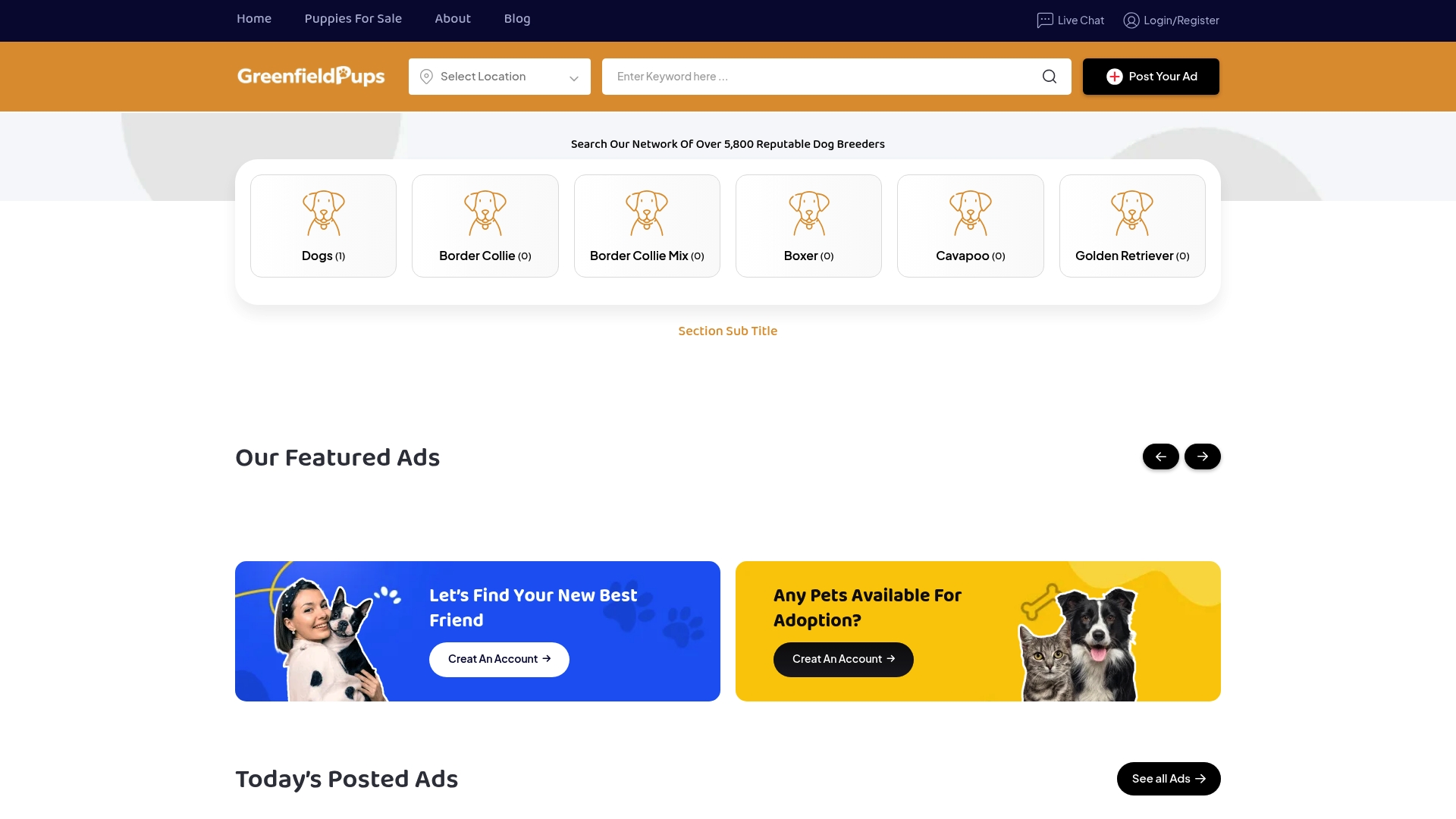
Start with the Dog Breeder Listing Guide to make sure your profile stands out against every competitor in your breed category. Not sure how to position your program to buyers who are still learning? The resource on dog breeder types helps you communicate your value clearly. When you’re ready to get your puppies in front of active buyers, the listings page is the fastest way to reach serious, motivated buyers across the country. Greenfield Pups combines marketplace reach with educational resources so you can build trust and close sales in the same place.
Frequently asked questions
Which social media platforms are most effective for selling puppies?
Instagram and Facebook are the top platforms due to their visual focus and interactive features like stories, live Q&A, and easy sharing with potential buyers.
How can I make my breeding listing stand out online?
Use high-quality photos, clear health and pedigree information, and positive buyer reviews. Transparency in documentation and a written breeding philosophy signal credibility to buyers at first glance.
Does paid advertising really work for dog breeders?
Yes. Real campaign data shows a $9,000 ad budget producing over $118,000 in sales, and Google Ads campaigns achieving a 900% increase in click-through rates for dog breeders.
What’s the best way to keep buyers interested if they don’t purchase right away?
Regular email updates about new litters, care tips, and exclusive early-access offers keep your business top-of-mind for buyers still in the decision stage.
How does SEO help breeders get more inquiries?
Strategic SEO, including keyword targeting and profile improvements, doubled organic form submissions for Golden Meadows Retrievers without requiring additional ad spend after the initial optimization work.
Recommended
- Dog Breeder Listing Guide: Get Noticed on Top Marketplaces – greenfield
- Top tips for choosing a responsible dog breeder – greenfield
- Why Socialize Puppies: Raise a Confident, Happy Dog – greenfield
- Why screening dog adopters leads to better matches – greenfield
- Hundefor på nett – slik finner du kvalitet og trygghet — Dr-Clauder Norge
Leave a Comment