

The Role of Puppy Deposits: A 2026 Buyer’s Guide
A puppy deposit is a payment made by prospective buyers to reserve their place on a breeder’s waitlist or claim a specific puppy from an upcoming litter. The role of puppy deposits goes well beyond a simple transaction. Deposits signal serious intent, protect breeders’ planning, and give buyers priority access before a litter is even born. Understanding how deposits work, what contracts should say, and how to spot scams is the difference between a smooth puppy purchase and a costly mistake.
How do puppy deposits work and what do they secure?
A deposit secures your spot on a breeder’s waitlist or reserves a specific puppy from a confirmed litter. Reputable breeders consistently credit deposits toward the total purchase price, so you are not paying extra. The deposit is a partial payment, not an added fee.
Timing varies by breeder and situation. Some breeders collect deposits before breeding even begins. Others wait until pregnancy is confirmed or puppies are born. Each timing scenario carries different risk levels for the buyer.
- Pre-breeding deposits: You pay before any breeding occurs. The risk is highest here because litters are not guaranteed.
- Post-confirmation deposits: Paid after pregnancy is confirmed. Lower risk, but litter size and puppy availability can still change.
- Post-birth deposits: Paid once puppies arrive. The safest option for buyers, though waitlist spots may already be filled.
Contracts define what your deposit actually covers. A solid contract will specify puppy selection rights, your priority in the litter, and what happens if your preferred puppy is unavailable. Contracts should state what happens if the litter is smaller than expected or if breeding fails entirely.
Pro Tip: Ask the breeder for the deposit contract before sending any money. Read every clause, especially the section on what triggers a refund and what does not.

Typical deposit amounts range widely depending on breed, breeder reputation, and location. The deposit is almost always applied toward the final price at pickup. That means paying a deposit moves you from browsing to actively preparing for your puppy’s arrival.
Why are puppy deposits important for buyers and breeders?
Deposits protect both sides of the transaction in ways that most buyers do not fully appreciate. For breeders, a deposit confirms that a buyer is serious. Without deposits, breeders would invest thousands of dollars in health testing, prenatal care, and socialization only to have buyers back out at the last minute.
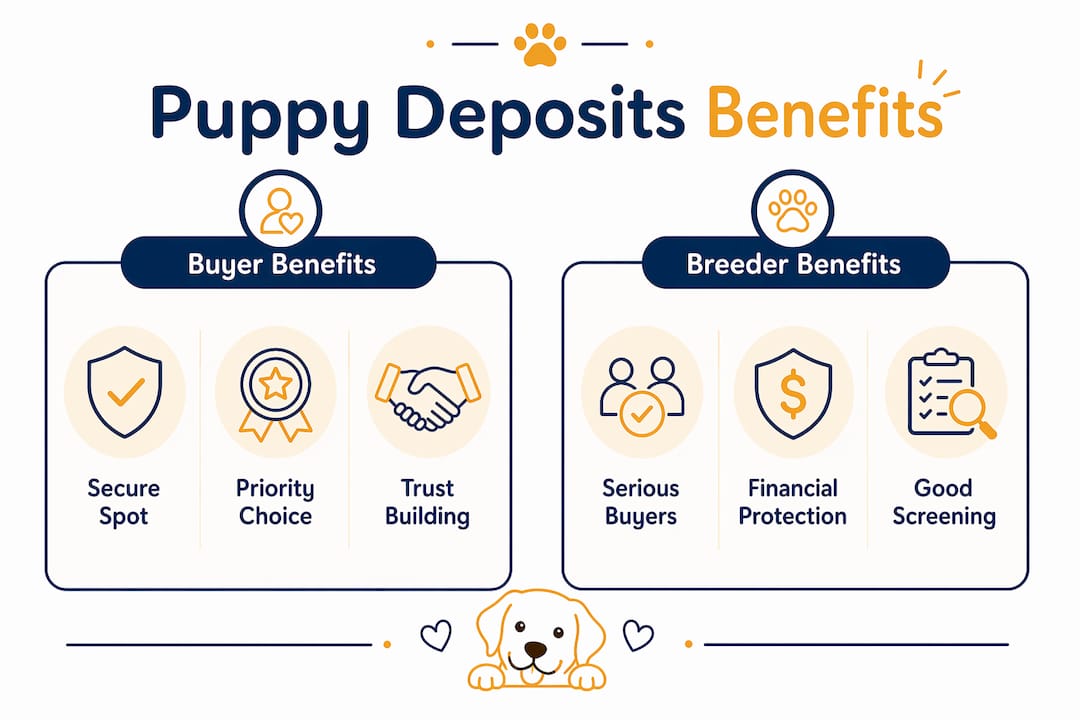
For buyers, a deposit locks in priority access. Breeders view deposits as a signal of serious intent, which means deposited buyers get first pick or guaranteed placement before the general public. That matters enormously for popular breeds with long waitlists.
The psychological impact is real and underappreciated. Once a buyer places a deposit, their mindset shifts from casual shopping to active preparation. They start researching crates, food, vet clinics, and training classes. That shift benefits the puppy directly.
“Breeders view deposits as a gift of security for both parties, marking serious intent and moving the relationship from inquiry to commitment.” — Honest Dog Breeder
The benefits break down clearly for each party:
- For breeders: Filters out non-serious inquiries, funds early puppy care costs, and allows confident breeding schedule planning.
- For buyers: Guarantees a spot, establishes a formal relationship with the breeder, and motivates preparation for responsible ownership.
- For puppies: Ensures they go to homes that have already committed financially and emotionally, supporting responsible placement practices.
Breeders who practice ethical breeding standards use deposits as a screening tool, not just a revenue source. A breeder who asks thoughtful questions alongside the deposit request is a good sign.
What are the refund policies and legal rules around deposits?
Most reputable breeders use non-refundable deposits to protect their investment. If a buyer backs out voluntarily, the deposit is typically forfeited. That is the standard model across the industry.
State laws offer less protection than most buyers expect. Pet purchase laws in states like California, New York, and Florida focus on health-related refunds, not voluntary buyer cancellations. If you change your mind, the law almost certainly will not get your deposit back. The contract is your only binding reference.
| Scenario | Typical outcome |
|---|---|
| Buyer cancels voluntarily | Deposit forfeited (non-refundable) |
| Breeder cancels or litter fails | Full deposit refund owed to buyer |
| Puppy born sick or misrepresented | Refund governed by state pet lemon laws |
| Partial refund model | 50% returned if buyer cancels; 50% kept by breeder |
A partial refund deposit model offers a reasonable compromise. Some breeders return 50% if the buyer cancels, keeping the other half to cover their costs. This approach reduces disputes and builds goodwill without leaving the breeder fully exposed.
Pro Tip: Never pay a deposit without a signed written contract. The contract is your only legal protection if something goes wrong.
Buyers should also ask about deposit transfers. Some breeders allow a deposit to roll over to a future litter if the current one does not produce a suitable match. That flexibility is worth asking about before you pay.
How to spot and avoid common puppy deposit scams
Puppy scams are widespread, and deposits are the primary target. Scammers collect deposits and disappear, leaving buyers with no puppy and no recourse. Knowing the red flags protects your money.
- Demand for unrecoverable payment methods. Never pay a deposit via cryptocurrency, gift cards, wire transfer, or PayPal “friends and family.” These methods offer no fraud protection. Scam red flags include any pressure to use these payment types.
- Pressure for immediate payment. Legitimate breeders do not rush you. If a breeder insists you must deposit within hours or lose your spot, that is a manipulation tactic.
- No contract provided. A reputable breeder always provides a written agreement. Refusal to share a contract before payment is a serious warning sign.
- Refusal to video call. Always request a live video call to see the puppies and the breeding environment. A scammer cannot produce a real puppy on camera.
- No verifiable references or documentation. Ask for health testing records, registration papers, and references from past buyers. Legitimate breeders provide these without hesitation.
If you suspect a scam, act fast. Save all communications, contact your bank to dispute the charge, and report the incident to the FTC at reportfraud.ftc.gov. You can also report to your state attorney general’s office.
Pro Tip: Use platforms like Greenfieldpups that list verified breeders with reviews and transparent contact information. A marketplace with accountability reduces your scam risk significantly.
Choosing a responsible breeder from a reputable platform is the single most effective way to avoid deposit fraud. Transparency and written contracts are the hallmark of breeders worth trusting.
Key questions to ask before placing a puppy deposit
Asking the right questions before paying protects you from surprises later. A breeder who answers these questions clearly and confidently is worth trusting.
- Is the deposit refundable, partially refundable, or non-refundable? Get the exact terms in writing before you pay anything.
- What happens if the litter is smaller than expected? If your preferred puppy is not available, do you get a refund, a transfer, or priority on the next litter?
- How are puppies allocated? Some breeders assign puppies by deposit order. Others match puppies to homes based on temperament, which means deposit order does not guarantee your first choice.
- Are the deposit terms written and signed by both parties? Verbal agreements are unenforceable. The breeder contract must document every term.
- Can the deposit transfer to a future litter? If this litter does not work out, you want the option to apply your deposit elsewhere rather than lose it entirely.
- What documentation comes with the deposit? Expect a receipt, a signed contract, and confirmation of your waitlist position or puppy reservation.
These questions are not aggressive. They are standard due diligence. Any reputable breeder will welcome them.
Key Takeaways
A puppy deposit is a binding commitment that protects both the buyer and the breeder, and the contract governing it is the only legal protection a buyer has if something goes wrong.
| Point | Details |
|---|---|
| Deposits secure your spot | A deposit reserves your waitlist place or a specific puppy and applies toward the final price. |
| Contracts are binding | State laws rarely protect voluntary cancellations; the written contract governs all deposit terms. |
| Non-refundable is the norm | Most reputable breeders keep deposits if buyers cancel; partial refund models offer a middle ground. |
| Scam prevention is critical | Never pay via cryptocurrency or gift cards; always request a live video call and a written contract. |
| Ask before you pay | Clarify allocation methods, transfer options, and refund triggers before sending any money. |
Deposits are about trust, not just money
Buyers often treat a deposit as a purely financial step. After years of watching how these transactions play out, I think that framing misses the point entirely.
A deposit is the first real test of the buyer-breeder relationship. When a breeder asks for a deposit and provides a clear, fair contract in return, they are showing you exactly how they operate. When a buyer pays that deposit and follows through with preparation, they are showing the breeder they are serious. That mutual accountability is what makes the whole system work.
The buyers I have seen struggle most are the ones who paid a deposit impulsively, without reading the contract, and then felt trapped when their circumstances changed. The deposit did not cause their problem. The lack of preparation did.
My honest view: a partial refund model is the fairest structure for both sides. It acknowledges that life happens while still holding buyers accountable. Breeders who offer this model tend to have fewer disputes and stronger long-term reputations.
Read the contract twice. Ask every question on your list. If a breeder gets defensive about basic questions, that tells you everything you need to know before you spend a dollar.
— Taylor
Greenfieldpups resources for confident puppy buyers
Placing a deposit is a major step, and going in informed makes all the difference. Greenfieldpups connects prospective buyers with breeders who operate transparently and provide clear deposit agreements from the start.
Before you place any deposit, review the Greenfieldpups guide on types of dog breeders to understand what separates hobby breeders, show breeders, and commercial operations. Each type handles deposits differently. Greenfieldpups also offers a safe buying guide covering how to verify breeders, read contracts, and protect your payment. Use these resources before you commit to any reservation fee.
FAQ
What is the typical amount for a puppy deposit?
Deposit amounts vary by breed, breeder, and location, and are not publicly standardized. The deposit is almost always credited toward the final purchase price, not charged as a separate fee.
Are puppy deposits refundable?
Most reputable breeders use non-refundable deposits. Refunds are typically only owed if the breeder cancels or the litter fails, not if the buyer changes their mind.
What legal protections do buyers have for puppy deposits?
State pet purchase laws in California, New York, Florida, and most other states focus on health-related refunds for sick or misrepresented puppies. They do not protect buyers who voluntarily cancel a deposit.
How do breeders decide which puppy goes to which buyer?
Breeders may allocate puppies by deposit order or by temperament matching. Buyers should clarify the allocation method before paying, since deposit order does not always guarantee first pick.
What should a puppy deposit contract include?
A deposit contract should specify the deposit amount, refund terms, puppy selection process, what happens if the litter fails, and the expected pickup timeline. Both parties must sign it before any money changes hands.
Leave a Comment