


Signs of Healthy Puppies: What Every New Owner Should Know
Signs of healthy puppies include clear, bright eyes, a shiny coat, steady appetite, playful behavior, and consistent weight gain. These physical and behavioral indicators, recognized by organizations like the American Kennel Club and the American Humane Society, form the foundation of puppy vitality assessment. Knowing how to read these signs from day one gives you the power to catch problems early and give your puppy the best possible start. A quick daily observation routine, combined with regular veterinary visits, covers most of what you need to keep a young dog thriving.
1. Signs of healthy puppies: bright, clear eyes
A healthy puppy’s eyes are clear, moist, and free from discharge, redness, or cloudiness. The whites of the eyes should appear white, not yellow or pink. Cloudiness, excessive tearing, or a thick discharge can signal infection, injury, or a congenital issue that needs prompt attention. Breed matters here too. Flat-faced breeds like Bulldogs and Pugs naturally produce more eye discharge than Labrador Retrievers, so knowing your breed’s baseline is part of reading this sign accurately.
2. A shiny, clean coat without bald patches
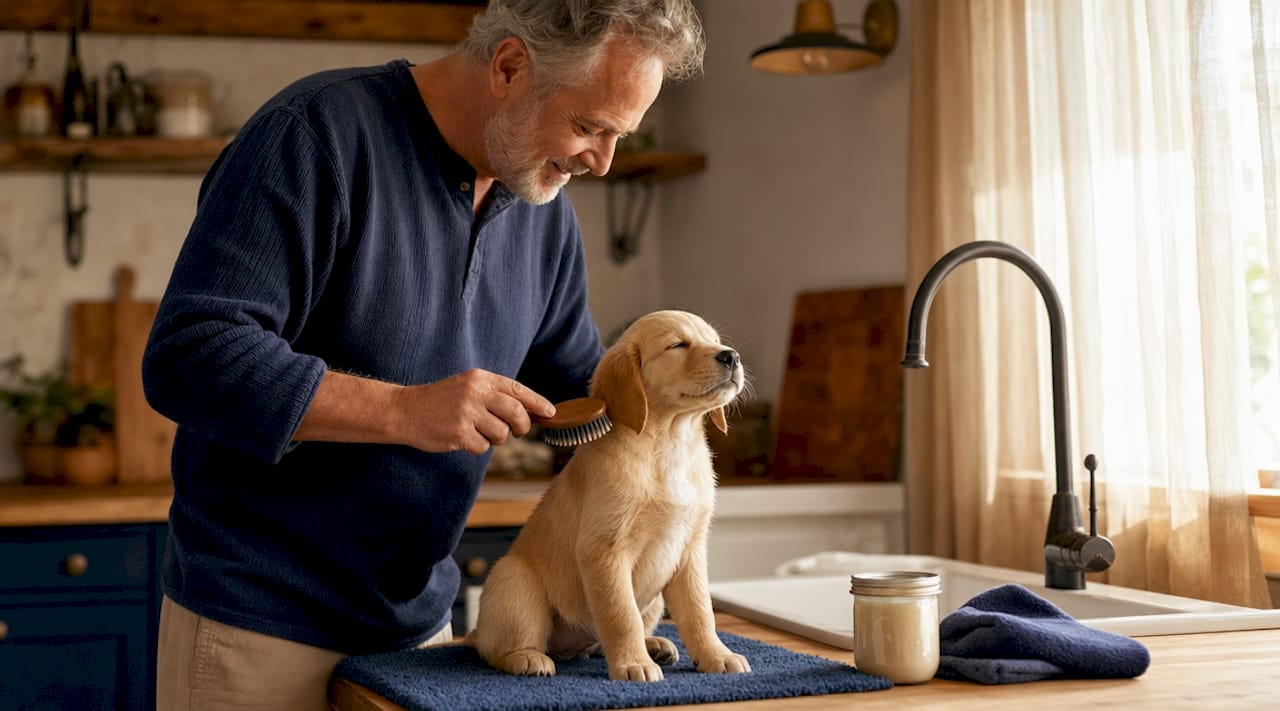
Coat condition is one of the most visible puppy health indicators available to any owner. A healthy coat lies flat, feels soft, and has a subtle sheen. Dull, brittle, or patchy fur often points to nutritional deficiencies, parasites like fleas or mange mites, or underlying illness. Run your fingers through the coat and part the fur to check the skin beneath. Redness, flaking, or tiny dark specks (a sign of flea dirt) all warrant a closer look and likely a vet call.
3. Pink, moist gums
Gum color is one of the fastest ways to assess circulation and hydration in a puppy. Healthy gums are bubble-gum pink and feel slightly moist to the touch. Press a finger against the gum, release it, and watch the color return within two seconds. That’s called the capillary refill time, and it’s a reliable field test. Pale, white, blue, or gray gums are a medical emergency. They indicate poor circulation, anemia, or shock, and require immediate veterinary care.
4. Consistent appetite and enthusiastic eating
A healthy puppy eats with energy and finishes meals reliably. Appetite loss lasting over 24 hours requires veterinary contact. That threshold matters because puppies have very little metabolic reserve. Unlike adult dogs, they can develop hypoglycemia (low blood sugar) within hours of skipping meals, particularly in toy breeds like Chihuahuas and Yorkshire Terriers. Signs of a well-fed puppy include steady weight gain, good muscle tone, and a rounded but not bloated abdomen. Track meals in a simple notebook for the first few weeks to spot patterns quickly.
Pro Tip: Weigh your puppy on a kitchen scale every three to four days during the first two months. A consistent upward trend is one of the clearest signs of a healthy, well-fed puppy.
5. Playfulness and curiosity as behavioral health markers
Healthy puppies are alert and engaged for their age, showing curiosity toward people, objects, and their environment. Play is not just fun. It’s a direct window into neurological and physical health. A puppy that explores, pounces, and interacts with littermates is demonstrating normal development across motor, sensory, and social systems. Socialization during the critical window between three and twelve weeks shapes long-term behavior. Learning why socializing puppies matters helps you understand why a playful, curious puppy is doing exactly what it should.
6. Normal sleep patterns without excessive lethargy
Puppies sleep a lot, typically 16 to 20 hours per day, and that’s completely normal. The key distinction is between restorative sleep and lethargy. A healthy puppy wakes up alert, moves around with purpose, and returns to play or feeding with enthusiasm. Nonreactive, quiet behavior after the first few weeks may indicate illness even when no obvious physical signs are present. If your puppy seems impossible to rouse, shows no interest in food or interaction after waking, or moves with unusual stiffness, those are red flags worth acting on the same day.
7. Clean ears without odor or excessive wax
Healthy ears are pale pink inside, odor-free, and produce only a small amount of light-colored wax. A strong smell, dark discharge, or frequent head shaking points to a yeast or bacterial infection, both of which are common in puppies. Floppy-eared breeds like Cocker Spaniels and Basset Hounds are especially prone to ear infections because reduced airflow creates a warm, moist environment where bacteria thrive. Check ears weekly as part of your puppy health checklist. Catching an infection early means a simple topical treatment rather than a prolonged course of antibiotics.
8. Healthy breathing rate and effort
Normal resting respiratory rate in puppies runs roughly 20 to 40 breaths per minute. That number matters less than the effort behind each breath. A puppy breathing rapidly after play or in warm weather is normal. A puppy breathing rapidly at rest, with visible chest heaving, flared nostrils, or a bluish tinge to the gums, is experiencing respiratory distress. Labored breathing alongside color changes or collapse is an emergency requiring immediate veterinary care. Count breaths while your puppy sleeps to establish a personal baseline, then use that number as your reference point going forward.
9. Steady weight gain and proper body condition
Weight gain is one of the most objective puppy vitality signs you can track at home. A healthy puppy should gain weight steadily every week during the first several months of life. You should be able to feel the ribs with light pressure but not see them prominently. A visible waist when viewed from above and a slight abdominal tuck from the side indicate good body condition. Both underweight and overweight puppies face health risks. Underweight puppies are vulnerable to infection and hypoglycemia. Overweight puppies put excess stress on developing joints, which can cause long-term orthopedic problems.
10. Normal elimination habits
Healthy puppies urinate frequently and produce firm, brown stools at least once or twice daily. Diarrhea that lasts more than 24 hours, blood in the stool, or straining to eliminate all require veterinary evaluation. Continuous vomiting, bloody diarrhea, or severe lethargy are classified as emergency symptoms by veterinary hospital guidelines. Intestinal parasites like roundworms and giardia are extremely common in puppies and often show up first as loose stools or a pot-bellied appearance. A fecal test at your first vet visit catches these early and prevents them from affecting growth.
11. How to perform a simple DIY puppy health check
A thorough at-home health screening covers eyes, ears, gums, coat, skin, paws, and abdomen alongside vital signs and behavior. Run through this sequence once a week:
- Eyes: Look for clarity, equal pupil size, and no discharge.
- Ears: Smell for odor, check for dark wax or head shaking.
- Gums: Press and release to test capillary refill time.
- Coat and skin: Part the fur and look for redness, flaking, or parasites.
- Paws: Check pads for cuts, swelling, or foreign objects between toes.
- Abdomen: Feel gently for bloating, hard masses, or pain response.
- Vital signs: Count resting breaths and note any unusual sounds.
- Behavior: Compare today’s energy and appetite to the puppy’s normal baseline.
Comparing puppy behavior to its normal routine is the most practical method for catching health issues early. Write down what normal looks like for your specific puppy so deviations are obvious rather than guesswork.
Pro Tip: Schedule your weekly health check at the same time each day, ideally after a meal when the puppy is calm. Consistency makes the process faster and the results more reliable.
12. Breed and age differences in health sign interpretation
| Factor | What changes | What stays constant |
|---|---|---|
| Flat-faced breeds (Bulldogs, Pugs) | Higher baseline respiratory rate, more eye discharge | Gum color, appetite, and alertness standards |
| Floppy-eared breeds (Cocker Spaniels) | Greater ear infection risk | Coat sheen and weight gain expectations |
| Giant breeds (Great Danes, Mastiffs) | Slower growth curve, lower energy per pound | Capillary refill time, elimination habits |
| Neonatal puppies (0 to 3 weeks) | Sleep dominates; play is absent | Steady weight gain and nursing enthusiasm |
| Juvenile puppies (8 to 16 weeks) | Rapid growth, high curiosity, vaccination window | Gum color, coat condition, appetite |
Breed-specific predispositions mean that a Bulldog breathing faster than a Border Collie at rest is not automatically a problem. Getting baseline information from your breeder or a veterinarian at the first visit gives you the right reference point for your specific dog. Meeting the breeder before buying is one of the best ways to gather that baseline health history before you bring a puppy home.
Early veterinary visits combined with home monitoring form the foundation for long-term puppy wellness, according to the American Humane Society. The first vet appointment should happen within 48 to 72 hours of bringing a new puppy home.
Key takeaways
Healthy puppies show alignment across multiple systems: clear eyes, pink gums, a shiny coat, steady appetite, and playful behavior all working together tell a more complete story than any single sign alone.
| Point | Details |
|---|---|
| Physical signs come first | Check eyes, gums, coat, and ears weekly to catch problems before symptoms escalate. |
| Behavior reveals what the body hides | A puppy that is quiet and disengaged after the first few weeks may be ill even without visible physical signs. |
| Appetite is a daily metric | Any refusal to eat lasting more than 24 hours requires a same-day veterinary call. |
| Breed context changes interpretation | Know your breed’s respiratory and coat baseline before using general health benchmarks. |
| Home checks support vet care | A weekly DIY inspection does not replace veterinary visits but catches early warning signs between appointments. |
What I’ve learned from watching puppies closely
I’ve spent years reading about, writing about, and talking to breeders and veterinarians about puppy health. The single most consistent mistake I see new owners make is treating health signs as a binary. Either the puppy looks sick or it doesn’t. That framing misses almost everything.
The real skill is learning what normal looks like for your specific puppy and then noticing when something shifts. A Labrador that normally charges its food bowl and one morning sniffs it and walks away is telling you something. That same behavior in a puppy that has always been a slow eater means far less. Context is everything.
I also think new owners underestimate how much information a good breeder carries. A responsible breeding program tracks litter weights, vaccination schedules, and early behavioral observations. That data gives you a head start that no article can fully replicate. Ask for it before you leave with your puppy.
The other thing I’d push back on is the idea that vigilance and enjoyment are in tension. They’re not. The owners who know their puppies best are the ones who spend the most time with them. Observation is not a chore you add to your day. It’s what happens naturally when you’re present and paying attention.
— Taylor
Start your puppy search with confidence at Greenfieldpups

Finding a healthy puppy starts before you ever meet one in person. Greenfieldpups connects prospective owners with breeders who prioritize health, temperament, and responsible practices across the United States. The platform’s resources on choosing a responsible dog breeder walk you through exactly what to look for, from health testing documentation to early socialization practices. When you know the signs of a healthy puppy and you source from a breeder who meets those standards, you give your new dog the best possible foundation. Browse available listings and breeder profiles at Greenfieldpups today.
FAQ
What are the first signs of a healthy puppy?
The first signs to check are clear, bright eyes, pink moist gums, a shiny coat, and an enthusiastic appetite. A healthy puppy is also alert and responsive to its environment from the first weeks of life.
How can I tell if my puppy is growing properly?
Steady weekly weight gain, visible muscle tone, and ribs that are felt but not seen are the primary growth indicators. Giant breeds grow more slowly per week than small breeds, so compare your puppy’s progress to breed-specific growth charts.
When should I take my puppy to the vet immediately?
Seek emergency care for continuous vomiting, bloody diarrhea, difficulty breathing or collapse, pale or blue gums, and seizures. These symptoms indicate conditions that deteriorate rapidly without professional intervention.
Is a quiet puppy always a sick puppy?
Not always, but quiet behavior after the first few weeks warrants attention. Neonatal puppies sleep most of the time, but by weeks four to six, reduced playfulness and engagement are signs worth discussing with a veterinarian.
How often should I do a home health check on my puppy?
A weekly full-body inspection covering eyes, ears, gums, coat, paws, and abdomen is the standard recommendation. Daily observation of appetite, energy, and elimination habits fills in the gaps between those weekly checks.
Leave a Comment