

Why Avoid Puppy Mills: What Every Buyer Must Know
A puppy mill is a commercial breeding operation that prioritizes profit over animal welfare, producing dogs in overcrowded, unsanitary conditions with little to no veterinary care. The reasons to avoid puppy mills go far beyond sentiment. According to Humane World for Animals, about 10,000 active mills operate across the United States, producing nearly 2 million puppies every year. These facilities cause measurable, lasting harm to dogs and to the buyers who unknowingly fund them. Understanding the full picture of puppy mill dangers is the first step toward making a choice you won’t regret.
Why avoid puppy mills: the core difference from ethical breeders
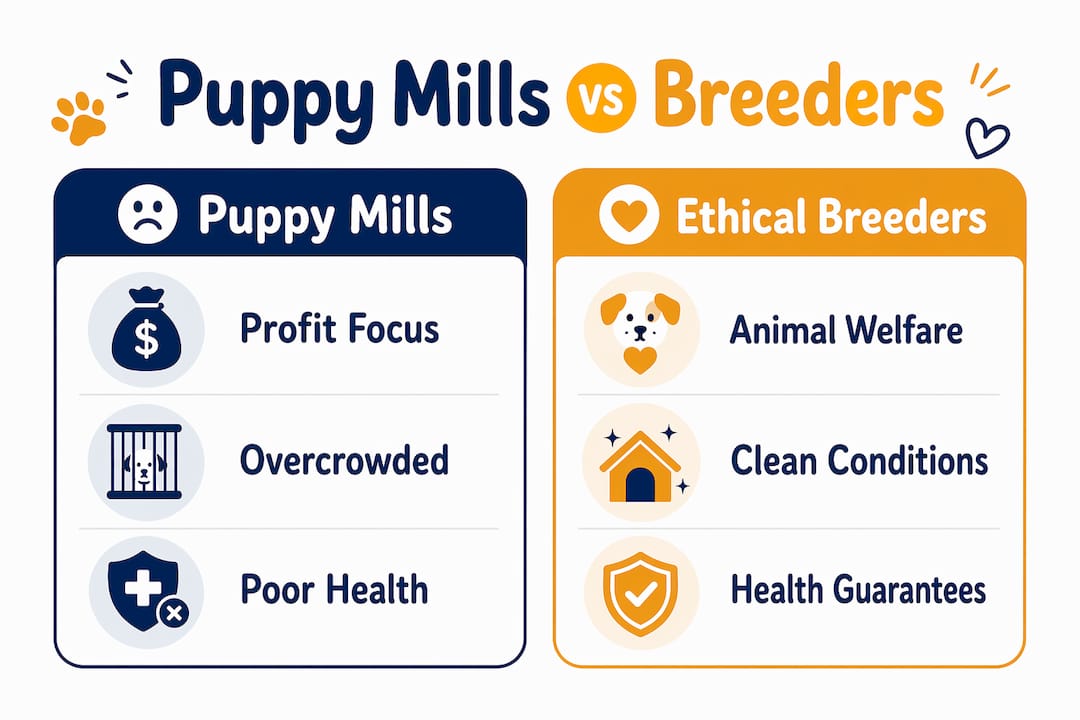
Puppy mills and responsible breeders operate on opposite ends of the animal welfare spectrum. A mill treats dogs as production units. A responsible breeder treats them as living animals with health, behavioral, and genetic needs that require careful attention.
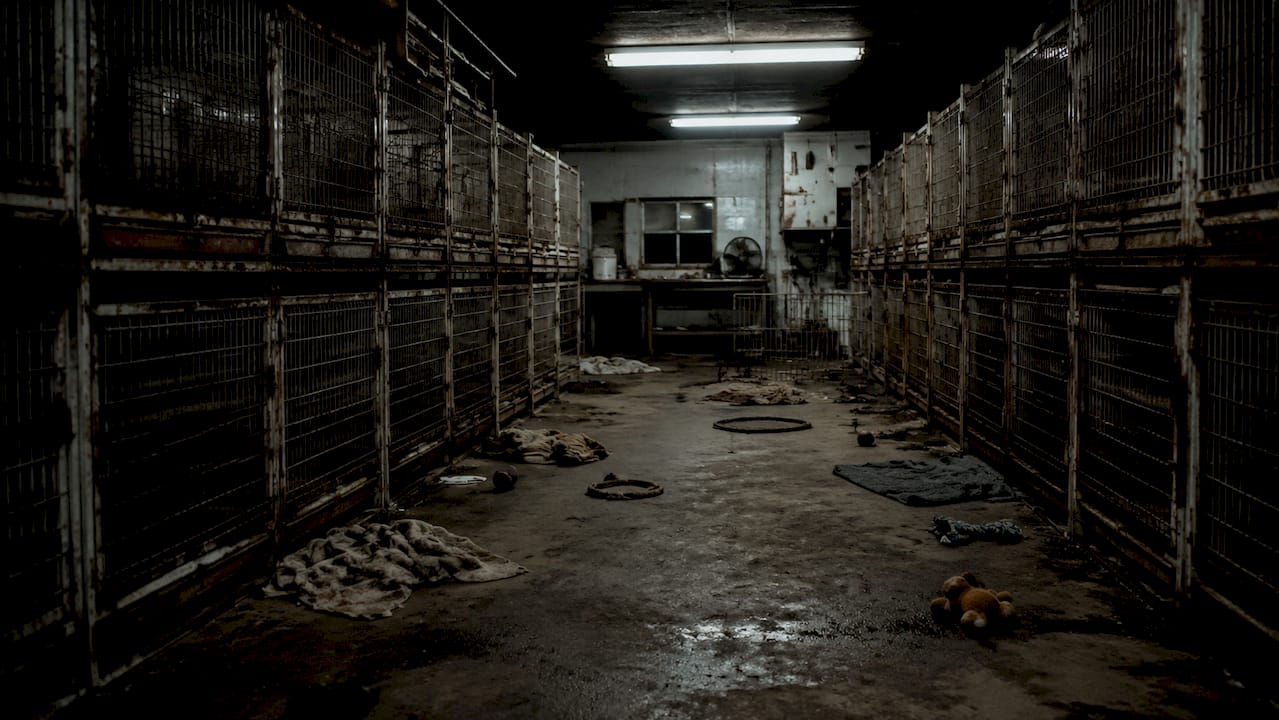
The conditions inside most mills are well documented. Dogs live in wire-floored stacked cages, rarely leave those cages, and receive minimal human contact. Mothers are bred at every heat cycle until their bodies give out. Puppies are pulled from their mothers too early, which disrupts critical socialization windows and causes lasting behavioral damage.
USDA licensing is one of the most misunderstood factors in this space. A USDA license only guarantees that a dog has basic shelter, food, and water. It does not require adequate veterinary care, socialization, or humane space standards. Many buyers see “USDA licensed” in an ad and assume it signals quality. It does not.
Reputable breeders interview buyers, provide health guarantees, and focus on lifelong temperament and wellness. They will not sell to anyone who shows up with cash. That screening process is the clearest signal that a breeder prioritizes the dog over the sale.
| Point | Puppy mills | Responsible breeders |
|---|---|---|
| Primary motivation | Profit | Animal welfare and breed health |
| Living conditions | Overcrowded cages, minimal space | Clean, spacious, socialized environments |
| Veterinary care | Minimal or absent | Regular screenings and health guarantees |
| Buyer screening | None, sells to anyone | Interviews buyers, asks questions |
| USDA licensing | Often present but minimal standard | May or may not apply; welfare exceeds minimums |
Pro Tip: Ask any breeder for a full facility tour before committing. A responsible breeder will welcome the visit. A mill operator will offer excuses or suggest a neutral meetup location instead.
What health and behavioral problems do mill puppies commonly face?
The puppy mill impact on dogs is not limited to early weeks in a cage. The damage follows these animals for life. 71% of puppies from mills suffer respiratory illnesses, and 51% die before reaching six months due to preventable conditions. Those numbers represent a systemic failure, not isolated bad luck.
Veterinary costs reflect that reality. First-year vet bills for mill puppies regularly exceed $3,000 due to infections, parasites, genetic disorders, and immune deficiencies. Buyers who thought they were saving money by choosing a cheaper puppy often spend far more in the first twelve months than they would have with a responsibly bred dog.
Research from the Royal Veterinary College confirms that the damage is not reversible through good home care alone. Puppies from low-welfare sources show measurably higher rates of health disorders by 21 months, regardless of how well they are cared for after purchase. The breeding environment shapes the dog’s baseline health before it ever reaches your home.
Behavioral issues are equally serious. Mill puppies miss the critical socialization window between 3 and 12 weeks. Without human contact, varied environments, and interaction with other animals during that period, they develop fear responses, anxiety, and aggression that require months or years of professional training to manage.
Common health and behavioral red flags in mill puppies include:
- Chronic respiratory infections or persistent coughing
- Eye and ear discharge that recurs after treatment
- Extreme fearfulness, hiding, or unprovoked aggression
- Difficulty bonding with humans or other pets
- Gastrointestinal issues including chronic diarrhea
- Genetic conditions like hip dysplasia, heart defects, or epilepsy
Pro Tip: Before bringing any puppy home, ask for a written health record covering vaccinations, deworming, and any vet visits. A responsible source will have documentation. A mill will have little or none.
Does buying from a mill fund animal cruelty?
Buying a puppy from a mill directly funds its continuation. This is the uncomfortable truth that most buyers do not consider in the moment. Consumer demand keeps mills profitable, and every purchase signals to the market that the model works. The individual buyer’s intention to “rescue” a sick puppy from a pet store does not change the financial outcome for the mill.
Animal welfare advocates at the MSPCA identify market pressure as the most effective tool for reducing mill operations. When consumer demand drops, mills lose revenue and close. That is not theory. States that have banned pet store sales of mill-sourced puppies, including California and Illinois, have seen measurable reductions in mill-connected retail activity.
The cycle is straightforward. A mill produces puppies. A pet store or online seller lists them. A buyer purchases one. The mill receives payment and breeds the next litter. Breaking that cycle requires a deliberate choice at the point of purchase.
Here are four concrete steps to stop supporting mills:
- Adopt from a shelter or rescue. Shelters across the United States hold millions of dogs at any given time, including purebreds and puppies. Choosing adopt not shop removes demand from the commercial breeding market entirely.
- Buy only from breeders you can visit in person. If a seller refuses a facility visit or insists on a parking lot handoff, walk away.
- Avoid pet stores that sell live puppies. Most pet store puppies trace back to commercial mills, even when the store claims otherwise.
- Report suspected mills to your state’s department of agriculture or local humane society. Documentation and complaints create regulatory pressure.
How to identify puppy mills when buying or adopting a dog
Knowing how to identify puppy mills protects you before money changes hands. The warning signs appear in online ads, phone conversations, and in-person visits. Recognizing them takes practice, but the patterns are consistent.
Online red flags are often the first signal. Ads that list multiple breeds available simultaneously, use stock photos instead of real puppy images, or refuse to provide the mother’s name and registration number are all warning signs. Legitimate breeders typically focus on one or two breeds and can provide detailed documentation on request.
One of the most deceptive tactics in the industry is called pet-fishing. Sellers use fake home settings to disguise mill origins, staging photos in living rooms or backyards that have nothing to do with where the puppy was actually raised. The solution is simple: insist on visiting the actual breeding facility, not a neutral location or the seller’s home.
When you visit, look for these specific red flags:
- Multiple litters available at the same time from different breeds
- Mothers that appear exhausted, malnourished, or fearful
- No records of veterinary visits or health screenings
- Puppies kept in cages with wire floors and no bedding
- Seller pressure to complete the sale quickly or pay cash only
- No contract, health guarantee, or return policy offered
Questions that reveal a breeder’s priorities include: “Can I meet the puppy’s mother?” “What genetic testing have the parents had?” “What happens if the puppy develops a health problem?” A responsible breeder answers all three without hesitation. A mill operator deflects or gives vague answers.
Greenfieldpups offers a detailed step-by-step guide to finding reputable breeders that walks through each of these questions in depth. Understanding types of dog breeders also helps buyers place any seller they encounter on the ethical spectrum before making a decision.
Pro Tip: Search the USDA’s Animal Care database before buying from any breeder who claims federal licensing. The database is public and lists inspection reports, violations, and license status. A clean record matters, but remember: USDA compliance is a floor, not a ceiling.
Key Takeaways
Avoiding puppy mills requires understanding that every purchase decision either funds animal cruelty or supports ethical breeding, and the difference comes down to where and how you choose to buy.
| Point | Details |
|---|---|
| Mills cause lasting harm | Puppies from mills show higher health disorder rates at 21 months regardless of post-purchase care. |
| USDA licensing is not a welfare guarantee | A USDA license only covers basic food, water, and shelter, not socialization or vet care. |
| Consumer demand drives the cycle | Buying from mills funds continued operations; adopting or choosing ethical breeders reduces demand. |
| Red flags are consistent and visible | Refusal of facility visits, multiple breeds available, and no health records all signal a mill. |
| Responsible breeders screen buyers | Ethical breeders interview buyers and provide health guarantees, unlike mills that sell to anyone. |
The part most buyers never think about until it’s too late
I’ve spoken with dozens of pet owners over the years who bought a puppy from a pet store or an online listing without asking a single hard question. Almost every one of them told me the same thing afterward: “I thought I was helping the puppy.” That belief is the mill industry’s most powerful marketing tool, and it costs dogs enormously.
The part that sticks with me is the financial and emotional toll. A family brings home a puppy that seems healthy. Within weeks, it develops a respiratory infection. Then a skin condition. Then a genetic disorder surfaces at 18 months. The vet bills climb past $4,000. The family loves the dog deeply by then, so they pay. The mill that produced that puppy has already moved on to the next litter.
What I’ve learned is that the best protection is not sympathy for the puppy in the cage. It’s discipline at the point of purchase. Visiting a facility, meeting the mother, reading inspection records, and asking uncomfortable questions are not obstacles to getting a dog. They are the process that separates a healthy, well-adjusted companion from years of heartbreak and expense.
The good news is that ethical breeders and shelters are not hard to find when you know what to look for. Choosing responsible breeding practices over convenience is one of the most direct ways any buyer can improve canine welfare at scale. One informed decision at a time adds up.
— Taylor
Find ethical breeders and trusted listings on Greenfieldpups
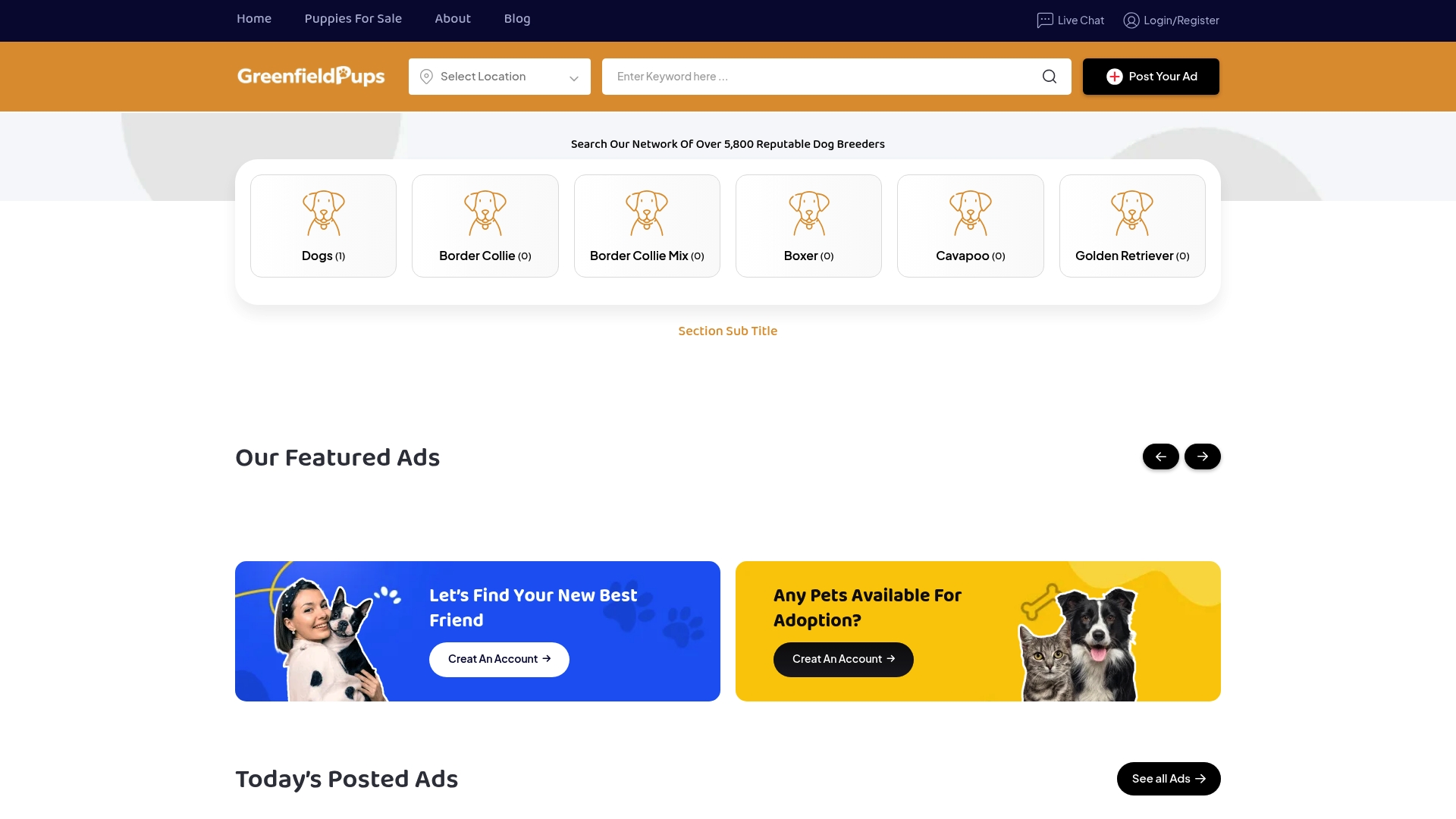
Greenfieldpups connects dog buyers with breeders who meet ethical standards, making it easier to find a healthy puppy without supporting commercial mills. The platform gives you access to breeder profiles, breed-specific searches, and listings from sellers across the United States who are committed to animal welfare.
Whether you are buying your first dog or adding to your family, knowing the difference between breeder types changes everything. Greenfieldpups has built resources to help you make that call with confidence. Start with the guide on types of dog breeders to understand exactly where any seller you encounter fits in the ethical spectrum. For deeper guidance, the dog breeder roles and ethics resource explains what responsible breeders are actually accountable for, and what to expect from them at every step.
FAQ
What is a puppy mill, exactly?
A puppy mill is a high-volume commercial breeding facility that prioritizes profit over animal welfare, keeping dogs in overcrowded, unsanitary conditions with minimal veterinary care. These operations produce nearly 2 million puppies annually across approximately 10,000 active facilities in the United States.
Are pet store puppies from mills?
Most puppies sold in pet stores originate from commercial mills, even when stores claim otherwise. The MSPCA and other animal welfare organizations consistently link pet store supply chains to large-scale commercial breeders operating under minimal welfare standards.
Does a USDA license mean a breeder is ethical?
No. A USDA license only confirms that a facility meets minimum standards for food, water, and basic shelter. It does not address socialization, veterinary care, or humane living conditions, so a licensed mill can still cause serious harm to dogs.
How can I tell if a breeder is running a mill?
Key warning signs include refusal to allow facility visits, multiple breeds available simultaneously, no health records, and pressure to complete the sale quickly. Reputable breeders welcome questions, provide documentation, and always allow buyers to meet the puppy’s mother.
Is adopting from a shelter better than buying from a breeder?
Adopting from a shelter removes demand from the commercial breeding market entirely and gives a dog in need a home. If you prefer a specific breed, choosing a responsible ethical breeder who screens buyers and provides health guarantees is the next best option.
Leave a Comment