


Puppy Rehoming Process: A Responsible Owner’s Guide
The puppy rehoming process is a structured series of steps designed to place your dog safely with a new family through preparation, thorough screening, and a responsible handover. Done right, rehoming takes up to 3 months to complete when you prioritize safety over speed. Platforms like Rehome by Adopt-a-Pet and resources from Austin Pets Alive make the process more manageable. This guide walks you through every stage, from getting your puppy ready to supporting the new owner after placement, so you can make this transition with confidence and care.
What does the puppy rehoming process actually involve?
The dog rehoming process is not a single event. It is a sequence of decisions that begins well before you post a listing and continues after the puppy leaves your home. Each stage protects your dog from landing in an unsafe situation.
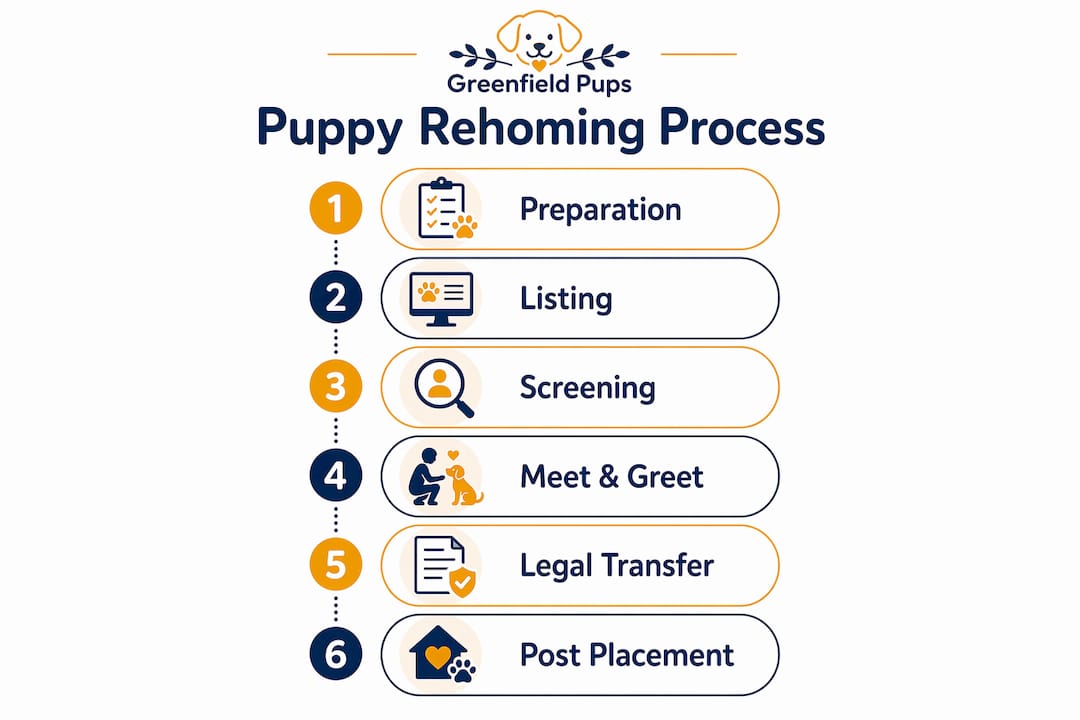
The core stages are preparation, listing creation, adopter screening, meet-and-greet, legal transfer, and post-placement follow-up. Skipping any stage increases the risk of a failed placement or, worse, a puppy ending up with someone who cannot care for it properly. Think of it like a job hiring process: you would not hand over a role to the first applicant who showed interest.
Responsible rehoming also means being honest with yourself. Before listing your puppy, explore every local support option. Community resources like training programs and low-cost veterinary services can sometimes resolve the issues driving the rehoming decision. Keeping a dog in a familiar home is less stressful than any placement, no matter how good the new family is.
How should you prepare before listing your puppy?
Preparation is the foundation of a successful placement. A puppy that arrives at its new home healthy, documented, and behaviorally stable is far more likely to stay there.
Start with medical care. Vaccinations, microchip details, and a signed transfer agreement must be current and organized before you contact a single adopter. Gather all vet records into one folder, physical or digital. If your puppy is not yet spayed or neutered, address that before listing if your timeline allows.
Next, create a behavior profile. Write down your puppy’s daily routine, known fears, food preferences, energy level, and how it interacts with children, strangers, and other animals. This document becomes the instruction manual you hand to the new owner. A professional grooming session and a few basic obedience refreshers also improve your puppy’s first impression during meet-and-greets.
Legal preparation matters too. A signed transfer agreement protects both parties. It should include the puppy’s name, breed, date of birth, vaccination history, microchip number, and a clause covering what happens if the placement does not work out.
- Update all vaccinations and flea or worm treatments
- Compile vet records, microchip registration, and spay/neuter documentation
- Write a detailed behavior and care profile
- Schedule a grooming appointment before photos and meetings
- Draft a transfer agreement with a return policy clause
Pro Tip: Take your behavior profile seriously. New owners who receive a detailed care document report far fewer adjustment problems in the first month.
How do you create a listing and screen adopters effectively?
A strong listing attracts the right applicants and filters out the wrong ones before you spend time on phone calls. Honesty is your best tool here.
Your listing should include clear, well-lit photos from multiple angles, an accurate description of the puppy’s personality, energy level, and any known quirks. Avoid vague phrases like “great with kids.” Instead, write “plays well with children over age 8 but gets anxious around toddlers.” Specificity builds trust and self-selects applicants whose lifestyle matches your puppy’s needs.
Platforms like Rehome by Adopt-a-Pet cap listings at 30 days or 20 applications to keep the process manageable. That cap exists for a reason. More applications do not mean better outcomes. Focused screening of a smaller pool produces stronger matches.
Charging a rehoming fee deters bad actors and scammers who target free listings. A fee between $50 and $200 is common and signals to serious adopters that you are treating this as a responsible placement, not a quick disposal.
Screening questions to ask every applicant:
- Do you currently have other pets, and how are they managed?
- What is your living situation, and does your landlord allow dogs?
- Who is your current or planned veterinarian?
- How many hours per day will the puppy be alone?
- Have you owned a dog before, and what happened to that dog?
- What is your plan if the puppy develops a behavioral or health issue?
After the initial application, conduct a phone or video call before any in-person meeting. Listen for hesitation, vague answers, or pressure to skip steps. A responsible adopter welcomes your questions. Anyone who resists screening is not the right fit.
Pro Tip: Ask applicants what happened to their last pet. The answer tells you more about their commitment than any other question.
What are the best practices for meet-and-greets and final handover?
The meet-and-greet is where you confirm what the application suggested. It is also where most placement mistakes happen if you rush it.
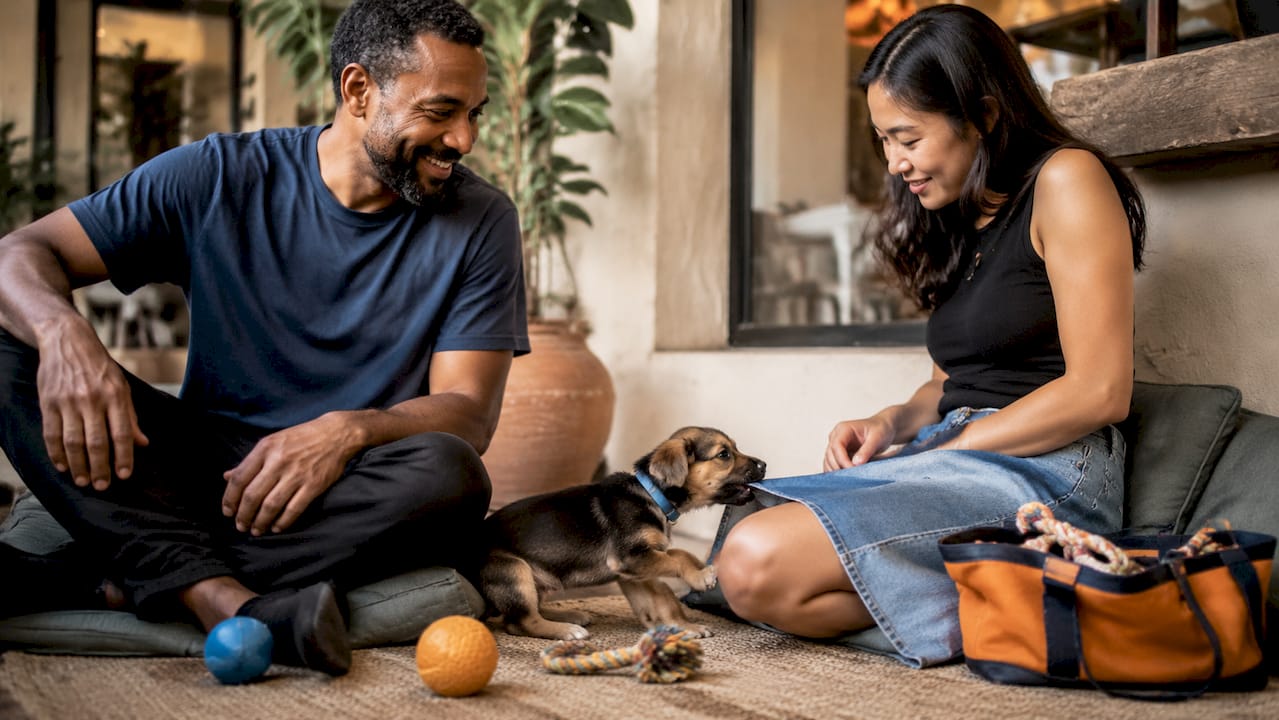
Neutral locations reveal true dog behavior far better than home visits. A park, a quiet parking lot, or a pet-friendly outdoor space removes territorial responses and gives you a cleaner read on how your puppy interacts with the prospective family. Watch for signs of stress in your puppy: tucked tail, flattened ears, or attempts to hide.
Trial periods with written expectations reduce placement failures significantly. A trial of one to two weeks gives both the puppy and the new family time to adjust before the transfer becomes permanent. Put the terms in writing: who covers vet costs during the trial, what counts as a failed placement, and how the puppy is returned if needed.
| Step | Action Required | Key Document |
|---|---|---|
| Initial meet-and-greet | Neutral location, observe interactions | None |
| Trial period start | Written trial agreement signed | Trial agreement |
| Final transfer | Full handover with all records | Signed transfer agreement |
| Post-placement check-in | Follow-up call or message at 1 week | Care instruction manual |
Common mistakes to avoid during this phase:
- Rushing the handover because you feel emotionally ready to move on
- Skipping the trial period to simplify the process
- Forgetting to transfer microchip registration to the new owner
- Handing over the puppy without the full care document
Pro Tip: Transfer the microchip registration on the day of handover, not after. Delays create gaps in ownership records that complicate things if the puppy gets lost.
How do you support your puppy and new owner after rehoming?
The placement is not finished when the puppy leaves your home. The first weeks in a new environment are the hardest for any dog.
New dogs commonly show behavioral regression during a 3–12 week decompression period. A puppy that was house-trained may have accidents. A dog that was calm may become anxious or clingy. This is normal. The new owner needs to know this before it happens, not after they panic and consider returning the puppy.
Your care document is the most important thing you hand over. Include feeding schedule, favorite toys, known fears, commands the puppy responds to, and any medical needs. The more specific it is, the smoother the transition. Think of it as a user manual for a living creature that cannot speak for itself.
- Schedule a check-in call or message at the one-week mark
- Provide your contact information for questions during the first month
- Share your vet’s contact details in case of medical questions
- Remind the new owner that behavioral regression is temporary and normal
“Transparent communication and trial periods post-adoption significantly improve rehoming success and reduce behavioral issues.”
Managing your own emotions during this period matters too. Grief after rehoming is real and valid. Give yourself permission to feel it without second-guessing a decision you made carefully and responsibly.
What are the biggest challenges in rehoming and how do you handle them?
Even a well-run rehoming effort hits obstacles. Knowing what to expect prevents panic and poor decisions under pressure.
Limited or unsuitable applicants are the most common frustration. If you receive few responses, expand your listing to additional platforms or local Facebook groups focused on dog adoption. If applicants are unsuitable, do not compromise. A longer search is always better than a wrong placement.
Urgent rehoming situations require extra caution, not less. When time pressure is high, the temptation to skip screening steps increases. Resist it. A rushed placement that fails puts the puppy in a worse position than a brief delay.
Scams and unsafe adopters target free or low-priced listings. Red flags include requests to ship the puppy, refusal to meet in person, or pressure to decide quickly. Any of these signals should end the conversation immediately.
Emotional stigma around rehoming stops many owners from seeking help early enough. Rehoming a puppy responsibly is an act of care, not failure. Reaching out to organizations like Austin Pets Alive for guidance before you reach a crisis point gives you more options and more time to find the right match.
If your own efforts stall, contact a local rescue organization or no-kill shelter. Many offer owner-surrender programs with screening processes already in place. This is a legitimate path, not a last resort to be ashamed of.
Key takeaways
A responsible puppy rehoming process succeeds when preparation, honest screening, and post-placement communication work together to protect the dog at every stage.
| Point | Details |
|---|---|
| Prepare before listing | Gather vet records, write a behavior profile, and complete medical care before posting. |
| Screen adopters thoroughly | Use structured questions, phone calls, and a rehoming fee to filter serious applicants. |
| Use neutral meet-and-greet locations | Neutral settings reveal true dog behavior and prevent territorial misjudgments. |
| Include a trial period | A written one-to-two week trial reduces placement failures and protects both parties. |
| Support the transition actively | Provide a detailed care document and follow up at one week to catch early adjustment issues. |
What i’ve learned from watching rehoming go right and wrong
Rehoming a puppy is one of the most emotionally loaded decisions a dog owner makes. I have seen it handled beautifully and I have seen it go badly wrong, and the difference almost always comes down to one thing: whether the owner treated it as a process or as an event.
The owners who do it well start early. They do not wait until the situation is desperate. They take the time to write a real behavior profile, ask hard questions of applicants, and insist on a trial period even when the adopter seems perfect. That patience is not overcaution. It is the only thing standing between their puppy and a placement that fails six weeks later.
The owners who struggle tend to prioritize their own emotional relief over the puppy’s needs. They want the process to be over. That urgency leads to skipped steps, and skipped steps lead to returns or, worse, a puppy that disappears into a situation you cannot monitor.
The behavioral matching guidance from Daily Paws puts it plainly: successful placements focus on the dog’s practical needs, not the adopter’s wishes. That principle should anchor every decision you make from the first listing to the final handover.
If you are in the middle of this process right now, slow down. The right family exists. Give yourself the time to find them.
— Taylor
Find more guidance on responsible dog placement at Greenfieldpups
Rehoming a puppy is one part of a larger picture of responsible dog ownership. Greenfieldpups has built a library of resources for owners, breeders, and adopters navigating exactly these decisions.
Whether you are placing a puppy for the first time or looking to understand what ethical placement looks like from a breeder’s perspective, the responsible seller’s guide covers the legal, practical, and ethical steps in detail. For a broader view of how placement works across the market, the dog marketplaces guide explains how to use listing platforms safely and effectively. Greenfieldpups exists to make these decisions easier, with resources grounded in real practice rather than generic advice.
FAQ
How long does the puppy rehoming process take?
The process takes up to 3 months when done thoroughly. Rushing the timeline increases the risk of a poor match and a failed placement.
Should i charge a rehoming fee?
Yes. A rehoming fee deters bad actors and scammers who target free listings. A fee between $50 and $200 is standard and signals that you are conducting a serious screening process.
What documents do i need to transfer with my puppy?
You need vaccination records, microchip registration details, and a signed transfer agreement that includes ownership information and a return policy clause.
What is a decompression period and why does it matter?
The decompression period is a 3–12 week adjustment phase after a dog arrives in a new home. Behavioral regression during this time is normal, and a detailed care document from you helps the new owner manage it without panic.
Where should i meet potential adopters for the first time?
Meet in a neutral location like a park or quiet outdoor space. Neutral environment meetings reveal your puppy’s true temperament and avoid territorial behavior that can mislead both parties.
Leave a Comment