
How breeders shape pet adoption and responsible dog ownership
Many dog lovers assume the world is neatly split into two camps: breeders who sell puppies for profit and shelters that rescue dogs in need. That framing is understandable, but it misses a critical truth. Responsible breeders, the ones who screen buyers, provide lifelong support, and take dogs back if a placement fails, can actively reduce the number of dogs that ever reach a shelter. This article breaks down how ethical breeder practices fit into the wider adoption ecosystem, what separates good breeders from harmful ones, and how you can make smarter choices for your next canine companion.
Table of Contents
- Understanding adoption and breeder roles: The landscape today
- How responsible breeders support lifelong success (and help limit returns)
- Dangers of irresponsible breeding: Puppy mills and shelter impact
- How to identify and choose a responsible breeder
- A nuanced truth: Responsible breeders and the adoption movement aren’t enemies
- Explore resources for responsible dog adoption and breeding
- Frequently asked questions
Key Takeaways
| Point | Details |
|---|---|
| Responsible breeders reduce surrenders | Screening, support, and return policies lower the odds of dogs ending up in shelters. |
| Irresponsible breeding harms adoption | Puppy mills and unethical operations increase shelter intake and pet welfare issues. |
| Due diligence is vital | Vet breeders through visits, records, and questions—don’t rely on reputation or price. |
| Most shelter dogs come from non-breeder sources | Data shows informal and owner-to-owner transfers are the largest shelter dog sources. |
Understanding adoption and breeder roles: The landscape today
Having set the context for why this conversation matters, it is essential to understand where breeders fit in today’s adoption landscape.
The term “pet adoption” usually brings shelters and rescues to mind, but the reality is broader. Pet adoption basics include any process where a person takes permanent responsibility for a dog, whether that dog comes from a municipal shelter, a breed-specific rescue, or a private breeder. Each pathway has its own culture, costs, and outcomes, and none is inherently superior for every family.
Most people imagine that breeders are a primary pipeline into shelters, but the data tells a different story. The dominant intake sources for shelters are strays, owner surrenders, transfers between facilities, and seizures, not dogs relinquished by licensed commercial breeders. The breeder-to-shelter pipeline is far smaller than popular belief suggests. This matters enormously, because blaming all breeders for shelter overcrowding misidentifies the problem and leads people away from the real solutions.
The American Kennel Club makes a direct point here: responsible breeders can play a constructive role in the pet adoption ecosystem by carefully placing puppies and staying available to owners after purchase, which can reduce returns and relinquishments to shelters. That is a powerful statement from one of the country’s foremost canine authorities. It reframes responsible breeders not as adversaries of adoption but as partners in the same goal: fewer dogs in need.
The Animal Humane Society takes a similarly nuanced position. While adoption is always encouraged first, AHS acknowledges that families seeking specific traits, like a low-shedding breed for allergy sufferers or a highly trainable working dog, may turn to breeders. The AHS advises consumers to evaluate a breeder carefully using facility tours and inspection records to avoid supporting inhumane practices or puppy mills.
Understanding the full range of types of dog breeders is a good place to start. The landscape ranges from hobbyist breeders who raise one or two litters a year with intense personal investment, to large commercial operations that vary wildly in quality.
Key differences: Responsible breeders, puppy mills, and adoption organizations
| Factor | Responsible breeder | Puppy mill | Shelter or rescue |
|---|---|---|---|
| Primary motivation | Breed improvement, health | Volume and profit | Rehoming and welfare |
| Health testing | Genetic and medical screening | Minimal or none | Varies by organization |
| Buyer vetting | Thorough application process | Little to none | Application required |
| Post-placement support | Lifelong guidance | Rare or none | Limited after adoption |
| Return policy | Contractual return to breeder | Typically none | Adoption returns accepted |
| Facility transparency | Open to visits | Usually closed | Generally open |
Why families choose breeders
There are legitimate reasons families seek out breeders rather than shelters, and understanding them helps everyone in the ecosystem:
- Predictable temperament: Breed-specific traits are far more consistent in puppies from tested parents than in mixed-breed or unknown-history shelter dogs.
- Known health history: Responsible breeders provide documentation of genetic testing, vaccinations, and early veterinary care.
- Specific lifestyle match: Working families, active athletes, and allergy sufferers often need a breed with very specific traits that shelters cannot guarantee.
- Early socialization: Well-run breeding programs expose puppies to a controlled range of sounds, people, and environments before they ever go home with a buyer.
- Breeder mentorship: Many buyers value the ongoing relationship with a knowledgeable breeder who can advise them for the dog’s entire life.
How responsible breeders support lifelong success (and help limit returns)
Understanding the spectrum of breeder involvement, let’s look at how responsible practices create better adoption outcomes and healthier long-term matches.
The single biggest driver of shelter intake is mismatched expectations. A family that wanted a calm lapdog but got a high-energy herding breed will struggle. A first-time dog owner who underestimated a strong-willed guardian breed may feel overwhelmed. Responsible breeders work to prevent exactly these situations, and the AKC’s responsible dog breeding guide is explicit about this: breeders should avoid “kennel blindness” (seeing only the positives in their own dogs), provide safe early care, and screen puppy buyers to match temperament and lifestyle needs. That matching process is a hidden form of adoption support that rarely gets discussed.
What does good buyer screening actually look like? It is more structured than most people expect.
- Initial application: Buyers complete a written questionnaire covering housing type, lifestyle, family composition, prior pet experience, and hours alone at home each day.
- Reference checks: Responsible breeders ask for veterinary references from previous pets to verify care history.
- Follow-up interview: A phone or video call lets the breeder assess fit, answer questions honestly, and describe the breed’s real demands, not just its charming qualities.
- Home check: Some breeders require a home visit, either in person or via video tour, particularly for large or energetic breeds.
- Match confirmation: Only after all steps are complete does the breeder confirm a puppy placement, and they may guide which puppy in the litter best suits that specific buyer.
The signs of a responsible breeder include contractual return provisions that function as an internal safety net. If a placement does not work out, the dog goes back to the breeder rather than to a shelter. That is a direct, measurable reduction in shelter intake from a private source.
The role good screening of dog adopters plays in long-term success cannot be overstated. Whether you work with a breeder or a rescue organization, the upfront investment in matching the right dog to the right home pays dividends for years.
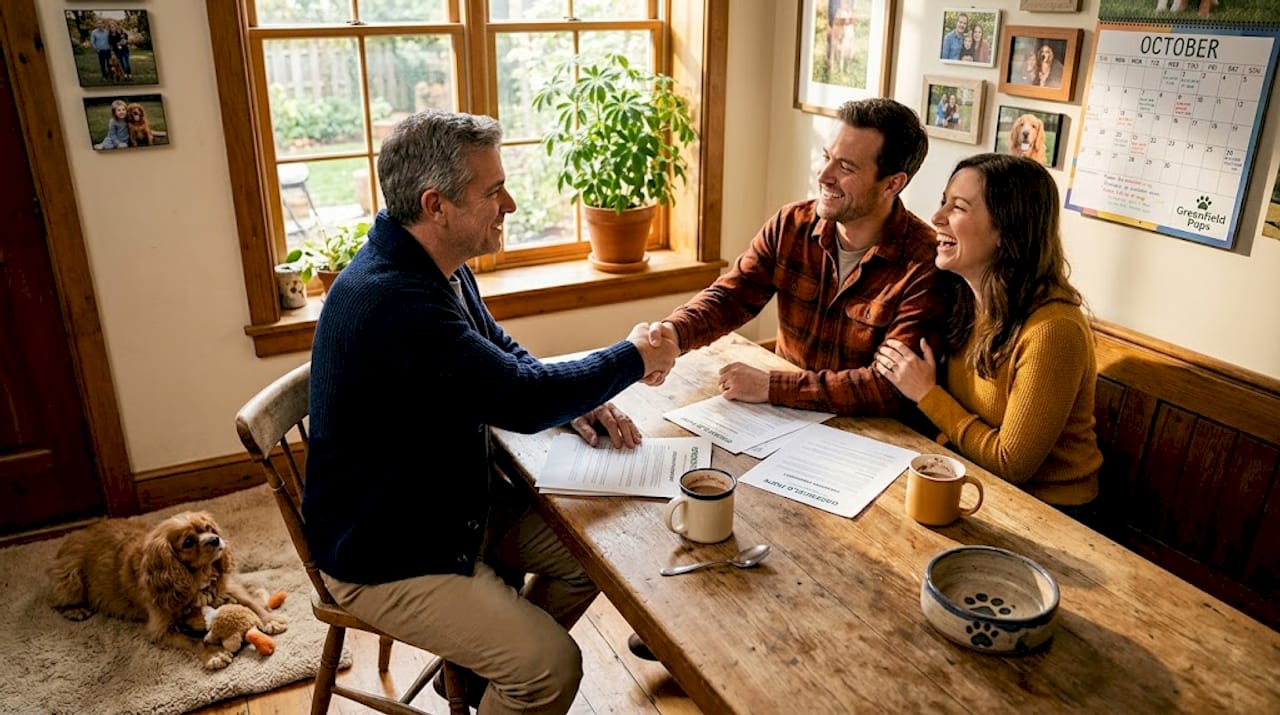
Pro Tip: Always ask for a return-to-breeder clause when reviewing any purchase contract. A reputable breeder who refuses to include one is a red flag worth taking seriously. This clause protects the dog, not just your investment.
Post-placement support comparison
| Support type | Responsible breeder | Puppy mill | Shelter or rescue |
|---|---|---|---|
| Behavioral guidance | Available for dog’s life | None | Limited or one-time |
| Veterinary referrals | Provided | None | Sometimes at adoption |
| Nutrition advice | Breed-specific and ongoing | None | Generic handout |
| Return acceptance | Contractual requirement | Rarely accepted | Yes, with process |
| Training resources | Recommended trainers, resources | None | Sometimes offered |
Understanding these differences helps you recognize why responsible breeding practices are not just about producing healthy puppies. They are about sustaining healthy placements over the long term.
Dangers of irresponsible breeding: Puppy mills and shelter impact
While responsible breeders offer safeguards for owners and pets, it is critical to recognize the real threat posed by irresponsible breeding operations.
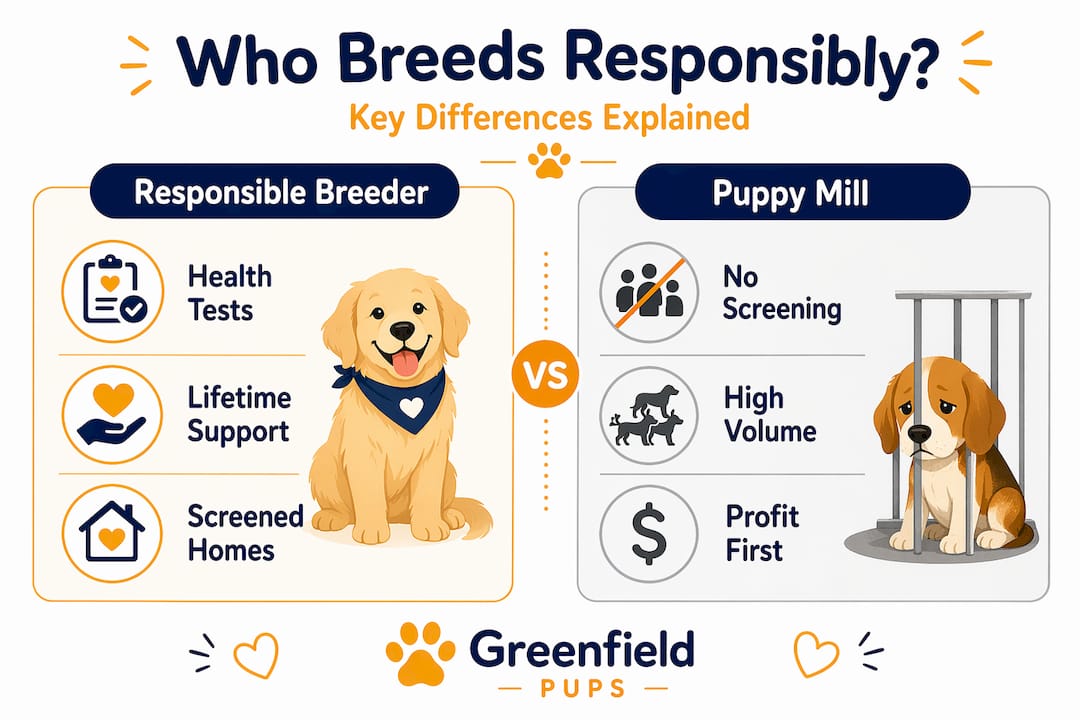
Puppy mills are large-scale commercial dog breeding facilities where profit is prioritized over animal welfare. Dogs in mills are often housed in overcrowded, unsanitary conditions, with little to no veterinary care, no socialization, and no effort made to match puppies with appropriate homes. The output of these operations causes measurable harm to the pet-owning public and to shelters nationwide.
“Advocacy groups and researchers highlight that puppy mills and commercial bad actors undermine adoption efforts by producing poorly bred or poorly cared-for dogs that later enter shelters or rescues.” Source: Humane World
Humane World publishes an annual list exposing some of the worst-offending mills in the country, consistently identifying over 100 puppy mills operating at levels that directly harm animal welfare. These are not edge cases. They represent an ongoing, systemic problem that fuels the very shelter overcrowding that many people incorrectly attribute to responsible breeders.
Here is what puppy mill operations typically produce in terms of real-world risk:
- Behavioral problems: Puppies raised in isolated, understimulating environments often develop anxiety, fear aggression, and difficulty bonding with humans, all of which drive owner surrenders years later.
- Hidden health issues: Without genetic health testing, mill-bred dogs carry higher rates of heritable conditions like hip dysplasia, cardiac disease, and vision problems that become expensive and emotionally difficult to manage.
- No support after sale: When problems emerge, buyers have no recourse and often turn to shelters when they cannot cope.
- Misrepresentation: Mills frequently sell dogs through pet stores or misleading online ads, making it nearly impossible for buyers to distinguish them from responsible breeders without doing serious research.
Understanding licensed breeders explained in proper terms helps you tell the difference. A USDA license alone does not mean a breeder is responsible. It means they have met minimum federal thresholds, which are often far below what ethical breeding communities expect.
It is also worth recognizing that shelter intake data consistently points to community-level informal acquisition, strays, and owner surrenders from various sources as the dominant reasons dogs end up in shelters. The ethical breeder is rarely part of that equation. That fact should redirect the public’s scrutiny toward where the real problem lives: unregulated, informal, and commercial mass breeding with no accountability.
Building awareness around transparent dog advertising is also part of the solution, helping buyers learn what ethical listings look like versus red-flag operations hiding behind polished marketing.
How to identify and choose a responsible breeder
Recognizing the downsides of irresponsible breeding, let’s focus on what you, the potential dog owner, can do to ensure you support ethical practices.
The AHS and AKC converge on the same conclusion: branding and price are not reliable indicators of quality. What matters is direct due diligence, including facility access, inspection records, buyer screening, and contract terms. Here is a practical step-by-step process for evaluating any breeder:
- Request a facility visit. A responsible breeder will always welcome you to see where the puppies are raised. Refusal to allow a visit is one of the clearest red flags available.
- Review health and inspection records. Ask for documentation of genetic health testing for both parents, veterinary records for the litter, and any state or USDA inspection reports.
- Ask for references. Speaking with previous buyers gives you real-world information that no website or brochure can provide.
- Review the purchase contract. Look for a return-to-breeder clause, a health guarantee, and documentation of the breeder’s responsibilities post-sale.
- Notice how they screen you. A responsible breeder will ask you detailed questions about your lifestyle and home. If they seem eager to sell without asking anything, that is a warning sign.
- Verify breed club membership. Membership in national breed clubs, like those affiliated with the AKC, indicates a commitment to breed-specific health and ethical standards.
Red flags to watch for include breeders who offer multiple breeds simultaneously with no breed-specific expertise, those who cannot name the genetic tests they run, and any operation that ships puppies without requiring a buyer application.
Pro Tip: Never let price guide your decision. Some high-end breeders charge premium prices for mill-quality dogs. Some responsible breeders with excellent health programs charge moderate prices. The work is in the research, not in the dollar amount.
Our tips for choosing a responsible breeder go deeper into each of these steps, and our guide to finding reputable breeders walks you through the full process with practical checklists.
A nuanced truth: Responsible breeders and the adoption movement aren’t enemies
With practical steps in hand, let’s step back for a broader perspective on how these pieces work together for real progress.
The “breeder versus adoption” debate has been loud for years, and it has done real damage by oversimplifying a complicated issue. At Greenfield Pups, we have seen the full range of what both responsible breeders and adoption organizations bring to the table, and the truth is that the best outcomes for dogs happen when buyers are informed, breeders are accountable, and shelters are supported, not when one side declares victory over the other.
The uncomfortable reality is that most dogs entering shelters did not come from well-run breeder programs. They came from informal purchases, backyard breeders with no screening or support systems, online impulse buys, and community-level circumstances that responsible breeders have almost no control over. Targeting ethical breeders as the source of shelter overcrowding misallocates public pressure and lets the real bad actors operate without scrutiny.
Buyers, not advocacy campaigns, hold the most immediate power here. When you insist on a facility visit, ask for health records, and demand a return clause, you are withdrawing support from irresponsible operations and putting it where it belongs. That individual-level accountability scales. A breeder who cannot fill litters because buyers are better informed will either improve their practices or exit the market. Neither outcome is bad for dogs.
Understanding breeder ethics and responsibilities in full context changes how you approach the decision. Ethical breeders are not rivals of shelters. They are a parallel system that, when functioning well, keeps dogs out of shelters in the first place. The responsible breeding guide we offer reflects that philosophy: accountability, transparency, and long-term commitment to every dog produced.
The goal for every dog lover should be the same, fewer dogs in crisis, more dogs in permanent loving homes. Responsible breeders, well-run shelters, and informed buyers all serve that goal. The enemy is not the ethical breeder. It is the bad actor hiding behind the same vocabulary.
Explore resources for responsible dog adoption and breeding
For readers eager to dig deeper, here are further resources to support your adoption or breeder journey.
At Greenfield Pups, we believe that good information is the foundation of good pet ownership. Whether you are still deciding between a breeder and a rescue, or you are already deep into evaluating specific breeders, having the right resources makes all the difference.
Our platform gives you access to a full range of guides designed to walk you through every stage of this process. Explore types of dog breeders to understand who is operating in the U.S. market and what separates them. Use our practical checklist on choosing responsible breeders to prepare for your first breeder conversation. And if you want a broader look at how the industry works and what ethical standards really mean, our deep-dive into breeder roles and ethics is where to start. Every resource we offer is built around one principle: more informed buyers create better outcomes for dogs.
Frequently asked questions
Do responsible breeders really help reduce dogs entering shelters?
Yes. Responsible breeders screen buyers, offer lifelong support, and use contractual return policies so dogs never need to enter a shelter if a placement does not work out.
What’s the difference between a responsible breeder and a puppy mill?
Responsible breeders prioritize health testing, buyer matching, and long-term support, while puppy mills focus on volume and profit with little regard for animal welfare, producing dogs that often end up in shelters.
Is it true that most dogs in shelters come from breeders?
No. Shelter intake data shows that strays, owner surrenders, and community-sourced dogs dominate shelter populations, not dogs relinquished by licensed responsible breeders.
What should I look for when choosing a breeder?
Always visit the facility, review health and inspection records, ask for references, check the contract for a return clause, and note whether the breeder screens you thoroughly before agreeing to a sale.
Leave a Comment