
What Is a Puppy Mill? the Truth About Dog Farms
Most people encounter the term “puppy mill” and picture something extreme and obviously illegal. The reality is more uncomfortable. A puppy mill is a commercial dog breeding operation that prioritizes profit over the physical and emotional welfare of the animals it produces. These facilities exist across the United States in large numbers, many of them fully licensed and operating within the law. Understanding what a puppy mill actually is, how it operates, and what drives it forward is the first step any animal welfare advocate needs to take before buying or adopting a dog.
Table of Contents
- Key takeaways
- What is a puppy mill, really?
- Common conditions dogs endure in puppy mills
- Laws, enforcement, and the gaps that let mills survive
- How consumer choices drive and can stop puppy mills
- My perspective: why this problem is harder to fix than it looks
- Find responsible breeders through Greenfieldpups
- FAQ
Key takeaways
| Point | Details |
|---|---|
| Welfare defines a puppy mill | A puppy mill is defined by poor care conditions, not by the number of dogs bred. |
| Many mills operate legally | USDA licensing does not guarantee humane treatment or adequate inspections. |
| Consumer demand drives the problem | Buying puppies from unverified sources directly funds puppy mill operations. |
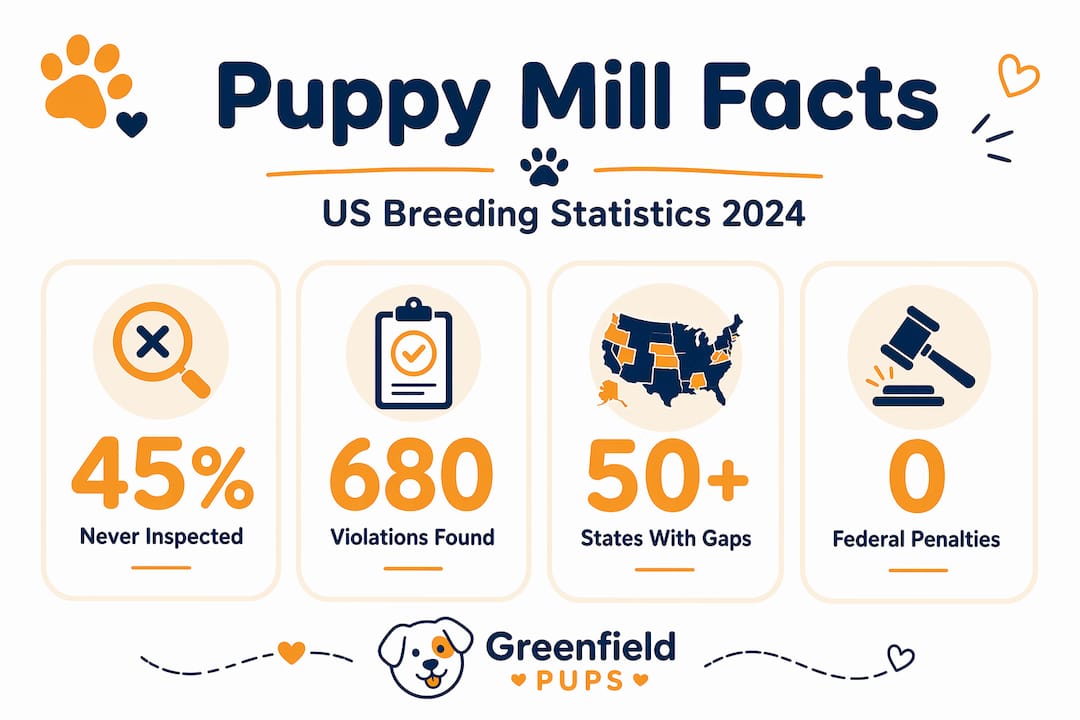
| Enforcement has serious gaps | Nearly half of licensed breeders went uninspected in 2024, leaving dogs unprotected. |
| You have power to act | Choosing vetted breeders or adoption over impulse purchases is the most effective way to help. |
What is a puppy mill, really?
The puppy mill definition that most welfare organizations agree on has nothing to do with a specific number of dogs. No numeric threshold determines whether a breeding operation qualifies as a puppy mill. What matters is the quality of care, or more accurately, the lack of it.
The American Humane Society describes puppy mills as facilities with filthy, unsafe kennels where dogs are frequently dirty, ill, or injured, and where little to no behavioral or veterinary care is provided. That framing matters because it shifts the conversation away from scale and toward outcomes. A small operation can be a puppy mill. A large licensed facility can also be one.
Animal welfare groups are consistent on this point:
“Puppy mills are defined by poor welfare outcomes more than by breeding scale or licensing status.” — American Humane Society
The key conditions that separate a puppy mill from a responsible breeding program include:
- Dogs kept in overcrowded, wire-floored cages with little room to move
- No meaningful socialization with humans or other animals during developmental stages
- Breeding females cycled through pregnancy repeatedly until their bodies give out
- No genetic screening or health testing before breeding
- Puppies removed from their mothers too early to meet retail demand
Understanding this welfare-focused definition is what puppy mills explained as an issue requires. It is not about size. It is about the treatment of living animals as production units.
Common conditions dogs endure in puppy mills
The physical environment inside a puppy mill is not an accident. It is a cost-cutting decision. When a breeder eliminates veterinary care, proper nutrition, and adequate space, profit margins go up. Dogs pay the price.
Here is what documented investigations and welfare reports consistently find:
- Unsanitary housing. Wire cage floors cut paw pads. Waste accumulates beneath cages. Dogs live in proximity to sick animals with no disease management protocols.
- No veterinary care. Infections, injuries, and genetic conditions go untreated. Breeding dogs may spend years in pain with no intervention.
- Severe under-socialization. Puppies raised with no human contact and no exposure to normal household stimuli develop fear-based behaviors that persist into adulthood.
- Malnutrition. Feeding is minimized to reduce costs, leaving dogs underweight and immune-compromised.
- Psychological suffering. The emotional neglect in these operations causes lasting behavioral damage that many families are unprepared to manage after purchase.
Puppies from mills are significantly more likely to arrive at their new homes with hidden illnesses, parasites, or behavioral issues that only become visible weeks after purchase. Families who paid hundreds or thousands of dollars then face unexpected veterinary bills and the heartbreak of watching a sick puppy decline.
Pro Tip: If a puppy you are considering purchasing has never seen a vet, cannot be seen with its mother in person, or is available for immediate pickup without any screening of you as a buyer, those are serious warning signs.
The suffering in these operations is not limited to the animals sold. Breeding dogs, the mothers and fathers who never leave the facility, often spend their entire lives in a cage. They are the invisible victims of the puppy mill industry.
Laws, enforcement, and the gaps that let mills survive
The Animal Welfare Act gives the USDA authority to set and enforce minimum care standards for commercial breeders. On paper, that sounds like meaningful protection. In practice, the coverage is riddled with gaps.
The law primarily covers breeders who sell wholesale or to pet stores. Breeders who sell direct to the public often fall outside the same oversight framework, meaning they may never be inspected or licensed at all. That structural gap is not a loophole so much as a built-in blind spot.
The numbers make the problem clear:
| Metric | Data | Source |
|---|---|---|
| Licensed breeders uninspected (2024) | 45% never received an inspection | ASPCA via Humane World for Animals |
| Inspections noting welfare failures | 20% flagged issues including no water, no vet care, unsanitary conditions | Humane World for Animals |
| Documented violations (2025 ASPCA report) | 680 violations found across licensed facilities | ASPCA Annual Report 2025 |
| USDA penalty rate | Majority of violation cases received no substantial action | ASPCA Annual Report 2025 |
The ASPCA’s 2025 annual report found 680 documented violations at licensed facilities, with the USDA failing to penalize the majority of cases despite having the authority to act. That is not a system protecting dogs. It is a system creating the appearance of protection.
State laws vary widely. Some states have passed stronger regulations for commercial breeders. Others have minimal oversight beyond the federal baseline. The result is that a puppy mill can be entirely legal and still be causing significant suffering every single day.
USDA enforcement inconsistencies mean that public awareness and policy advocacy are not optional extras for animal welfare. They are the actual mechanism of change.
How consumer choices drive and can stop puppy mills
This is the section that puts responsibility where it actually belongs. Most puppy mills are not illegal, and they remain in operation because there is steady demand for puppies from buyers who do not ask hard questions. Consumer demand is not a minor factor. It is the engine.
When someone buys a puppy from a pet store, an online listing with no verifiable information, or a seller who will not let them visit the facility, that purchase funds the next litter. The puppy mill industry operates because it is profitable, and it stays profitable because buyers keep arriving.
Here is how to recognize signs of a puppy mill before you commit to a purchase:
- The seller has multiple breeds available at the same time, particularly popular or trendy ones
- You cannot visit the facility or meet the puppy’s mother in person
- No health records, vaccination history, or genetic testing documentation is offered
- The seller pushes urgency, suggesting puppies are selling fast or a price discount expires soon
- The price is unusually low for the breed, which signals corners being cut somewhere
- No questions are asked of you as a buyer about your home, lifestyle, or experience with dogs
Reputable breeders do the opposite. They invite visits. They share health certifications. They ask about your home environment. They stay connected after the sale. Understanding types of dog breeders helps buyers recognize that difference before money changes hands.
Pro Tip: Ask any breeder for the names and contact information of families who have previously purchased from them. A reputable breeder will provide references without hesitation. A puppy mill operator typically cannot or will not.
Adoption is always worth considering. Shelters and rescue organizations have dogs of all ages and many purebred dogs as well. Choosing adoption removes demand from the commercial breeding market entirely. If you do choose to purchase from a breeder, choosing a responsible dog breeder means verifying their practices before you ever open your wallet.
My perspective: why this problem is harder to fix than it looks
I have spent years reading investigations, welfare reports, and legislative proposals on commercial dog breeding. What I have come to believe is that most people who want to help dogs underestimate how durable this industry is.
The instinct is to look for a villain, a single bad actor who can be shut down and punished. But puppy mill operations persist not because enforcement agencies are corrupt or lazy, though inadequate funding is real. They persist because the supply chain has been designed to hide its origins from buyers. The pet store in a mall does not display where the puppies came from. The online listing uses heartwarming photos and friendly language. The transaction is designed to feel clean.
What I find underappreciated in most discussions is the role of the middle step. Brokers and distributors move puppies from mills to storefronts, creating legal and physical distance between the worst conditions and the final sale. That distance is intentional. It protects profitability.
The consumer vigilance piece is the most effective lever available right now, not because it is a perfect solution, but because it works in real time without waiting for legislation. Every buyer who asks for a facility visit, requests health documentation, and walks away from suspicious sellers makes the business model slightly less viable.
I also think the animal welfare community would gain more traction by talking more about what responsible breeding looks like and less about shame. People respond to a clear alternative. Show them what ethical breeding looks like in practice, and you give them something to choose toward rather than just something to avoid.
— Taylor
Find responsible breeders through Greenfieldpups
If this article has made you want to be more deliberate about where your next dog comes from, Greenfieldpups has the resources to help you get there.
Greenfieldpups offers detailed guides on ethical breeding practices and what separates responsible breeders from those who cut corners on animal welfare. The platform’s breeder listings connect you with sellers who operate transparently, and the educational content covers everything from how to evaluate a breeder to what questions to ask before you commit. Start with a clear understanding of breeder ethics and responsibilities so you know exactly what standards to hold any breeder you contact to.
FAQ
What is a puppy mill in simple terms?
A puppy mill is a commercial dog breeding facility that prioritizes profit over animal welfare, resulting in overcrowded, unsanitary conditions and dogs that receive little to no veterinary or behavioral care.
Is there a legal definition of a puppy mill?
There is no single legal definition. Animal welfare organizations define a puppy mill by its poor care conditions rather than by the number of dogs bred or whether the facility holds a USDA license.
Are puppy mills illegal in the United States?
Most puppy mills operate legally. The Animal Welfare Act sets minimum standards, but nearly half of licensed breeders went uninspected in 2024, and enforcement of existing rules is inconsistent.
How can I tell if a breeder is a puppy mill?
Key warning signs include sellers who refuse facility visits, cannot provide health records, have multiple breeds available simultaneously, and ask no questions about your suitability as a dog owner.
What is the best alternative to buying from a puppy mill?
Adopting from a shelter or rescue organization is the most direct way to avoid supporting puppy mills. If purchasing from a breeder, use resources that help you find reputable breeders and verify their practices before any money is exchanged.
Leave a Comment