
Licensed Dog Breeders Explained: What You Need to Know
When most people hear the word “licensed,” they assume it signals quality. That assumption can lead you straight to a disappointing or even heartbreaking adoption experience. A license tells you a breeder is operating within certain legal boundaries, but it says almost nothing about whether the puppies are healthy, well-socialized, or ethically raised. Understanding what a license actually means, who needs one, and how to go beyond the paperwork is one of the smartest things you can do before bringing a dog home. This guide breaks it all down so you can make a genuinely informed decision.
Table of Contents
- What does ‘licensed dog breeder’ mean?
- How breeder licensing works: Laws, exemptions, and enforcement
- Licensed vs. responsible breeders: What’s the difference?
- How to check a breeder’s license and assess their responsibility
- Our perspective: Why licensing is only the start of quality adoption
- Find verified breeders and resources for your adoption journey
- Frequently asked questions
Key Takeaways
| Point | Details |
|---|---|
| Licensing basics | Not all breeders are required to be licensed; rules depend on scale and location. |
| Compliance vs. responsibility | Legal compliance does not guarantee responsible breeding or healthy puppies. |
| Verification steps | You can check breeder licensing using USDA and local public records. |
| Exemptions exist | Many small-scale breeders may be exempt from federal licensing but still sell legally. |
| Health and ethics matter | Choose breeders with documented health tests and high welfare standards, not just a license. |
What does ‘licensed dog breeder’ mean?
The term “licensed dog breeder” gets thrown around a lot, but it means different things depending on who you ask and where you live. In the United States, licensing operates at multiple levels: federal, state, and local. Each level has its own rules, its own enforcement, and its own gaps.
At the federal level, USDA licensing under the AWA applies to breeders and dealers who sell dogs commercially, particularly those who sell to pet stores, brokers, or buyers who cannot see the animal in person before purchase. The Animal Welfare Act, or AWA, is the primary federal law governing the humane care and handling of animals in commercial settings. Breeders who fall under AWA jurisdiction must apply for a USDA license, pay fees, pass inspections, and maintain records.
However, not every breeder needs a federal license. Federal exemptions under 9 CFR 2.1 cover small-scale breeders who sell directly to buyers in person and who maintain fewer than a set number of breeding females. This means a breeder could be entirely unlicensed at the federal level and still be operating completely legally.
State and local licensing adds another layer. Many states require kennel licenses or breeder permits based on the number of dogs kept on the premises, the volume of sales per year, or both. Some municipalities require zoning permits or business licenses on top of that. The rules vary enormously from one state to the next, and even between counties within the same state. Checking local breeder rules in your specific area is always a smart first step.
Here is a quick breakdown of the main licensing levels in the U.S.:
| Level | Governing body | Who it applies to | What it covers |
|---|---|---|---|
| Federal (USDA/AWA) | U.S. Department of Agriculture | Commercial breeders, dealers, brokers | Facility standards, recordkeeping, inspections |
| State | State agriculture or animal control | Varies by state law | Volume thresholds, kennel conditions |
| Local/Municipal | City or county government | Varies by municipality | Zoning, business permits, animal limits |
Key things a license does and does not tell you:
- It confirms legal operation within that specific regulatory framework
- It does not confirm health testing, genetic screening, or ethical breeding practices
- It does not guarantee that puppies were raised in clean, stimulating, or humane conditions beyond minimum legal standards
- It does not indicate breed expertise or knowledge of hereditary conditions
- It does not mean the breeder provides ongoing support after you take your puppy home
Browsing dog breeder listings is a useful starting point, but knowing what to look for beyond a license status is what separates a great adoption experience from a regrettable one.
How breeder licensing works: Laws, exemptions, and enforcement
Now that you understand what licensing means at each level, it helps to see how the process actually works from start to finish. The path to becoming a licensed breeder is not a single, uniform process across the country. It depends heavily on scale, location, and business model.
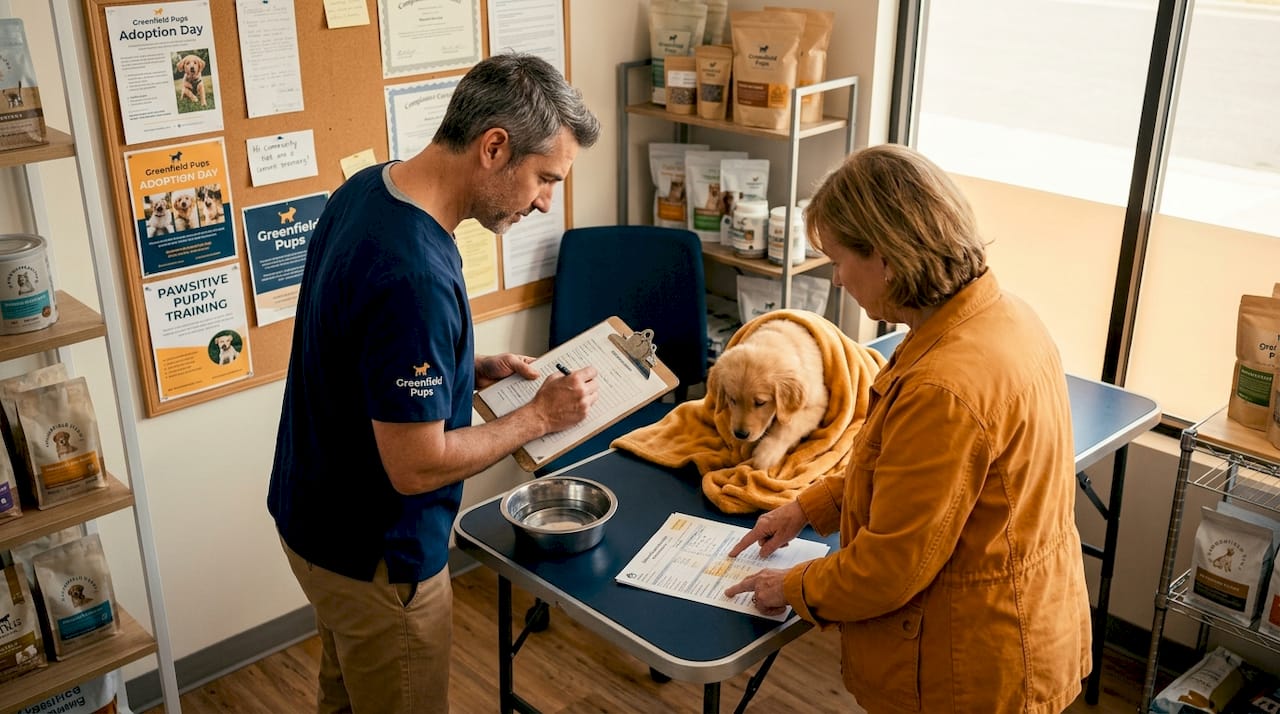
USDA Animal Care enforces AWA licensing through a structured process that includes application, facility inspection, approval, and ongoing compliance checks. Licensees must be approved for specific activities, animal types, and physical sites. If a breeder moves locations or changes the scope of their operation, they must update their license accordingly.
Here is how federal USDA licensing typically works, step by step:
- Application submission. The breeder submits an application to USDA Animal Care, identifying the type of license needed (Class A for breeders, Class B for dealers).
- Pre-license inspection. A USDA inspector visits the facility to confirm it meets AWA standards for housing, sanitation, ventilation, veterinary care, and more.
- License issuance. If the facility passes, the license is issued for a one-year period.
- Annual renewal. Breeders must renew each year and remain in compliance throughout.
- Unannounced inspections. USDA inspectors can and do conduct surprise visits. Inspection reports are public record and searchable online.
- Violations and consequences. Violations can result in warnings, fines, license suspension, or revocation depending on severity.
The table below shows the key differences between federally licensed and exempt breeders:
| Category | Licensed (USDA) | Exempt (small-scale) |
|---|---|---|
| Number of breeding females | Typically more than four | Four or fewer |
| Sales method | Includes internet/phone/sight-unseen | In-person only |
| Inspection requirement | Yes, annual and unannounced | No federal inspection |
| Public record | Yes, searchable online | No federal record |
| AWA standards apply | Yes | No |
To find licensed breeders who operate transparently, look for those who voluntarily share their USDA license number and welcome inspection inquiries even if they are technically exempt from federal requirements.
Pro Tip: Search the USDA’s public database before contacting any breeder. You can look up their license number, see past inspection reports, and check for any documented violations. A clean record is a good sign, but it is only one piece of the puzzle.
It is also worth noting that state-level enforcement varies widely. Some states have strong kennel licensing laws with regular inspections and meaningful penalties. Others have minimal oversight, leaving buyers with little protection beyond federal minimums. Knowing your state’s specific requirements gives you a clearer picture of what “licensed” actually means in your area.
Licensed vs. responsible breeders: What’s the difference?
This is where many prospective dog owners get tripped up. They assume that because a breeder is licensed, they are also responsible. The reality is more complicated, and understanding the gap between these two things can protect you and your future dog.
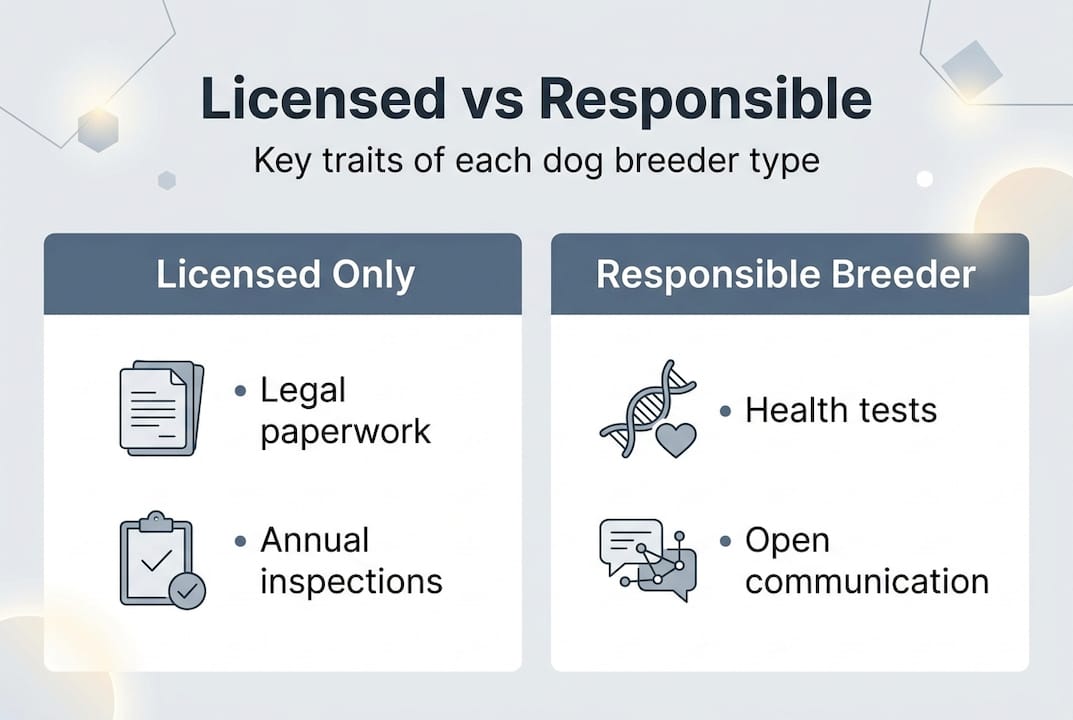
Legal licensing is about compliance with regulations. Responsible breeding is about commitment to the health, temperament, and welfare of the breed. These two things can overlap, but they often do not.
As the AKC puts it, responsible breeding goes beyond licensing and requires health screening, honest self-assessment to avoid “kennel blindness,” and full transparency with buyers through documentation and open communication. Kennel blindness, by the way, is the tendency for breeders to overlook faults in their own dogs because of emotional attachment. A responsible breeder actively guards against this by using objective health testing and outside evaluation.
“A licensed status does not necessarily mean the breeder is responsible or uses best-practice health testing and breeding ethics.” — AKC responsible breeding guidance
What does a genuinely responsible breeder actually look like? Here are the traits that matter most:
- Health testing. They screen breeding dogs for genetic conditions common to the breed, such as hip dysplasia, eye disorders, or heart conditions, and provide documentation.
- Breed knowledge. They specialize in one or a small number of breeds and can speak in depth about temperament, care needs, and breed-specific health risks.
- Puppy socialization. They raise puppies in a home or enriched environment with exposure to sounds, people, and experiences that support healthy development.
- Contracts and guarantees. They provide a written health guarantee and a take-back policy if you can no longer keep the dog.
- Transparency. They welcome visits, answer questions openly, and do not pressure you into a quick decision.
- Ongoing support. They stay in contact after adoption and are a resource for questions throughout the dog’s life.
Pro Tip: Ask a breeder what health tests they run on their breeding dogs and request the actual certificates, not just verbal assurances. Responsible breeders test through organizations like the Orthopedic Foundation for Animals (OFA) and are proud to share results.
A licensed breeder who does none of these things is still legally compliant. But you deserve more than legal compliance when you are choosing a lifelong companion.
How to check a breeder’s license and assess their responsibility
Knowing the difference between licensed and responsible is one thing. Knowing how to verify both is where the real work happens. Here is a practical, step-by-step approach to protect yourself and find a breeder worth trusting.
Step 1: Search the USDA public database.
The USDA Animal Care public search tool lets you look up any federally licensed breeder by name, location, or license number. You can view their current license status, the type of license they hold, and their full inspection history including any violations. This takes about five minutes and is completely free.
Step 2: Contact your state’s animal control or agriculture department.
Ask whether the breeder holds a state kennel license and whether any complaints have been filed. Some states maintain public databases; others require a direct inquiry. Either way, it is worth the call.
Step 3: Ask the breeder directly for their license number.
A legitimate breeder will share this without hesitation. If they become defensive or vague, treat that as a red flag.
Step 4: Request health documentation.
Ask for OFA or similar health test results for both parents. Ask for vaccination records, deworming history, and a vet health certificate for the puppy. A responsible breeder has all of this ready and organized.
Step 5: Visit the facility in person.
This is non-negotiable if at all possible. You want to see where the puppies are raised, meet at least one parent, and assess the overall cleanliness and energy of the environment. Happy, curious puppies in a clean, stimulating space are a very good sign.
Red flags to watch for when evaluating any breeder:
- Multiple breeds available at all times with puppies always in stock
- Refusal to allow facility visits or meet the parents
- No health testing documentation or vague answers about genetics
- Pressure to buy quickly or pay a deposit before you have asked questions
- No written contract or health guarantee
- Puppies available at unusually young ages (under eight weeks)
You can also use breeder verification tools and expert pet advice to supplement your research and make sure you are asking the right questions at every stage.
The goal is not to distrust every breeder. Most people who breed dogs genuinely love the animals. The goal is to verify, not assume, so that your adoption experience is built on real information rather than marketing language.
Our perspective: Why licensing is only the start of quality adoption
After years of connecting adopters with breeders across the United States, we have seen one pattern repeat itself more than any other: buyers who relied on a license as their primary quality signal and ended up with dogs who had preventable health problems, behavioral challenges, or unclear histories.
Licensing is a floor, not a ceiling. It tells you a breeder cleared a minimum legal bar. It does not tell you they care deeply about the breed, that they know what genetic conditions to screen for, or that they will answer your call six months after adoption when you have a question about your dog’s health.
The uncomfortable truth is that some of the most responsible breeders we have encountered are technically exempt from federal licensing because they operate at a small scale and sell in person. Meanwhile, some fully licensed operations have passed every inspection while still cutting corners on health testing and socialization.
What actually predicts a good adoption outcome is a combination of factors: transparent health documentation, willingness to answer hard questions, a genuine relationship with the buyer, and a clear commitment to the breed’s long-term welfare. Licensing can be part of that picture, but it is rarely the most important part. Use it as a starting point, not a finish line.
Find verified breeders and resources for your adoption journey
You now have a solid foundation for understanding what licensed breeders are, how the system works, and what to look for beyond the paperwork. The next step is putting that knowledge to work.
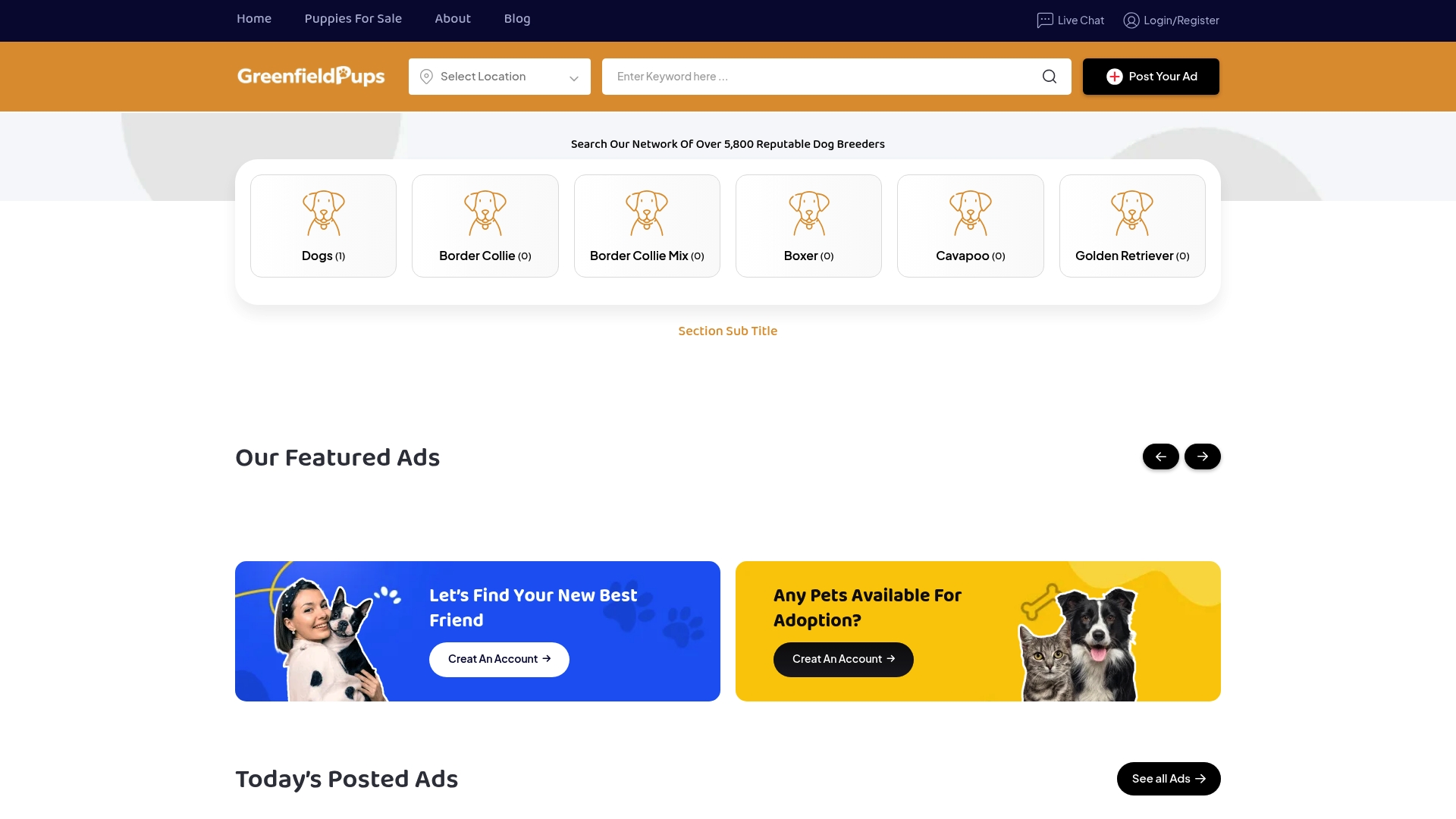
At Greenfield Pups, we make it easier to connect with breeders who take their responsibility seriously. Browse our current dog breeder listings to find dogs available near you, with breeder profiles that help you ask the right questions from the start. Our pet adoption resources give you additional tools for evaluating breeders and preparing for life with a new dog. Whether you are just starting your search or ready to make a decision, Greenfield Puppies is here to support a safe, informed, and rewarding adoption experience.
Frequently asked questions
How do I know if a dog breeder is licensed?
You can check the USDA Animal Care public search for federal licensing and inspection records, and contact your state or local animal control office for additional licensing information specific to your area.
Does a dog breeder license guarantee healthy puppies?
No. A license confirms legal compliance, not that the breeder follows health testing or ethical breeding practices. Always request health documentation and visit the facility independently of any license status.
Who needs a USDA dog breeder license?
Breeders with more than four breeding females or those selling pets sight-unseen typically need a USDA license. Federal exemptions under AWA may apply to small-scale breeders who sell only in person, so the threshold matters.
Are state and local breeder licenses required in all U.S. states?
No. Requirements vary widely by state and municipality, so always check your local laws and contact your area’s animal control office to understand exactly what applies where you live.
Leave a Comment