

How to Find Reputable Breeders: A Step-by-Step Guide
Bringing a puppy home is one of the most exciting decisions your family will make, but buying from the wrong source can cost you thousands in vet bills and years of heartbreak. Puppies from irresponsible breeders are far more likely to arrive with hidden genetic conditions, poor socialization, and behavioral problems that surface months later. The good news is that finding a truly ethical, reputable breeder is a learnable skill. This guide walks you through every stage of the process, from understanding what separates great breeders from bad ones, to asking the right questions, spotting red flags, and making a confident, informed choice.
Table of Contents
- Understanding what makes a breeder reputable
- Preparing your search: Research and requirements
- How to vet breeders: Questions, health checks, and visits
- Warning signs and how to avoid unethical sources
- A practical perspective: What most guides miss about finding reputable breeders
- Next steps for finding a healthy, happy puppy
- Frequently asked questions
Key Takeaways
| Point | Details |
|---|---|
| Know the hallmarks | Reputable breeders prioritize health testing, limited litters, and full transparency with buyers. |
| Vet breeders thoroughly | Always visit the facility in person, request detailed records, and ask tough questions before committing. |
| Avoid red flags | Stay away from cash-only deals, rushed sales, and sellers unwilling to share documentation. |
| Use trusted sources | Start with breed clubs, AKC Marketplace, and empirical resources to narrow your search. |
Understanding what makes a breeder reputable
Before you start searching, it’s essential to know what truly sets reputable breeders apart from the rest. The word “reputable” gets thrown around a lot, but it has a specific meaning in the dog world. A reputable breeder prioritizes the health, temperament, and genetic soundness of their dogs above profit. They breed selectively, limit the number of litters they produce each year, and stay involved with buyers long after the puppy goes home.
The contrast with puppy mills and backyard breeders is stark. Puppy mills are large-scale commercial operations that treat dogs as inventory. Backyard breeders are often well-meaning but lack the knowledge, resources, or commitment to health testing that responsible breeding requires. Both sources routinely produce puppies with avoidable health and behavioral problems.
Here is a quick comparison to help you see the difference at a glance:
| Factor | Reputable breeder | Puppy mill / backyard breeder |
|---|---|---|
| Health testing | Mandatory, documented | Rare or absent |
| Facility access | Open to visits | Often refused |
| Litter frequency | Limited, planned | Frequent, profit-driven |
| Buyer screening | Yes, asks questions | No, sells to anyone |
| Post-sale support | Ongoing | Usually none |
| Contract / guarantee | Always provided | Rarely offered |
Reputable breeders share a consistent set of qualities. Look for breeders who:
- Perform breed-specific health tests and share results openly
- Belong to a national or regional breed club
- Limit themselves to one or two breeds they know deeply
- Require buyers to return the dog if they can no longer keep it
- Ask you as many questions as you ask them
- Provide a written health guarantee and purchase contract
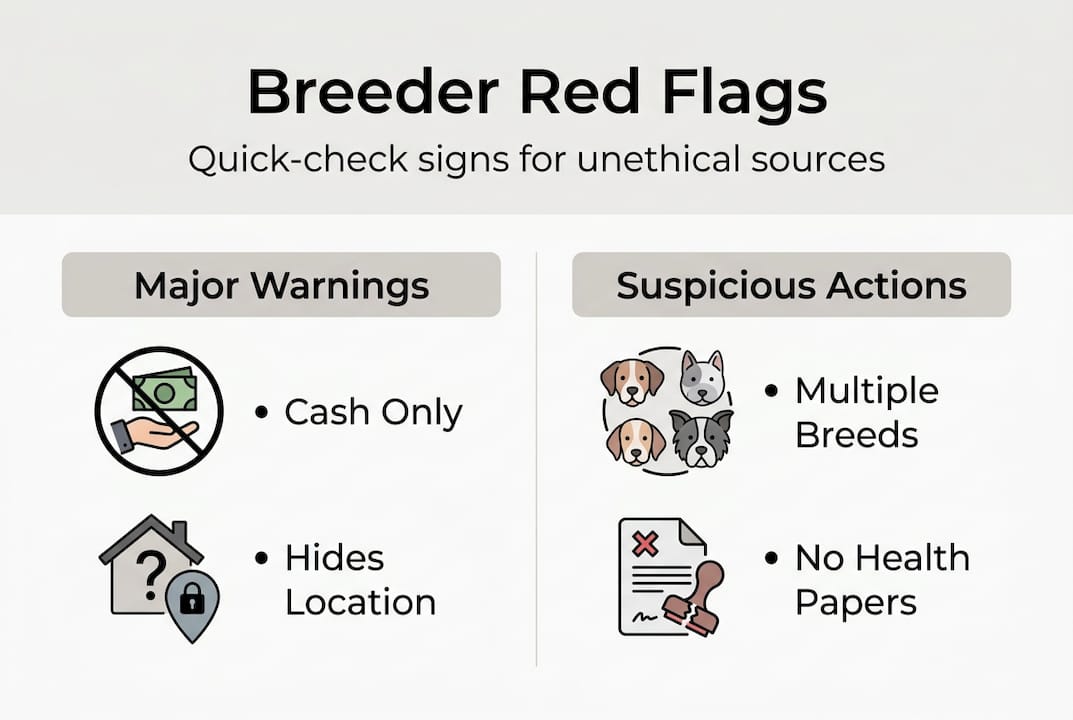
Red flags include breeders who offer multiple breeds at once, accept cash only, or seem reluctant to show where the dogs live. AKC-recognized breeders meet health and ethical standards set by parent clubs, making those directories a reliable starting point. You should also be cautious of USDA-licensed commercial breeders, since many have violation histories that are publicly searchable.
Pro Tip: Before contacting any breeder, read up on ethical breeding basics for your specific breed. Knowing the standard health tests expected for that breed gives you immediate credibility and helps you ask smarter questions.
Preparing your search: Research and requirements
Armed with a clear sense of what a reputable breeder looks like, let’s prepare for the search itself. Jumping straight into a Google search for puppies is one of the most common mistakes new buyers make. The best breeders rarely need to advertise heavily because their waiting lists fill up through word of mouth and breed club referrals.
Here are the most trusted sources for finding reputable breeders, ranked by reliability:
- National breed club referral lists — Every AKC-recognized breed has a parent club with a breeder referral page. These breeders have agreed to a code of ethics.
- AKC Marketplace — Start your search on breed-specific parent club sites and the AKC Marketplace for breeders who register litters.
- AKC Breeder of Merit and H.E.A.R.T. programs — These designations go a step further. AKC’s Breeder of Merit program recognizes breeders who health-test, title their dogs, and demonstrate long-term commitment to the breed.
- Bailing Out Benji’s search engine — A useful tool for cross-checking breeders against USDA violation records.
- Veterinarian referrals — Local vets often know which breeders in the area produce consistently healthy dogs.
Once you have a list of candidates, gather breed-specific health information before making contact. Every breed has known genetic vulnerabilities. Golden Retrievers, for example, have high rates of hip dysplasia and certain cancers. Knowing this in advance means you can ask directly about OFA hip scores and cancer screening protocols.
Prepare a written question checklist before your first call or email. This keeps the conversation focused and signals to the breeder that you are a serious, prepared buyer. Key topics to cover include health testing, socialization practices, parent temperaments, and what happens if you need to rehome the dog later.
Here is a simple research timeline to follow:
| Week | Task |
|---|---|
| 1 | Research breed health requirements and typical temperament |
| 2 | Identify 3 to 5 breeders from trusted sources |
| 3 | Send initial contact emails with your question checklist |
| 4 | Schedule in-person facility visits with top candidates |
Pro Tip: Browse current puppy listings to get a realistic sense of pricing and availability in your region before you commit to a breeder. This context helps you recognize when a deal seems too good to be true.
How to vet breeders: Questions, health checks, and visits
Once you’ve identified some potential breeders, it’s time to make direct contact and carefully evaluate them. This stage is where many buyers get nervous and let their excitement override their judgment. Stay methodical.
Start with these essential questions during your first conversation:
- What health tests have both parents received, and can I see the certificates?
- How many litters do you produce per year, and how many breeds do you work with?
- What is your policy if I can no longer keep the dog?
- Can you provide references from previous buyers?
- What does your purchase contract cover, and is there a health guarantee?
- At what age do puppies leave, and what socialization have they received?
Health and genetics verification is non-negotiable. OFA and CHIC certifications are the gold standard for documented health testing. OFA (Orthopedic Foundation for Animals) maintains a public database where you can look up any registered dog by name and verify their test results independently. CHIC (Canine Health Information Center) tracks breed-specific required tests. If a breeder cannot point you to these records, that is a serious problem.
Always visit the facility in person. Observing the dogs’ living conditions tells you more in ten minutes than any phone call can. Watch for cleanliness, space, and how the dogs interact with the breeder. Fearful, anxious, or aggressive behavior in the adult dogs is a warning sign about socialization practices.
“A breeder who truly loves their dogs will be proud to show you where those dogs live. Reluctance to open the door is the loudest red flag of all.”
Waiting lists are actually a good sign. The best breeders often have buyers lined up months in advance because demand for their puppies is high. If a breeder has puppies available immediately with no screening process, ask yourself why. Good breeders also screen you, asking about your living situation, experience with the breed, and your plan for training and exercise. This mutual vetting process protects the puppy and signals that the breeder genuinely cares where their dogs end up. You can also check puppy care supplies in advance so you are fully ready when your puppy arrives.

Warning signs and how to avoid unethical sources
Knowing what to look for is only part of the process. Spotting signs of trouble is equally important. Unethical breeders and puppy mills have become skilled at appearing legitimate, especially online. A polished website and cute photos are not proof of responsible breeding.
Common warning signs of unethical sellers include:
- Puppies available immediately with no waiting period
- Refusal to allow facility visits or video calls showing the environment
- Cash-only payment requirements
- Pressure to decide quickly or “reserve” without seeing the puppy
- No health records, contracts, or written guarantees
- Multiple breeds available at the same time
- Prices that seem unusually low for the breed
Red flags like cash-only deals, pressure tactics, and missing health documents are consistent indicators of sellers who prioritize profit over puppy welfare. The consequences are real. Puppies from mills and unethical breeders arrive with higher rates of parvovirus, giardia, respiratory infections, and genetic conditions that may not appear until the dog is two or three years old.
USDA-licensed commercial breeders and pet stores are linked to higher rates of violations and health issues than private ethical breeders. A USDA license means a breeder met a minimum legal threshold, not that they meet ethical or health standards.
Pro Tip: Check Pennsylvania breeder insights if you are considering breeders in that region, as Pennsylvania has specific licensing laws and a history of both strong ethical breeders and commercial operations worth scrutinizing.
If you spot a red flag, trust it. Walk away and report the seller to your state’s department of agriculture or the Humane Society. Your decision protects not just your family but future buyers too.
A practical perspective: What most guides miss about finding reputable breeders
With the technical details covered, it’s important to pause and reflect on what this process feels like in real life. Most guides focus on checklists, and checklists matter. But the single most overlooked quality in a great breeder is transparency under pressure.
Anyone can pass a checklist on a good day. What separates truly great breeders is how they respond when you ask hard questions. Do they get defensive? Do they pivot? Or do they answer directly, even when the answer is complicated? Experience alone is not proof of quality. We have seen breeders with 20 years of experience cut corners and newer breeders who operate with exceptional integrity from day one.
The excitement of finding a puppy you love is real, and it is the exact moment when your judgment is most vulnerable. Slow down. A reputable breeder will never pressure you. If you feel rushed, that feeling is data.
Even ethical breeders are not perfect. A litter might have an unexpected health issue. What matters is how they handle it. Transparency is non-negotiable. Read firsthand adoption stories from real buyers to understand what a positive breeder relationship actually looks and feels like before you commit.
Next steps for finding a healthy, happy puppy
Ready to start your search with peace of mind and the right resources? You now have the framework to find a breeder who genuinely puts their dogs first.
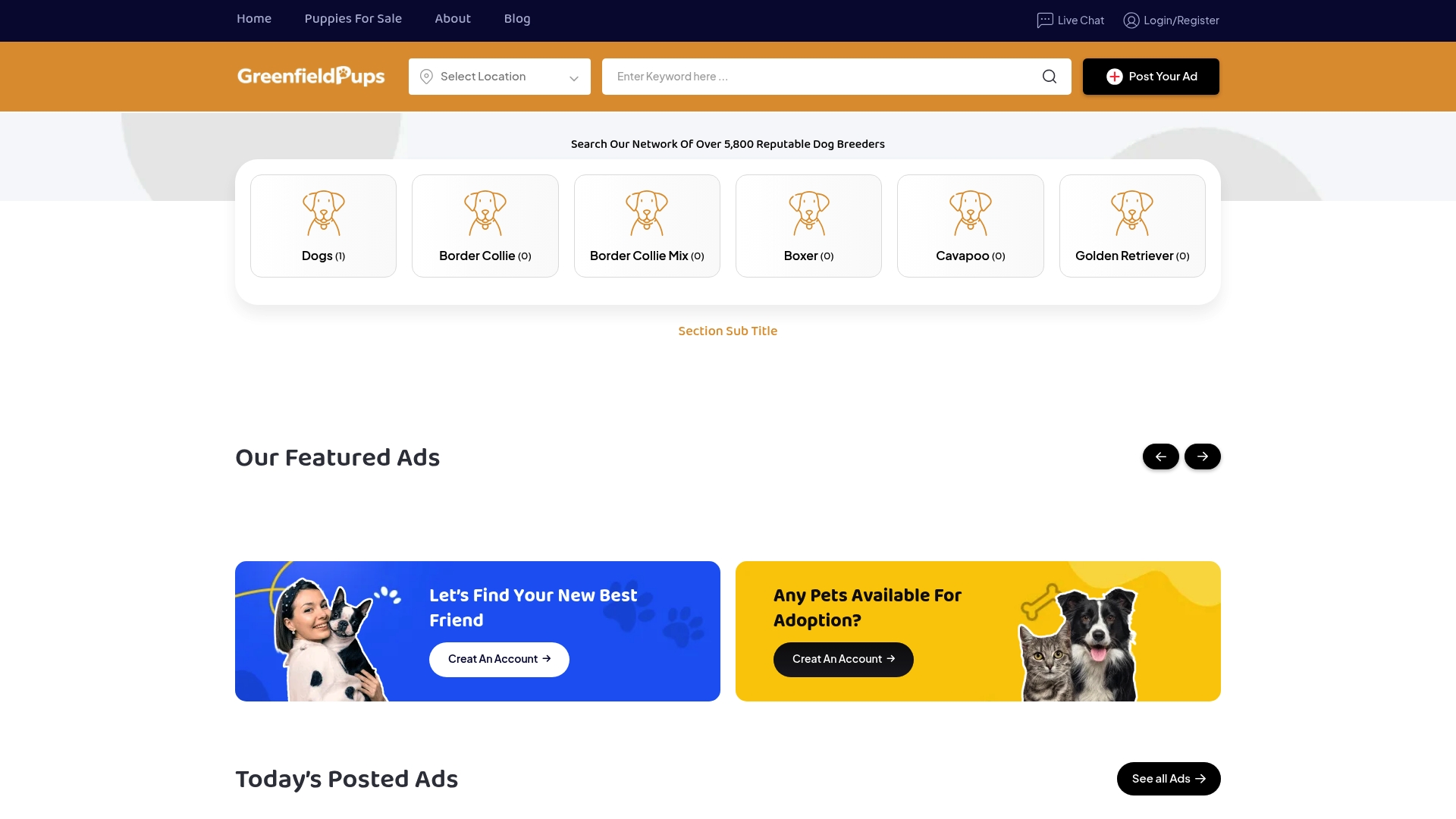
Greenfield Pups makes it easier to connect with breeders who meet high standards, whether you are searching for a specific breed or exploring options across the country. Browse trusted breeder listings to see current availability, filter by breed and location, and reach out directly with the questions this guide has helped you prepare. Visit Greenfield Pups to get started today and take the first confident step toward welcoming a healthy, happy puppy into your home.
Frequently asked questions
What paperwork should a reputable breeder provide?
Expect detailed health records, OFA/CHIC certifications, a purchase contract with a health guarantee, and AKC registration or similar breed club papers. Reputable breeders require health guarantees and proof of certification as standard practice.
Can I find a reputable breeder if I’m buying online?
Only if you can visit in person and verify health and testing records. Never buy a puppy sight-unseen, since 41% of licensed breeders have documented violations that an in-person visit would help you detect.
Why avoid pet stores or USDA-licensed commercial breeders?
Many have poor welfare records and higher rates of genetic defects. USDA-licensed breeders and pet stores are consistently linked to higher violation rates and health issues compared to private ethical breeders.
What are key red flags when screening breeders?
Beware breeders who won’t show facilities, offer multiple breeds, demand cash only, push fast sales, or lack health documents. Cash-only deals and pressure tactics are among the clearest signs of an unethical seller.
Leave a Comment