

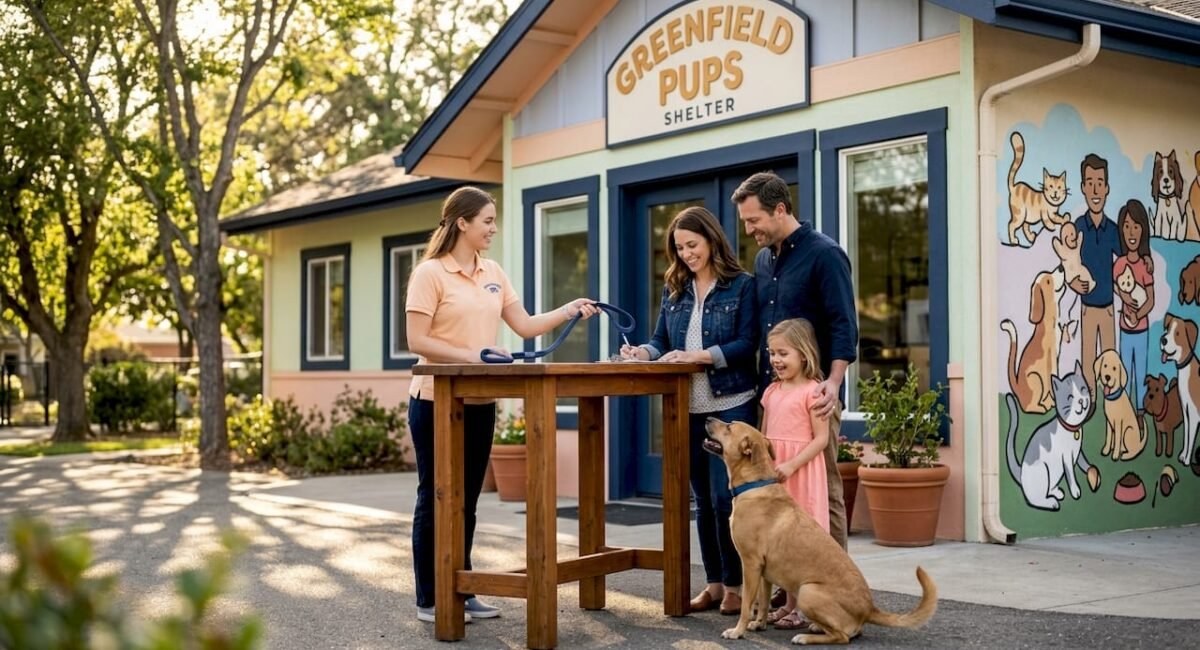
How to adopt a dog: Your complete guide for 2026
Deciding to adopt a dog is one of the most rewarding choices you can make, but without clear guidance, knowing how to adopt a dog can feel genuinely overwhelming. What do you bring? Which dog is right for you? What happens on adoption day? The good news is that the adopting a dog process is far more straightforward than most first-timers expect, and with the right preparation, you can walk out of a shelter with a dog who fits your lifestyle and actually stay there. This guide covers everything from assembling your dog adoption checklist to surviving the first night home.
Table of Contents
- What you need before adopting a dog
- Step-by-step adoption process
- Common challenges and how to navigate adoption day smoothly
- Welcoming your new dog home and setting up for success
- Choosing the right dog for your lifestyle
- Our honest take on how to adopt a rescue dog
- Find your match on Greenfield Pups
- Frequently asked questions
What you need before adopting a dog
Preparation is the part most people skip, and it is also the part most responsible for rocky starts. Walking into a shelter without the right documents, the right supplies, or a clear sense of what you want is a recipe for a stressful adoption day and a harder transition afterward.
Start with honest self-assessment. Think about your daily schedule, your energy level, your living space, and how much time you realistically have for a dog. A high-energy border collie in a studio apartment is a mismatch no amount of love can fix. A senior dog in a quiet household, on the other hand, can be a near-perfect pairing. Use our pet adoption workflow guide to map out your needs before you ever visit a shelter.
Documents you will need:
Most shelters require you to bring valid government-issued photo ID with your current address to any adoption appointment. Some also ask for proof of residency if your ID address differs from where you live now.
Your dog adoption checklist (essentials to have at home before adoption day):
- Dog food appropriate for the age and size of your expected dog
- Stainless steel or ceramic food and water bowls
- A properly sized crate for safe confinement and sleeping
- A dog bed placed in a quiet, low-traffic area
- Collar, harness, and a standard 6-foot leash (not retractable)
- Poop bags and a designated outdoor waste spot
- Enzymatic cleaning spray for accidents
- At least two or three chew toys and one plush toy
- Baby gates if you need to restrict access to rooms
- A vet appointment scheduled within the first week
| Supply category | Why it matters | Cost range |
|---|---|---|
| Crate | Provides security and prevents accidents overnight | $30 to $120 |
| Enzymatic cleaner | Removes scent markers that cause repeat accidents | $10 to $20 |
| Harness + leash | Safer than collar alone for walks and vet visits | $25 to $60 |
| Dog food (one bag) | Consistency in diet reduces digestive stress | $20 to $70 |
| Vet visit | Establishes baseline health and vaccination record | $50 to $150 |
Shelters also strongly recommend you have your home fully prepared with all essentials before the dog sets foot inside. Scrambling to buy supplies after adoption day adds chaos when your dog needs calm. Plan to prepare your home for a dog at least two or three days before your appointment.
Pro Tip: If you have a resident dog, schedule a meet-and-greet with any potential adoptee before you finalize anything. Most shelters accommodate this and it will tell you more about compatibility in 10 minutes than any staff description can.
Step-by-step adoption process
With your home and documents ready, here is what actually happens on adoption day. Knowing the flow keeps you from feeling caught off guard.
- Arrive prepared. Bring your valid photo ID and any secondary documents like proof of address. Some shelters require adopters to be at least 18 years old and will verify this at check-in.
- Meet with an adoption counselor. Expect a brief conversation about your lifestyle, home environment, other pets, and what you are looking for. Answer honestly. The counselor’s job is to find a good match, not to judge you.
- Spend time with the dog. Shelters provide a meet-and-greet room or outdoor yard. Watch how the dog responds to you, to movement, and to basic handling. This is your best window into their personality.
- Complete the paperwork. You will fill out an adoption application and agreement. Read it fully before signing, especially any spay/neuter or return clauses.
- Pay the adoption fee. Fees vary by the dog’s age, size, and what services are included such as microchipping, vaccinations, or spay/neuter. Budget anywhere from $50 to $500 depending on the organization.
- Take your dog home. Most adoptions are completed within one hour including the meet-and-greet, paperwork, and brief counseling. In most cases, your dog goes home with you the same day.
| Adoption step | Typical duration | What to watch for |
|---|---|---|
| Check-in and document review | 5 to 10 minutes | Have ID ready to avoid delays |
| Counselor consultation | 10 to 20 minutes | Be honest about your lifestyle |
| Meet-and-greet with dog | 15 to 30 minutes | Observe body language carefully |
| Paperwork and payment | 10 to 20 minutes | Read all terms before signing |
| Exit preparation | 5 to 10 minutes | Collar, leash, and crate confirm |
Pro Tip: Ask the counselor for a brief written summary of the dog’s known history, food preferences, and any behavioral notes before you leave. Staff observations from daily shelter interactions are gold, and they are easy to forget once the excitement kicks in.
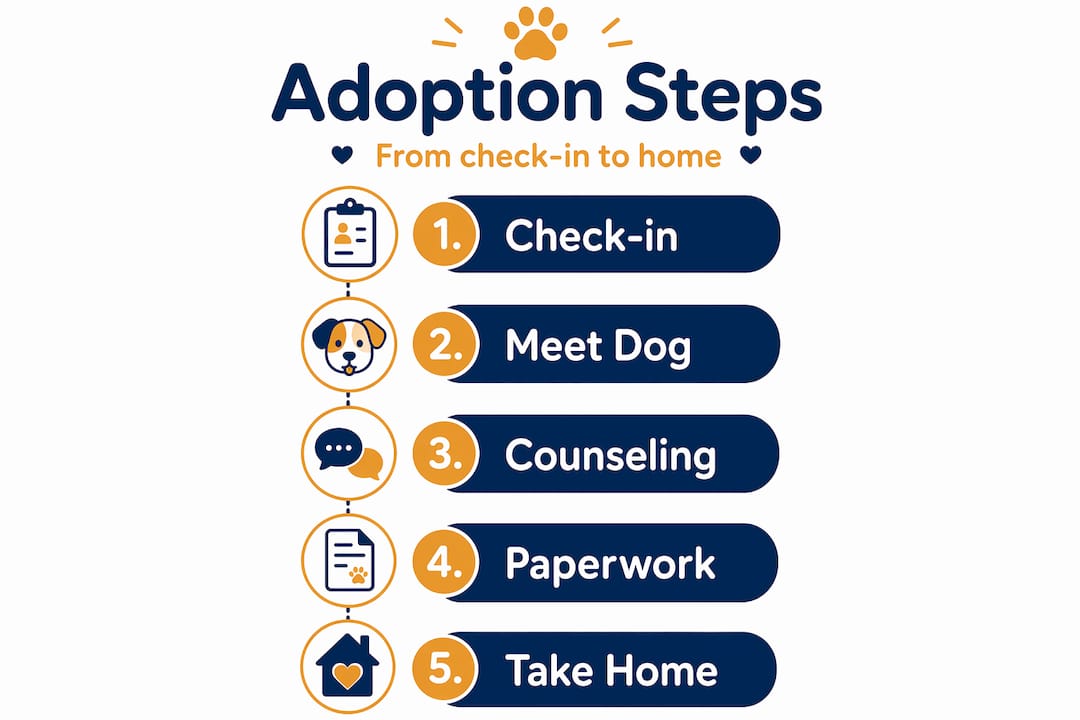
Follow the full dog adoption steps outline if you want a deeper walkthrough of each stage, including what to expect at private rescue organizations.
Common challenges and how to navigate adoption day smoothly
Understanding the typical steps helps, but a few logistical snags catch a lot of adopters off guard. Here is how to handle them.
Introducing a resident dog: Many shelters require or strongly recommend bringing your resident dog on a flat-collar or harness and a standard leash for a tandem walk. Bringing resident dogs on leash for a proper meet-and-greet prevents delays and surfaces any compatibility issues before you commit.
Getting both dogs home safely:
- Use a crate for the new dog during the car ride if possible
- If you only have one vehicle and two dogs, consider a partition or have a second person ride along to manage them separately
- Never let two dogs share an unsupervised space during the first few days
- Keep initial interactions short, calm, and on neutral ground like a backyard rather than living room
Courtesy holds: Some shelters allow you to place a temporary hold on a dog for a few hours using a non-refundable fee. This lets a family member or resident pet meet the dog before you finalize. Confirm the hold terms before paying anything.
“Bringing proper gear, including a leash, collar, and crate, and understanding hold and return policies ahead of time can reduce stress on adoption day significantly.” Read more at How adoption works.
Avoiding appointment cancellations: Arriving without valid ID, forgetting a leash, or showing up without your resident dog when required are the most common reasons adoptions get delayed or rescheduled. One quick review of your adoption day tips before you leave the house prevents most of these issues.
Welcoming your new dog home and setting up for success
Once you bring your dog home, the real work begins. The first two weeks matter more than most people realize.
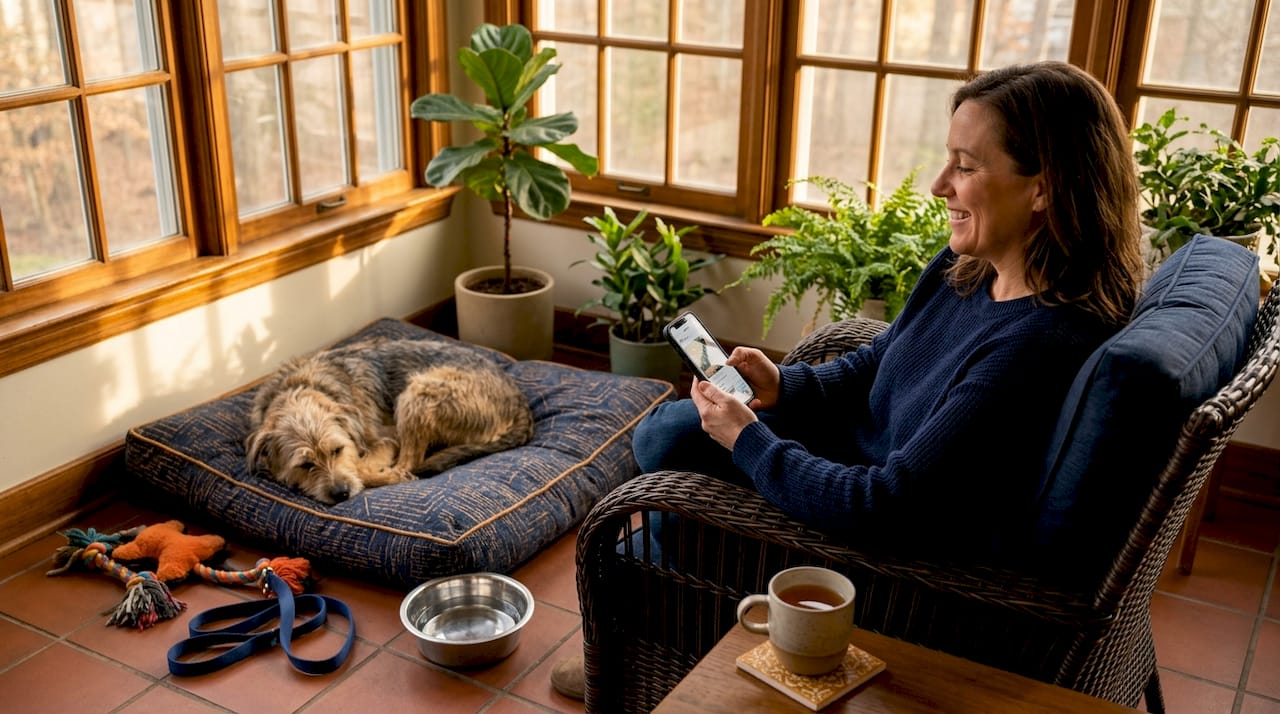
Expect an adjustment window. Adoption shock affects both new caregivers and dogs as routines, schedules, and environments change significantly. Your dog may seem shut down, hyperactive, or anxious for several days. This is normal and temporary.
Setting up a safe space:
- Choose a quiet corner away from drafts, loud TVs, and high foot traffic
- Place their crate and bed there so it becomes a consistent retreat
- Use a baby gate rather than a closed door so they feel connected without being overwhelmed
- Avoid inviting large groups of people over during the first week
Managing the first night: Dogs may whine, howl, or pace as they adjust to separation from shelter life and everything familiar. Placing a worn t-shirt near their bed can help, as can leaving a low radio or white noise machine on. Most dogs settle into a routine within five to seven nights.
Living spaces should include safety basics like secure fencing and a comfortable pet bed; the dog’s first night may be stressful and requires patience from everyone in the household.
Keep your schedule consistent, feed at the same times each day, and stick to regular potty breaks. Predictability is the fastest route to a relaxed, confident dog. From day one, read more about managing adoption shock to stay ahead of common first-week pitfalls.
Pro Tip: Schedule a vet visit within the first five days regardless of the shelter’s health records. You will get your own baseline for the dog’s health and catch anything missed during intake.
Choosing the right dog for your lifestyle
Here is something most adoption guides get backwards: they tell you to browse dogs first and assess your lifestyle second. Do it the other way around.
Behavioral traits, energy levels, and social compatibility predict long-term matching success far better than breed alone. A lab mix who spent three years in a calm home will behave very differently from a lab mix pulled from a hoarding situation, even though they are the same “type” of dog.
Questions to ask yourself honestly:
- How many hours per day is your home empty?
- Do you exercise daily or mostly on weekends?
- Are there children under 10 in your home?
- Does anyone in your household have pet allergies?
- How much space do you have indoors and outdoors?
| Dog profile | Best lifestyle match | What to watch out for |
|---|---|---|
| Puppy (under 1 year) | Active households with flexible schedules | High energy, needs training and supervision |
| Adult dog (1 to 7 years) | Most households, especially working adults | May have undisclosed history or quirks |
| Senior dog (7+ years) | Quieter homes, older adults, apartment dwellers | Possible medical costs, shorter time together |
| High-energy breed mix | Outdoor enthusiasts, active families | Needs daily running, not just yard access |
| Shy or anxious dog | Patient adopters, calm environments | Requires slow introduction, no overwhelming guests |
Use our resource on choosing the right dog for a more detailed breakdown of what to look for during shelter visits. Shelter staff are also an underused resource. Tell them your honest situation and let them suggest candidates rather than pointing at the cutest face in the kennels.
Our honest take on how to adopt a rescue dog
Most articles frame dog adoption as a charitable act. We think that framing does adopters a disservice.
When you focus on the idea of “rescuing” a dog, you unconsciously lower your standards for compatibility. You feel guilty ruling out a dog because of energy level or behavioral history, even when that history is a genuine red flag for your household. The result is a mismatched adoption that ends in a return, which is harder on the dog than staying in the shelter longer and finding the right home.
The benefits of adopting dogs are real. You typically pay less, the dog is often already spayed or neutered and vaccinated, and adult dogs skip the destructive puppy phase entirely. But none of that matters if the dog does not fit your life. The best reason to consider dog adoption is not guilt or charity. It is because there is genuinely a dog at your local shelter who is a better match for your household than anything you would find elsewhere, at a fraction of the cost.
Approach the process with the same standards you would use if you were buying. Ask hard questions about behavior history. Take your time in the meet-and-greet. Walk away if something feels wrong. That is not callousness. That is how you end up with a dog you keep for 15 years.
Find your match on Greenfield Pups
Ready to start searching? Greenfield Pups connects you with dogs available for adoption and purchase across the United States, whether you are looking for a specific breed, a rescue, or a mixed-breed companion.

Browse listings from shelters, rescues, and responsible breeders all in one place. You can filter by breed, location, age, and size to find dogs that actually match your lifestyle, not just the first cute face that pops up. Our understanding pet adoption benefits resource gives you additional context on what to expect from different types of adoption sources. Whether you are a first-time owner or adding a second dog to your household, Greenfield Pups makes the search easier, more transparent, and far less stressful.
Frequently asked questions
What documents do I need to bring to adopt a dog?
You typically need a valid government-issued photo ID with your current address and proof that you are at least 18 years old, as most shelters verify age and identity before proceeding with the adoption.
How long does the dog adoption process usually take?
Most adoptions are completed within one hour including meeting the dog, filling out paperwork, and a brief consultation with an adoption counselor.
Can I bring my existing dog to meet a dog I want to adopt?
Yes, many shelters actively encourage this and require resident dogs on leash and harness for a supervised meet-and-greet before the adoption is finalized.
What is “adoption shock” and how can I manage it?
Adoption shock is the stress both dogs and new owners experience as routines and environments change; adoption shock affects caregivers and dogs alike and typically resolves with a consistent schedule and a calm, patient household.
Are there return policies if the dog doesn’t fit my family?
Many organizations do allow returns, and some allow returns within 60 days with an adoption fee credit applied toward finding a better match for your household.
Leave a Comment