

The Role of Breeder Contracts in Responsible Dog Ownership
A breeder contract is a legally binding agreement that defines ownership transfer, health guarantees, breeding rights, and the mutual obligations of both the breeder and buyer from the moment a puppy changes hands. The role of breeder contracts goes far beyond paperwork. These documents protect animal welfare, reduce disputes, and codify the ethical standards that separate responsible breeders from casual sellers. Whether you are a breeder placing a puppy or a buyer bringing one home, understanding what these agreements contain and why they matter is one of the most practical steps you can take before any money changes hands.
What are the key components of a dog breeder contract?
Reputable breeder contracts cover far more than a purchase price. Health guarantees and warranty periods are among the most critical terms, with coverage often extending beyond the minimum legal baseline. Many contracts cover short-term health issues for 48 to 72 hours after purchase and extend genetic condition coverage up to 12 months or even a lifetime. That extended window matters because hereditary conditions in breeds like Golden Retrievers or German Shepherds often do not surface until the dog is one to three years old.
The core elements you will find in a well-drafted breeder contract include:
- Identification details: Full name of puppy, sire and dam registration numbers, microchip ID, and breed registry information
- Health guarantees: Short-term illness coverage and long-term genetic condition warranties with specific time frames
- Deposit and payment terms: Non-refundable deposit amounts, final payment deadlines, and conditions for refund
- Breeding rights and spay/neuter clauses: Whether the puppy is sold on a limited or full registration, and required age or health test milestones before any breeding occurs
- Return and repossession policies: Conditions under which the breeder will accept the dog back and right of first refusal language
- Dispute resolution: Mediation or arbitration clauses specifying the governing state law
- Owner obligations: Required veterinary visits, feeding standards, and notification duties if the dog is rehomed or develops a health issue
Pro Tip: Ask any breeder to send you their contract before you pay a deposit. A breeder who hesitates to share their contract in advance is a red flag worth taking seriously.
The breeding rights and conditions section deserves special attention. Standard contracts prohibit breeding until the dog reaches a minimum age and passes specific health tests, with consequences for violations ranging from financial penalties to mandatory return of the dog. These terms are not punitive. They exist to prevent irresponsible breeding that harms the breed’s long-term health.

How do breeder contracts protect both breeders and buyers legally?
A signed contract creates enforceable obligations on both sides and removes the ambiguity that turns minor disagreements into expensive legal battles. Dispute resolution clauses specifying mediation or arbitration and naming the governing state law can save thousands of dollars by keeping conflicts out of court. That is a concrete financial benefit for both parties, not just a legal formality.
The legal protections in a well-drafted contract work in several directions at once:
- For buyers: Health guarantees backed by genetic testing requirements give buyers recourse if a puppy develops a covered condition. Without a written guarantee, a buyer has almost no legal standing.
- For breeders: Documentation from birth including health tests, vaccination logs, signed agreements, and written communications creates a strong legal defense if a dispute arises. Verbal promises and reputation alone are not sufficient protection.
- For both parties: Explicit language on what is and is not guaranteed prevents emotional misinterpretations from becoming legal liabilities.
Ambiguous language is the primary driver of breeder-consumer disputes. Contracts must explicitly state what outcomes are not guaranteed, including fertility and show quality, to prevent claims based on unspoken expectations. Source
One common pitfall is the overly broad waiver. Some breeders include language attempting to waive all liability for any health condition. Courts in many states do not uphold blanket waivers, particularly when they conflict with consumer protection statutes. A contract that is specific, reasonable, and clearly written is far more enforceable than one that tries to eliminate all risk through vague disclaimers. Consulting a local attorney familiar with your state’s animal sale laws before finalizing any contract template is worth the investment.
What responsibilities do breeders and buyers have under a contract?
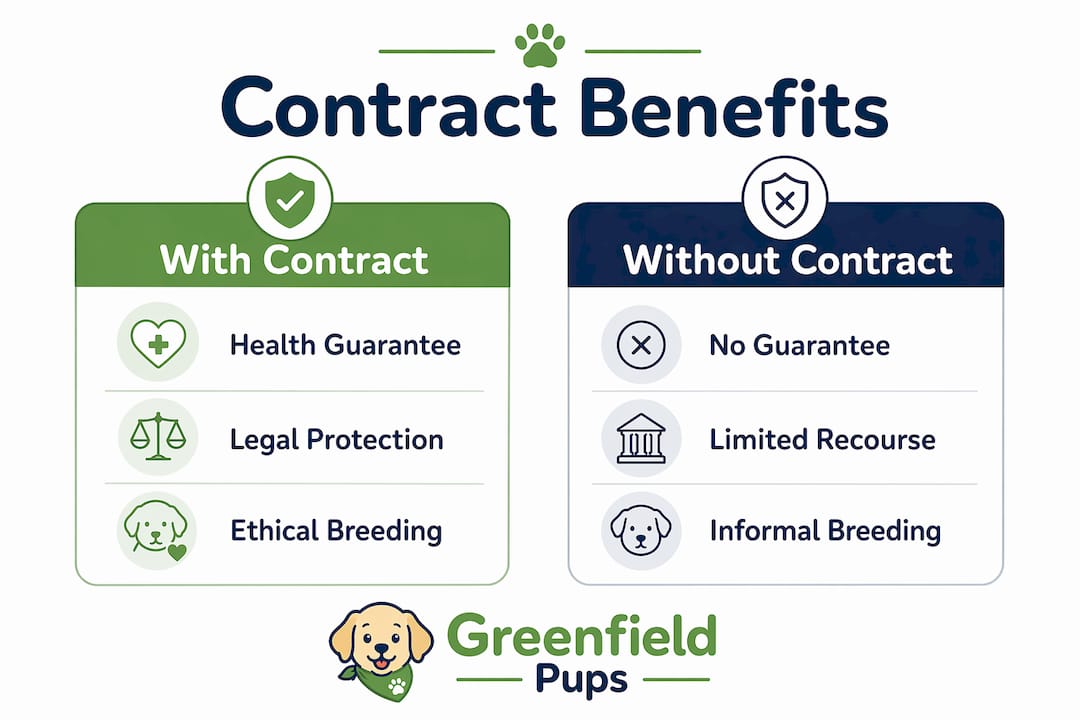
Breeder contracts are two-way agreements. Both parties carry obligations that, if ignored, can void protections or trigger penalties. Understanding your side of the deal before you sign is not optional.
Breeder responsibilities typically include:
- Providing complete health testing records for the sire and dam, including OFA, CAER, or breed-specific genetic panels
- Delivering the puppy with up-to-date vaccinations, deworming records, and a written health certificate
- Disclosing any known health issues, temperament concerns, or prior medical treatment
- Remaining available for questions and support throughout the dog’s life, as many ethical breeders commit to doing
Buyer responsibilities typically include:
- Scheduling a veterinary exam within the required window, usually 48 to 72 hours, to validate the health guarantee
- Complying with spay/neuter requirements by the agreed age if the puppy is sold on limited registration
- Notifying the breeder of any address change, serious health diagnosis, or intent to rehome the dog
- Maintaining proper care standards, including weight management and regular veterinary visits, to keep the warranty valid
Health guarantees can be voided if buyers miss required vet checkups or violate contract conditions. That means a buyer who skips the 48-hour exam and later discovers a congenital defect may have no legal recourse, even if the condition was present at the time of sale. The contract is only as protective as the compliance behind it.
Pro Tip: Keep a dedicated folder, physical or digital, with your signed contract, all vet records, and any written communications with your breeder. If a dispute ever arises, this paper trail is your strongest asset.
How do breeder contracts support ethical breeding and animal welfare?
The breeder agreement significance extends well beyond legal protection. A contract is a written expression of a breeder’s values, and the terms it contains reveal whether those values prioritize the dog’s welfare or just the sale. Greenfieldpups consistently observes that buyers who receive detailed, clearly written contracts report higher confidence in their breeder and fewer post-sale conflicts.
The right of first refusal clause is the clearest example of this principle in action. Without this clause, a breeder has no legal claim over a dog after the sale. With it, the owner is legally required to contact the breeder before surrendering the dog to a shelter, rescue, or third party. This single term has kept thousands of dogs out of shelters and ensured they return to someone who knows their history, health records, and temperament.
The table below compares what a contract-backed purchase looks like versus an informal sale:
| Factor | Contract-backed purchase | Informal sale |
|---|---|---|
| Health guarantee | Written, time-bound, enforceable | Verbal, unenforceable |
| Breeding rights | Clearly defined with conditions | Assumed or undefined |
| Dispute resolution | Mediation/arbitration clause | Court or no recourse |
| Dog’s future welfare | Right of first refusal protects dog | No breeder recourse after sale |
| Buyer confidence | High, expectations set upfront | Variable, often leads to conflict |
Comprehensive contracts reflect a breeder’s ethical priorities by protecting animal welfare long term and reducing the likelihood of abandonment or surrender. A contract that includes lifetime support language, clear return policies, and genetic health commitments tells a buyer they are working with someone who treats breeding as a responsibility, not a transaction. For buyers researching responsible dog breeding practices, the contract is one of the most reliable signals of breeder quality available.
Clear contracts decrease consumer disputes by setting expectations upfront, which means breeders who invest time in their agreements spend less time managing complaints and more time doing what they love.
Key takeaways
Breeder contracts are the single most effective tool for protecting both parties in a puppy sale, and every term in a well-drafted agreement serves a specific purpose tied to animal welfare, legal clarity, or long-term accountability.
| Point | Details |
|---|---|
| Contracts define mutual obligations | Both breeder and buyer carry enforceable duties that protect the dog and each other. |
| Health guarantees require active compliance | Buyers must complete required vet visits within 48 to 72 hours or risk voiding their warranty. |
| Dispute resolution clauses save money | Mediation and arbitration terms keep conflicts out of court and save both parties significant costs. |
| Right of first refusal protects dogs for life | This clause legally prevents owners from surrendering dogs to shelters without notifying the breeder first. |
| Vague language creates legal risk | Explicit exclusions on fertility and show quality prevent misinterpretations from becoming costly liabilities. |
Why contracts matter more than most breeders realize
I have reviewed hundreds of breeder contracts over the years, and the pattern is consistent. The disputes that escalate into legal action almost always trace back to one of two problems: missing terms or vague language. A contract that says “the puppy is healthy” without defining what that means, what testing was done, and what the remedy is if a condition emerges is not a contract. It is a false sense of security for both sides.
What surprises most new breeders is how much a contract communicates before the buyer even reads it carefully. A well-organized, specific agreement signals that the breeder is serious, prepared, and accountable. Buyers who receive a thorough contract feel more confident in their purchase, ask better questions, and are more likely to follow through on their own obligations. The contract shapes the entire relationship.
The mistake I see most often from buyers is treating the contract as a formality to sign and file away. Read every clause. Ask about anything you do not understand. If a breeder cannot explain why a term is in there, that is worth noting. Contracts should be living documents that breeders update as laws change and as they learn from experience. A contract written in 2015 may not reflect current state regulations or genetic testing standards for your breed.
The most underused clause in most contracts is the long-term support commitment. Breeders who explicitly commit to being a resource for the dog’s lifetime, not just the warranty period, build the kind of reputation that generates referrals for years. That is not just good ethics. It is good business.
— Taylor
Find responsible breeders and resources on Greenfieldpups
Greenfieldpups connects buyers with breeders who take their agreements seriously. Whether you are a breeder looking to understand breeder ethics and responsibilities or a buyer learning how to evaluate a contract before you commit, Greenfieldpups offers guides, breeder listings, and community resources built around responsible ownership. Browse listings from breeders who prioritize health testing, transparent contracts, and lifelong support. If you are still in the research phase, the Greenfieldpups guide on choosing a responsible breeder walks you through exactly what to look for, including the contract terms that matter most.
FAQ
What is the role of breeder contracts in a puppy sale?
A breeder contract defines ownership transfer, health guarantees, breeding rights, and the obligations of both parties. It protects the buyer, the breeder, and the dog’s long-term welfare in one legally binding document.
Can a breeder contract be enforced in court?
Yes, breeder contracts can hold up in court when they are specific, clearly written, and compliant with state law. Dispute resolution clauses that specify mediation or arbitration are particularly effective at resolving conflicts without litigation.
What voids a health guarantee in a breeder contract?
Missing required veterinary exams within the specified window, typically 48 to 72 hours, or violating other contract terms such as spay/neuter requirements can void a buyer’s health guarantee entirely.
What is a right of first refusal clause?
A right of first refusal clause legally requires the buyer to contact the breeder before rehoming or surrendering the dog. Without it, breeders have no legal claim over the dog after the sale is complete.
How do I know if a breeder contract is legitimate?
A legitimate contract includes specific identification details, written health guarantees with defined time frames, explicit breeding rights terms, and a dispute resolution clause naming the governing state. Vague language or missing sections are warning signs worth addressing before you sign.
Leave a Comment