

What Is a Waiting List for Puppies? Your 2026 Guide
If you’ve ever tried to bring home a purebred or carefully bred puppy, you’ve almost certainly run into a waiting list. Understanding what is a waiting list for puppies is the first thing any serious buyer needs to do before reaching out to a breeder, because this is not a simple “add to cart” situation. A puppy waiting list is a structured reservation system where approved buyers secure a spot in line before a litter is even born. The process involves screening, deposits, and weeks or months of anticipation. This guide breaks down exactly how it works, what to expect, and how to navigate it without wasting time or money.
Table of Contents
- Key Takeaways
- How the puppy waiting list process works
- What affects how long you actually wait
- Breeder waitlists versus shelter adoption waitlists
- Deposits, fees, and what happens if plans change
- My honest take after years of watching buyers get this wrong
- Find your next puppy with confidence on Greenfieldpups
- FAQ
Key Takeaways
| Point | Details |
|---|---|
| Waiting lists are reservation systems | Buyers apply, get approved, and pay a deposit to hold their place before puppies are born. |
| Wait times vary widely | Most buyers wait 3 to 9 months, but specific preferences can push that to 1 to 2 years. |
| Deposits are usually non-refundable | Always read the breeder’s refund policy before submitting any payment. |
| Shelters use different processes | Shelter adoption waitlists are first-come, first-served with no deposits required. |
| Flexibility shortens wait times | Buyers open to gender, color, or litter timing typically move through the list faster. |
How the puppy waiting list process works
The puppy waiting list process follows a predictable structure: application, conversation, approval, deposit, waitlist placement, litter updates, puppy matching, final payment, and pickup. Each step matters, and skipping ahead is not possible with any reputable breeder.
Here is how it typically unfolds:
- Submit an application. Reputable breeders ask detailed screening questions about your home environment, lifestyle, experience with dogs, and what you are looking for in a puppy. This is not bureaucratic gatekeeping. Breeders want their dogs in homes that are genuinely prepared.
- Have a follow-up conversation. Many breeders want a phone or email exchange before approving anyone. This is your chance to ask questions about the breed, health testing, and what the waiting period looks like.
- Receive approval and pay a deposit. Once approved, you pay a deposit to secure your spot. Your waitlist position is typically determined by the date your deposit is received, not just when you applied.
- Receive litter updates. After placement, a good breeder will keep you informed. You will hear about planned breeding dates, pregnancy confirmations, and eventually the birth of the litter.
- Select your puppy. Puppy selection often happens when puppies are 3 to 5 weeks old. Breeders offer in-person visits, virtual meetings, or photo and video sets so buyers can pick from the litter based on their position in the queue.
- Pay the remaining balance and schedule pickup. Once your puppy is chosen, you finalize payment and arrange the handoff date, usually around 8 weeks of age.
Pro Tip: Ask your breeder directly what position you would likely be in on the current waitlist before paying anything. A trustworthy breeder will give you an honest estimate rather than an optimistic sales pitch.
One nuance worth knowing: some breeders retain the right to pull certain puppies for their own breeding or show programs, even after your deposit is placed. This can shift your selection options without any warning. Confirm this upfront so it does not catch you off guard.
What affects how long you actually wait
Wait times are one of the most misunderstood parts of reserving a puppy. The honest answer is that wait estimates range from a few weeks for buyers with flexible preferences to up to 1 to 2 years for buyers seeking a specific gender, color, or breeding line. Most people land somewhere in the 3 to 9 month range.
Several factors push that timeline in one direction or the other:
- Litter size. A doe that was expected to deliver eight puppies might have four. Smaller litters mean fewer available spots per cycle.
- Gender ratios. You cannot predict how many males versus females will be born. If five people ahead of you all want females and only two females arrive, three of them roll over to the next litter.
- Buyer preferences. Specific coat colors, markings, or breeding lines narrow the pool significantly. The more specific your wish list, the longer your wait.
- Breeding success. Not every planned breeding results in pregnancy. Breeders deal with biological unpredictability, and delays happen without any fault from either side.
- Waitlist size versus real opportunity. A large waitlist does not mean you are far from the front. Many people on a breeder’s list have narrow timing requirements or very specific preferences, which means they pass on offers, and your spot moves up faster than expected.
The single most effective thing you can do to reduce your wait is to build in flexibility. Buyers with strict specifications consistently wait longer than those who are open on gender or color. If you absolutely need a female chocolate Labrador from a specific champion line, be prepared to sit on a list for the better part of a year or more.
Breeder waitlists versus shelter adoption waitlists

Not every puppy comes from a breeder, and the waiting list experience looks very different depending on which path you choose.
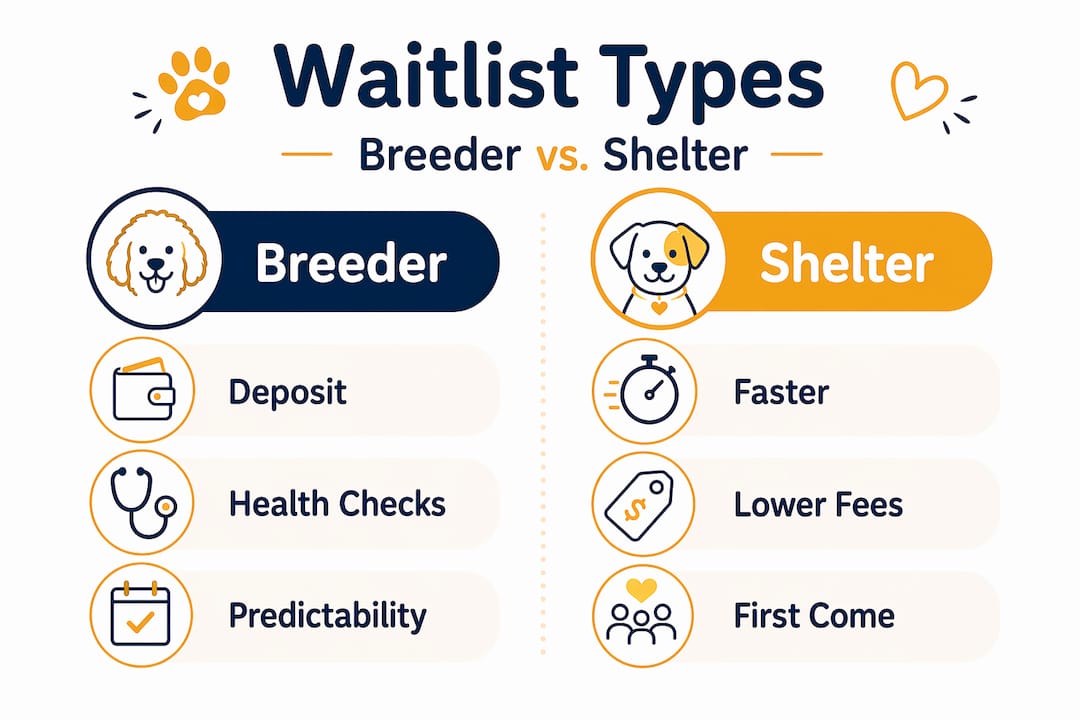
| Factor | Breeder waiting list | Shelter adoption waiting list |
|---|---|---|
| How position is determined | Deposit date and application order | First-come, first-served sign-in at set times |
| Deposit required | Yes, typically $300 to $1,000+ | No deposit required |
| Wait time | Weeks to 1 to 2 years | Hours to weeks depending on availability |
| Screening process | Detailed application plus conversation | Paperwork and ID verification |
| Cost structure | Deposit applies to total price | Set adoption fee, roughly $320 for puppies under 6 months |
| Puppy selection | Buyer picks from available litter | Based on which dogs are currently available |
The shelter route moves faster in many cases, and the fees are lower. You can read more about how that process works in this complete adoption guide from Greenfieldpups. The tradeoff is that you have much less control over breed, age, and health history. The shelter process involves roughly 30 minutes of paperwork, identification, and payment before you can bring a dog home, assuming the right animal is available.
Breeder waitlists give you more predictability around breed temperament, health testing results, and lineage. The cost is time and money upfront. Neither option is objectively better. They serve different buyer priorities.
Deposits, fees, and what happens if plans change
Money is where many buyers get caught off guard, so pay close attention here.
- Deposits typically range from $200 to over $1,000 depending on the breed, the breeder’s reputation, and regional demand. This amount is almost always applied toward the final purchase price of the puppy.
- Most deposits are non-refundable. This protects breeders from buyers who drop off the list after litter plans are already underway. Read the contract carefully before paying anything.
- Some breeders use two-stage deposit systems. One structure worth knowing: a master reservation list charges a first deposit, around $500, to hold your position on the waitlist without committing to a specific litter. Then a second deposit of similar size confirms your commitment when a matching litter becomes available. This approach protects both sides.
- Refund policies vary widely. Some breeders offer a partial refund if circumstances change, others do not. A few will roll your deposit to a future litter instead of refunding. You need to know which applies before writing a check.
- Contract clarity is a red flag indicator. Transparency in deposit policies is one of the clearest signals of an ethical breeder. If a breeder cannot clearly explain when and how refunds work, that warrants serious caution before committing.
Pro Tip: Request a copy of the breeder’s sales contract before paying your deposit. A legitimate breeder will hand it over without hesitation. If there is resistance or vague language around refunds, walk away.
Always ask these three questions before paying: What happens to my deposit if I change my mind? What happens if the litter does not produce what I am looking for? What happens if the breeding does not result in a litter at all? The answers will tell you everything about how that breeder operates.
My honest take after years of watching buyers get this wrong
I have seen buyers make the same avoidable mistakes over and over. The biggest one: treating a waiting list like a transaction instead of a relationship.
When you join a waiting list for a reputable breeder, you are entering a process built on trust. The breeder is trusting that you will follow through. You are trusting that they are honest about timelines and litter quality. That mutual trust is what makes the whole thing work. Buyers who approach it with impatience, or who push breeders for faster updates, often burn goodwill and end up with a worse experience overall.
What I have learned is that the buyers who get the most out of this process are the ones who ask good questions upfront and then let the process run. Ask about health testing. Ask about the parents. Find out whether the breeder works with a responsible breeder standard and what that looks like in practice. Then back off and let the biology do its thing.
The other thing I would push back on is the impulse to join multiple breeder waitlists at once as a hedge. It seems logical, but it creates real problems when two litters become available simultaneously and you have to back out of one commitment. That deposit is gone, and so is your reputation with that breeder. Pick the breeder who feels right and commit.
Patience is not passive here. It is the actual skill the process requires.
— Taylor
Find your next puppy with confidence on Greenfieldpups
Whether you are working through a breeder waitlist or exploring shelter adoption, having the right information makes the process far less stressful. Greenfieldpups is built to connect prospective buyers with reputable breeders and adoption resources across the United States, so you are never navigating this alone.
You can explore the full breakdown of types of dog breeders to understand exactly what kind of breeder you are working with before joining any waitlist. If you want to go deeper on ethical breeder practices and what they mean for your puppy’s health and temperament, the guide on breeder ethics and responsibilities is a smart next read. Greenfieldpups also offers a guide to finding reputable breeders step by step for buyers who want to vet their options before committing to a list.
FAQ
What is a waiting list for puppies?
A waiting list for puppies is a reservation system breeders use to match pre-approved buyers with puppies before or shortly after a litter is born. Buyers apply, pay a deposit to hold their spot, and receive litter updates until a matching puppy is available.
How long does a puppy waiting list take?
Most buyers wait between 3 and 9 months, though specific preferences like a particular gender or color can extend the wait to 1 to 2 years. Flexibility significantly reduces the timeline.
Is a puppy deposit refundable if I change my mind?
Most breeder deposits are non-refundable, though policies vary. Some breeders offer partial refunds or roll deposits to a future litter. Always request a written contract and confirm the refund terms before paying.
How is a breeder waitlist different from a shelter adoption list?
Breeder waitlists require a deposit and involve detailed screening, while shelter adoption lists operate on a first-come, first-served sign-in system with no deposit. Shelter fees and timelines are generally lower and faster, but breed and history specifics are harder to control.
Can I join multiple puppy waiting lists at the same time?
You can, but it carries financial and reputational risk. If two breeders offer you a puppy at the same time and you back out of one, you typically lose that deposit. Committing to one breeder whose practices you have thoroughly vetted is usually the smarter approach.
Leave a Comment