

Avoid common pet adoption mistakes for a smooth transition
Bringing a dog home is one of the most rewarding decisions you can make, but even the most well-intentioned adopters stumble into the same traps. The excitement of a new dog can cloud judgment, and small missteps in the first days can snowball into months of stress for both you and your new companion. Understanding what goes wrong, and why, gives you a real advantage before you ever walk through the shelter doors or meet a breeder for the first time.
Table of Contents
- Mistake 1: Overwhelming your new dog right away
- Mistake 2: Not using structured meet-and-greet techniques
- Mistake 3: Failing to check required paperwork and compliance
- Mistake 4: Expecting instant bonding and full socialization
- Mistake 5: Misunderstanding adopter screening and communication
- Why patience and preparation are underrated in dog adoption
- Ready to start your pet adoption journey?
- Frequently asked questions
Key Takeaways
| Point | Details |
|---|---|
| Keep early days simple | Avoid overwhelming your dog by maintaining a predictable, calm environment at first. |
| Use structured introductions | Ensure meet-and-greets are positive and low-stress to foster emotional safety. |
| Check required paperwork | Verify health certificate requirements and other legal documentation before adoption. |
| Expect gradual bonding | Let affection and trust develop over time with consistent routines and gentle training. |
| Prepare for screening | Adopters should expect thoughtful conversations and questions from shelters during the process. |
Mistake 1: Overwhelming your new dog right away
One of the most common errors new pet parents make is treating adoption day like a celebration rather than a sensitive transition. You want to show your dog the whole house, introduce them to every family member and neighbor, and take them on a long walk through the neighborhood. The intentions are great. The impact on your dog, however, can be genuinely harmful.
Dogs entering a new home often experience what behaviorists call “adoption shock,” a period of heightened stress caused by sudden environmental changes. Rushing early integration with too many stimuli at once can set the dog back significantly, and keeping the world small and predictable is what actually helps during the adjustment and decompression stage. Think of it like starting a new job: no matter how excited you are, being thrown into every meeting, every system, and every relationship on day one would exhaust anyone.
Here’s what a healthy first week should look like:
- Limit access to one or two rooms initially, then expand gradually
- Avoid large gatherings or parties during the first two weeks
- Keep feeding times, walks, and play sessions on a consistent schedule
- Introduce one new stimulus at a time, whether that’s a toy, a space, or a person
“A dog that seems ‘shut down’ in the first few days isn’t necessarily a bad fit. It’s often a sign they need more time to process the change, not more stimulation.”
Pro Tip: Set up a dedicated “decompression zone” before your dog even arrives. A crate or quiet corner with familiar-smelling bedding can become a safe anchor during the adjustment period. Check out our dog rehoming guide for more advice on easing this transition.
Our healthy dog adoption advice from a veterinary perspective also reinforces the importance of a calm start, and our resource on socializing puppies tips can help you plan gradual social exposure in the weeks ahead.
Mistake 2: Not using structured meet-and-greet techniques
Once you understand the importance of a calm environment, the next step is mastering how your dog meets the people already in your life. Unstructured introductions, where a crowd of excited humans rushes toward a new dog with loud voices and open arms, are a recipe for anxiety. Dogs read body language constantly, and a chaotic first impression can create lasting associations with fear rather than comfort.
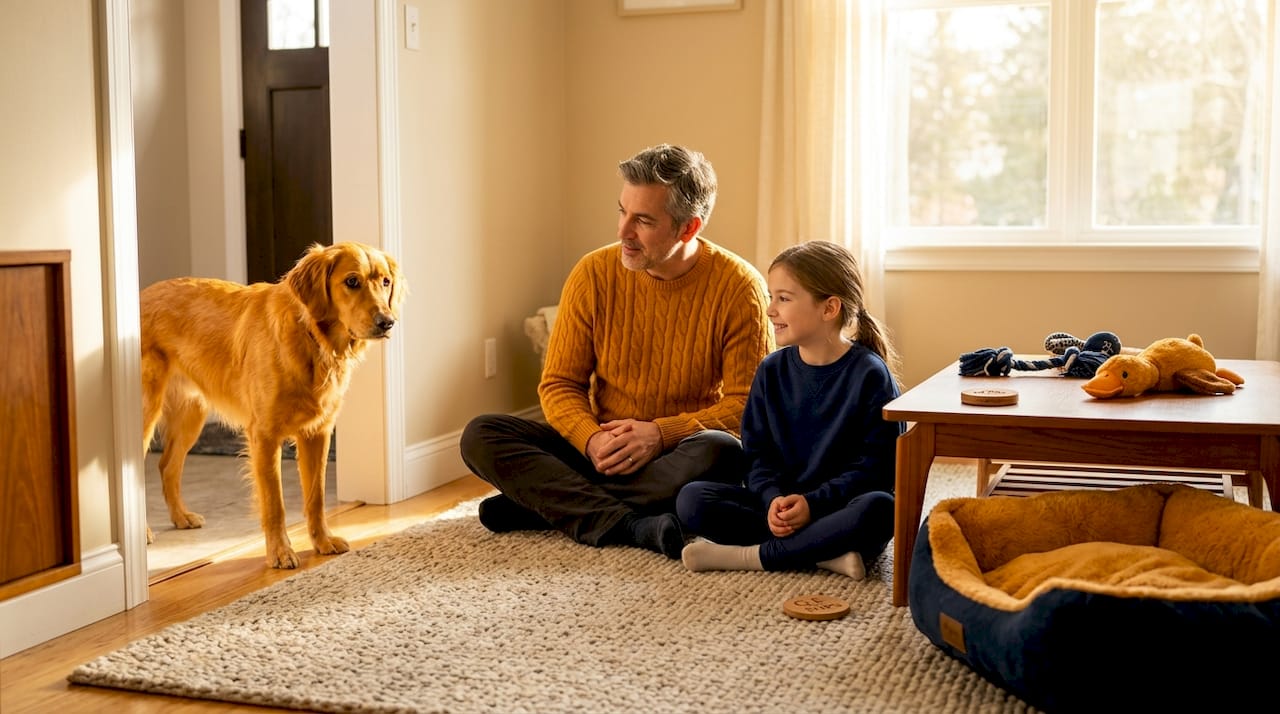
The ASPCA Professional guidelines on improving meet-and-greet experiences make it clear that failing to use structured, calming methods is a documented mistake. Instead, the recommendation is to use positive, low-stress techniques that reward calm behavior and follow a predictable routine.
Here is a step-by-step approach to structured introductions:
- Ask guests to crouch or sit at the dog’s level rather than looming over them
- Allow the dog to approach on their own terms, without forcing contact
- Use small, high-value treats to reward any calm interaction
- Keep initial visits short, no more than 15 to 20 minutes
- If the dog retreats, respect that boundary completely and ask others to do the same
- Repeat these short, positive sessions over several days before extending duration
This method works because it puts control in the dog’s hands. A dog that voluntarily approaches a person has already made a positive decision, which means the interaction starts from a foundation of confidence rather than fear.
Pro Tip: Avoid baby talk and rapid movements during introductions. Slow, deliberate movements and a calm, low tone of voice communicate safety far more effectively than enthusiastic energy.
For deeper guidance on the science behind these approaches, our socialization techniques resource breaks down exactly how positive reinforcement shapes confidence. You can also review our pet adoption guide for a fuller picture of what successful adoption looks like from start to finish.
Mistake 3: Failing to check required paperwork and compliance
Most adopters focus on the emotional and behavioral side of bringing a dog home, and rightly so. But the administrative side matters just as much, and overlooking it can stop an adoption dead in its tracks.
Health certificates are the most commonly missed paperwork requirement. Some states and municipalities require health certificates before placement or adoption, and failing to ensure that proper compliance documentation is in order can derail the entire process. Massachusetts is a specific example of a state with formal regulations for animal shelters and rescues that include these requirements.
| Document | Who needs it | Why it matters |
|---|---|---|
| Health certificate | Required in some states | Confirms the dog is free from infectious disease |
| Vaccination records | Required by most shelters and vets | Confirms rabies, distemper, and other core vaccines |
| Microchip registration | Strongly recommended | Links ownership legally and helps with recovery if lost |
| Spay/neuter agreement | Common with rescue groups | Outlines timing and legal responsibility for the procedure |
| Interstate health certificate | Required when crossing state lines | Federally recommended and often legally required |
Key compliance steps to handle before finalizing your adoption:
- Contact your local animal control office to ask about certificate requirements
- Request complete medical records from the shelter or rescue before signing anything
- Verify that all vaccinations are current and documented
- Confirm whether the dog has been microchipped and register the chip in your name immediately after adoption
- Ask the shelter whether any state-specific forms need to be completed
Skipping these steps does not just cause legal headaches. It can also leave you financially responsible for medical issues that were not properly disclosed. Our detailed pet adoption workflow walks you through each administrative checkpoint so nothing falls through the cracks.
Mistake 4: Expecting instant bonding and full socialization
Here is an expectation that catches almost every new adopter off guard: your dog may not love you immediately, and that is completely normal. The social media version of dog adoption shows tearful reunions and instant lifelong bonds. Real life looks different, and that difference trips people up more than almost anything else.
The most consistent expert guidance across behavioral sources is to treat the first weeks as a behavior-learning period, not an instant bonding experience. Reducing stressors, structuring routines, and starting training gently and early are what actually create a lasting relationship, not accelerating affection or rushing full socialization.
Common signs that bonding is still in progress, not failing:
- Your dog avoids eye contact or turns away when you approach
- They eat slowly or seem uninterested in treats they accepted at the shelter
- They follow you around but do not initiate physical contact
- They startle easily at sounds that seemed fine during the meet-and-greet
All of these are normal responses to a new environment. Trying to force affection at this stage backfires badly. Some dogs need two weeks. Others need two months.
| Approach | Short-term effect | Long-term outcome |
|---|---|---|
| Forcing affection early | Increases anxiety, avoidance behavior | Weaker trust, potential aggression triggers |
| Structured routines and gentle training | Builds predictability and confidence | Deeper, lasting bond and stable behavior |
| Gradual positive exposure | Reduces fear responses over time | Better socialization and adaptability |
Start with basic commands like “sit” and “stay” within the first week, not because you need a perfectly trained dog immediately, but because short training sessions give your dog a clear, positive framework for interacting with you. Training builds trust faster than cuddles alone. Our resource on puppy socialization benefits covers the research behind early positive exposure in clear, practical terms.
Mistake 5: Misunderstanding adopter screening and communication
The screening process is the part of adoption that makes many prospective adopters nervous, and that nervousness sometimes leads to either over-explaining or, worse, not being honest about their lifestyle. Both approaches backfire.
What is changing across many shelters and rescue organizations is the shift away from rigid, checklist-based screening toward a more conversational model. Some organizations advocate relationship-focused screening rather than strict pass or fail barriers, meaning prospective adopters should expect questions but also understand that the goal is finding the right match, not catching you out.
That shift is good news, but it requires a different kind of preparation. Here is what to be ready for:
- Questions about your daily schedule and how much time the dog will spend alone
- Questions about your living space, yard access, and whether you rent or own
- Questions about previous pets and what happened to them
- Questions about your experience with training and behavioral challenges
- Questions about your financial preparedness for veterinary costs
“The goal of a screening conversation is not to pass a test. It is to help the shelter make sure this specific dog and this specific family are genuinely a good fit.”
Be honest about your lifestyle, even if you think certain answers sound unfavorable. If you work long hours, say so. If you live in an apartment, own it. Shelters would rather find a less-than-ideal situation early than have a dog returned three months later because the reality of ownership was not discussed upfront.
Our guide on screening dog adopters explains the shelter’s side of this conversation in detail, which is incredibly useful for understanding what they are actually looking for. When you are ready to start browsing available dogs, our guide to finding the right dog can help you narrow your search by lifestyle fit before you even begin the formal adoption process.
Why patience and preparation are underrated in dog adoption
After looking at the five biggest mistakes adopters make, one pattern becomes impossible to ignore: almost every mistake comes from moving too fast. Too fast with introductions. Too fast with affection. Too fast with paperwork shortcuts. Too fast with assuming the screening conversation is just a formality.
There is a cultural pressure around dog adoption to feel instant joy and to project that joy outward. When your new dog hides under the bed on day three, it can feel like something went wrong. When they do not cuddle on the couch by week one, it can feel like the connection is not there. The uncomfortable truth is that many adoption “failures” are actually success stories that were abandoned prematurely.
The families that report the deepest, most rewarding bonds with adopted dogs almost universally describe a slow start. A few weeks of uncertainty. A moment where they questioned the decision. And then, gradually, a transformation as the dog began to trust the routine, the people, and the home.
Preparation matters as much as patience. Walking into adoption without knowing your local certificate requirements, your household’s realistic schedule, or your plan for the decompression period is the equivalent of showing up to a job interview without knowing what the role involves. The benefits of pet adoption are real and well-documented, but they come to families who do the work before, during, and after the adoption day. That work is not glamorous, but it is what actually creates a lasting family bond.
Ready to start your pet adoption journey?
Avoiding these common mistakes is a lot easier when you have the right resources in your corner from day one.

At Greenfield Pups, we make it simple to find helpful information on every part of the adoption and purchasing process. Whether you want to understand the types of dog breeders before making a decision, learn what to look for when choosing a responsible breeder, or follow a detailed adoption workflow guide that takes you through every step, we have put it all in one place. Our platform connects you with listings, expert guidance, and a community of dog lovers who have been exactly where you are right now.
Frequently asked questions
How long does it usually take for a dog to adapt to a new home?
Most dogs need several weeks to fully adjust, with steady improvement visible when routines are consistent and stressors are minimized. According to adoption shock research, rushing early integration can set the dog back, so patience during this window pays off significantly.
Are health certificates required for pet adoption in all states?
No, requirements vary by state. However, some states like Massachusetts mandate health certificates before placement or adoption, so always check your local regulations before finalizing.
What steps can help reduce adoption shock for my new dog?
Keep the environment small and predictable, stick to a consistent daily routine, and introduce new people or spaces gradually over several weeks. Keeping stimuli limited early is one of the most effective ways to reduce stress during the decompression stage.
How do shelters screen adopters—what should I expect?
Many shelters now use conversation-based screening focused on finding the right match rather than applying rigid pass or fail standards. Expect honest questions about your lifestyle, schedule, and previous pet experience, and answer them truthfully for the best outcome.
Leave a Comment