

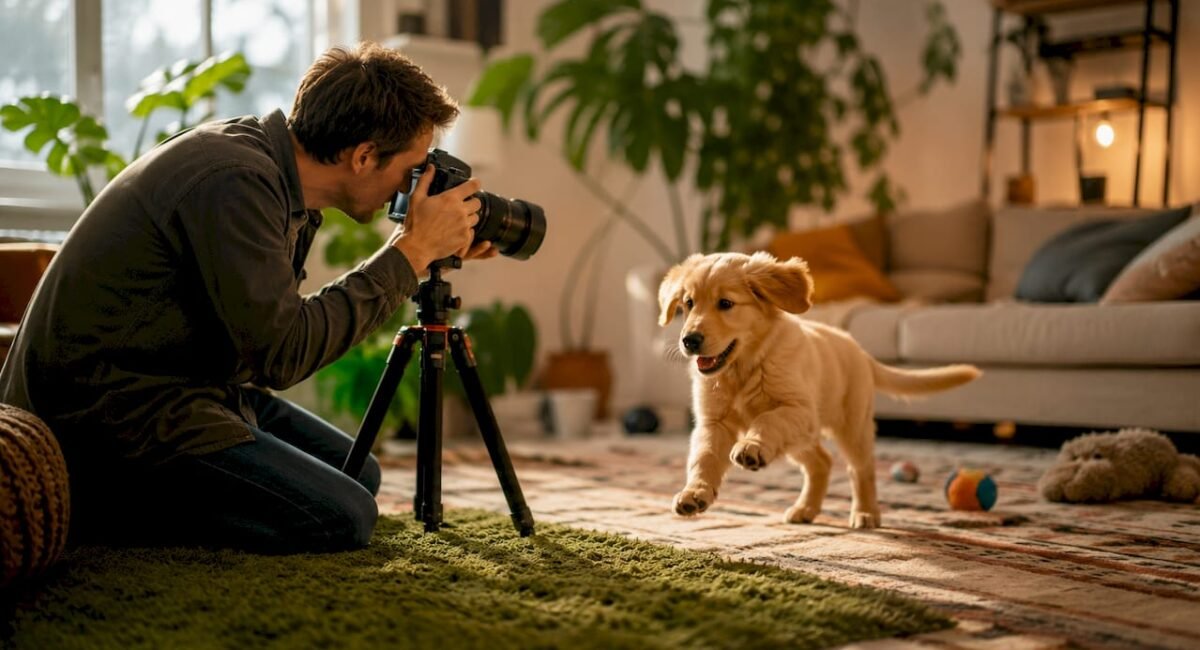
How to Photograph Puppies for Ads: Pro Techniques
Photographing puppies for ads is a discipline that combines commercial photography with animal behavior management. The best puppy ad images depend on four factors: lighting quality, puppy engagement, camera settings, and the specific advertising channel the image serves. Puppies aged 8–16 weeks produce the most compelling ad content because they retain baby-like proportions while showing genuine curiosity. A single photo session rarely covers every channel need. Social media, product listings, and marketplace ads each require distinct image styles, so planning your shoot with multiple outputs in mind is the professional standard.
How to photograph puppies for ads: camera gear and settings
Sharp puppy photos start with the right lens and shutter speed. A 50mm or 85mm prime lens gives you a natural field of view and a wide maximum aperture, which lets you separate the puppy from the background without blurring the face. Set your shutter speed to at least 1/500s to freeze motion. Puppies move fast and unpredictably, and anything slower produces soft, unusable images.
Aperture choice depends on the puppy’s face shape. Flat-faced breeds like French Bulldogs need a slightly narrower aperture (f/2.8 to f/4) to keep the full face in focus. Longer-muzzled breeds like Golden Retrievers can tolerate f/1.8 to f/2 because the focal plane covers more of the face naturally.
For studio sessions, the 3-light setup is the commercial standard. One key light (a 36-inch Octa works well) provides the main illumination. Two rim lights with grids create a sharp outline effect and add coat texture. Dog photographer Adam Goldberg specifically recommends grids on rim lights to prevent light spill that flattens the subject.
| Setting | Indoor Studio | Outdoor Natural Light |
|---|---|---|
| Shutter speed | 1/500s or faster | 1/500s or faster |
| Aperture | f/2.8–f/4 | f/2–f/2.8 |
| ISO | 400–800 | 100–200 |
| Key light | 36-inch Octa at 45 degrees | Golden hour sun at 45 degrees |
| Rim lights | Strip lights with grids | Reflectors or fill cards |
| Flash type | Softbox or diffused strobe | Avoid direct flash |
Pro Tip: Shoot in RAW format regardless of location. RAW files give you full control over white balance in post-production, which matters when you are correcting warm golden hour tones or balancing studio strobes.
What workflow keeps puppies engaged during a photo session?
A puppy’s attention span is the real constraint in any commercial shoot. Sessions should run 15–60 minutes maximum, broken into short bursts of active shooting followed by rest and play breaks. Trying to push through fatigue produces flat, disengaged images that no amount of editing can fix.
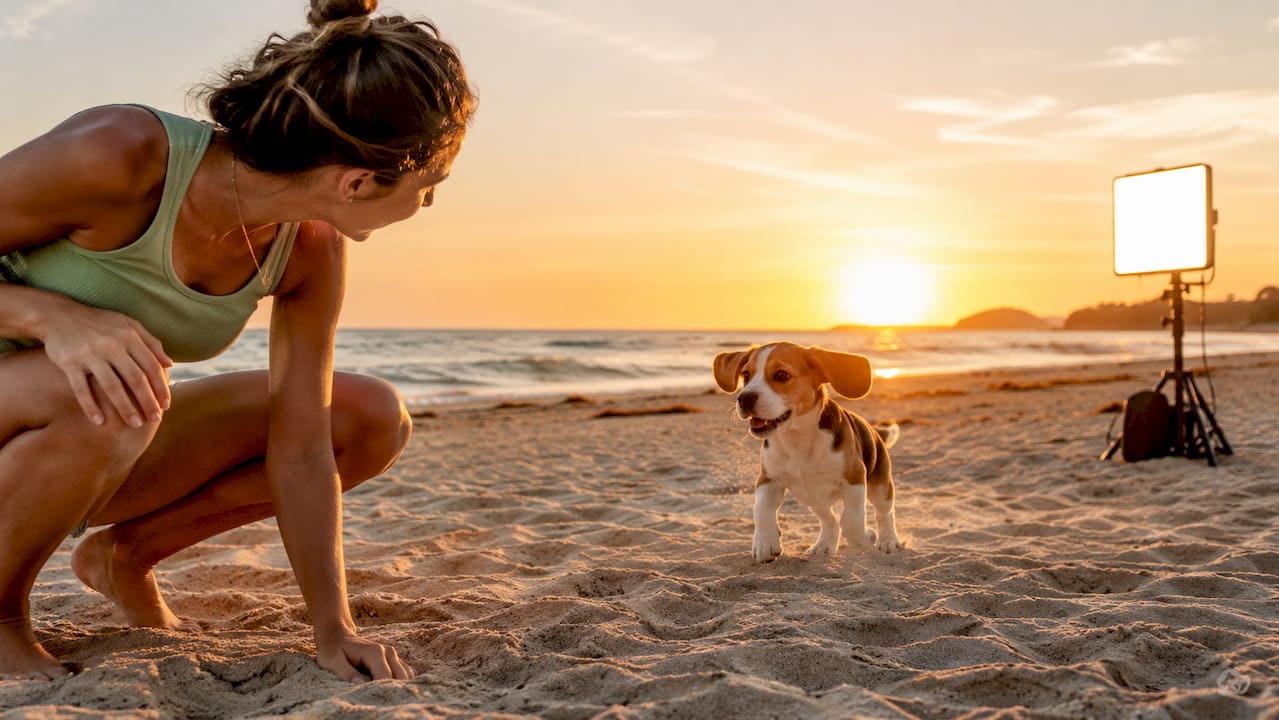
High-value treats are the most reliable engagement tool. Small pieces of cheese, hot dogs, or chicken hold attention far better than standard kibble. Rotate between two or three treat types during the session. Puppies habituate quickly, and variety sustains interest across the full shoot.
Squeaky toys and crinkle toys serve a different purpose. They trigger the head-tilt response and produce alert, forward-facing expressions. Use them sparingly so the reaction stays fresh. A toy that squeaks every 30 seconds becomes background noise within minutes.
Keep the puppy on leash throughout the session for safety and control. Remove the leash in post-production using standard cloning or content-aware fill tools in Adobe Photoshop or Lightroom. This approach is standard practice among professional pet photographers and prevents accidents on set.
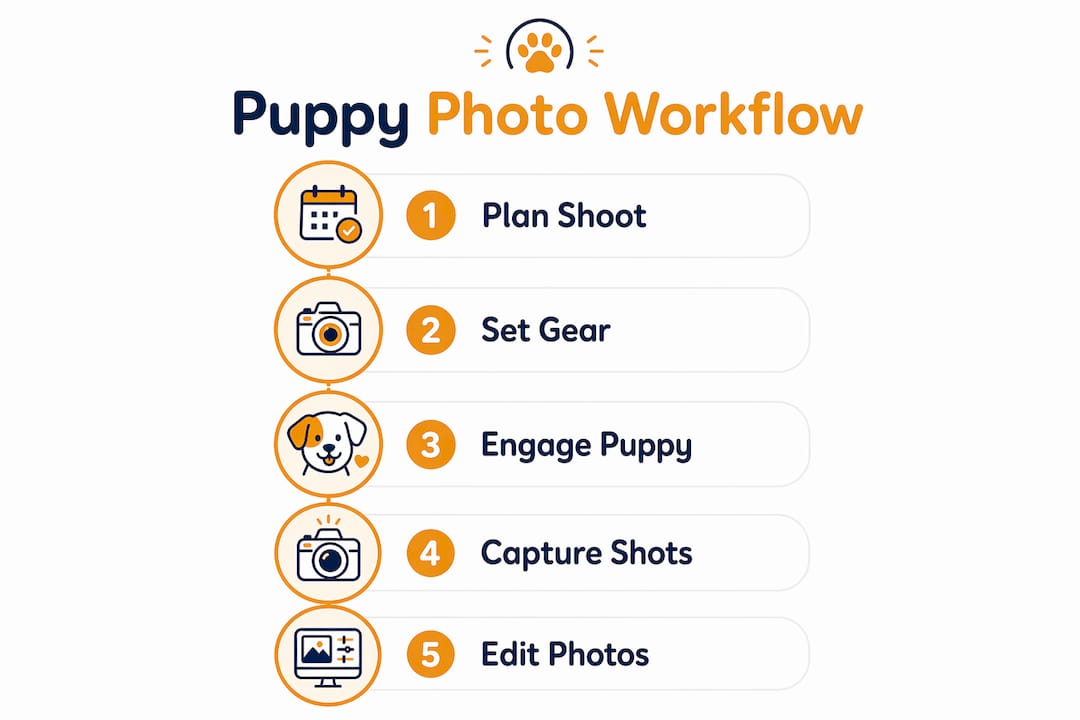
Here is a practical session workflow:
- Arrive 15 minutes early to let the puppy acclimate to the environment and equipment
- Run a 5-minute free-play period before shooting to burn off initial excitement
- Shoot in 10-minute active bursts with 5-minute breaks in between
- Use treats to reward eye contact and stationary moments
- Introduce squeaky toys only when you need a specific alert expression
- End the session before the puppy shows signs of fatigue (yawning, lying down, losing interest in treats)
Pro Tip: Bring a second handler to manage the puppy while you operate the camera. One person cannot simultaneously control a puppy and nail focus on a moving subject. The handler also becomes the treat and toy delivery system, keeping your hands free.
Which lighting conditions best highlight puppies in ads?
Warm, directional light is the single most important variable in emotionally effective puppy ad photography. Warm-toned natural light like golden hour sun or soft window light creates depth, warmth, and emotional resonance that cool or harsh lighting cannot replicate. Buyers respond to warmth. Cold, flat lighting makes puppies look clinical rather than lovable.
For outdoor shoots, schedule sessions within the first hour after sunrise or the last hour before sunset. The sun sits low, creating a natural 45-degree angle that adds dimension to the puppy’s coat and face. Midday sun is too harsh and creates unflattering shadows under the eyes and muzzle.
For indoor shoots, avoid direct on-camera flash entirely. Direct flash startles puppies and produces flat, reflective images. Use softboxes or diffused continuous LED panels instead. Position your key light at a 45-degree angle to the puppy’s face to mimic the quality of natural window light.
Here is a step-by-step lighting setup for a professional indoor puppy shoot:
- Position the key light (36-inch Octa) at a 45-degree angle to the puppy, slightly above eye level
- Place the first rim light behind and to the left of the puppy to define the coat edge
- Place the second rim light behind and to the right to complete the 3D outline effect
- Attach grids to both rim lights to control spill and keep the background clean
- Set a white or neutral gray background to maximize separation
- Test the setup with a stuffed animal before the puppy arrives to dial in exposure
Pro Tip: Battery-powered strobes remove all cables from the shooting area. Cables are a tripping hazard for energetic puppies and a liability on set. Godox and Profoto both make reliable battery-powered options that deliver studio-quality output.
How do you pose puppies to capture authentic personality?
Forced poses produce stiff, unconvincing images. Candid moments during play yield better commercial puppy photos than any staged position. Your job is to create conditions where natural, expressive behavior happens, then be ready to capture it.
Eye contact is the most powerful compositional element in a puppy ad. Sharp eyes draw the viewer in and create an emotional connection. Use a squeaky toy held just above the lens to direct the puppy’s gaze toward the camera. Shoot at the puppy’s eye level, not from above. Overhead angles make puppies look small and submissive rather than engaging.
Apply the rule of thirds by placing the puppy’s eyes on the upper horizontal grid line. Fill the frame tightly for social media crops. Leave breathing room on product pages where text overlays may be added.
| Pose Style | Best Ad Channel | Key Technique |
|---|---|---|
| Eye-level eye contact | Social media, marketplace listings | Squeaky toy above lens, shallow depth of field |
| Action/mid-play | Social media stories, Instagram Reels | 1/800s shutter, burst mode |
| Clean sit, centered | Product pages, print ads | Neutral background, f/4 for full face focus |
| Lifestyle with human | Facebook ads, email campaigns | Natural window light, candid interaction |
| Close-up face crop | Featured ad thumbnails | 85mm prime, f/2, eyes tack sharp |
Different advertising contexts require different framing. Social media favors emotional, story-driven images with warm tones and natural settings. Product pages need clear packshot-style images with consistent backgrounds and neutral color grading. Marketing experts note that overly artistic images can reduce buyer confidence on marketplace listings. Simple, clear images build trust faster.
How should you tailor puppy photos for different ad channels?
Each advertising channel has a distinct visual language, and using the wrong image type in the wrong place reduces performance. Social media platforms favor emotional, warm lifestyle images that tell a story. Product detail pages and marketplace listings need clean, consistent packshots that communicate clarity and trust.
Plan your shoot to produce both asset types in a single session. Shoot lifestyle content first while the puppy is fresh and energetic. Move to packshot-style images later in the session when the puppy is calmer and more likely to hold still.
Here is a channel-by-channel breakdown of image requirements:
- Instagram and Facebook: Warm, lifestyle images with natural backgrounds. Vertical 4:5 ratio for feed posts. Emotional expressions and human interaction perform well.
- Marketplace listings (Greenfieldpups and similar platforms): Clean, well-lit images on neutral backgrounds. Multiple angles including face, full body, and profile. Consistent color grading across all listing images.
- Google Display and programmatic ads: High-contrast images with clear subject separation. Avoid busy backgrounds that compete with ad copy.
- Email campaigns: Horizontal lifestyle images with space for text overlay. Warm tones and soft focus backgrounds increase click-through rates.
- Print and breeder brochures: High-resolution files at 300 DPI minimum. Studio lighting with precise exposure for accurate color reproduction.
Organizing your image catalog by channel type immediately after the shoot saves significant time during campaign production. Use Adobe Lightroom collections or Capture One albums to tag and sort assets before delivery.
Key takeaways
Effective puppy ad photography requires matching technical precision with an understanding of puppy behavior and channel-specific visual requirements.
| Point | Details |
|---|---|
| Optimal puppy age | Shoot puppies at 8–16 weeks for the best balance of baby-like appearance and curiosity. |
| Camera settings | Use a shutter speed of at least 1/500s and a 50mm or 85mm prime lens for sharp, motion-free images. |
| Lighting setup | A 3-light configuration with a key light and two gridded rim lights produces commercial-grade coat texture and background separation. |
| Session workflow | Run 10-minute shooting bursts with breaks, use high-value treats, and keep the puppy on leash for safety. |
| Channel-specific assets | Produce lifestyle shots for social media and clean packshots for product pages in every single session. |
What i’ve learned after years of puppy ad shoots
The biggest mistake I see photographers make is treating a puppy shoot like a standard portrait session. You cannot direct a puppy the way you direct a human subject. The moment you try to force a pose, you lose the authenticity that makes puppy ads convert.
My approach shifted when I stopped trying to get the shot and started creating conditions for a shot to happen. That means spending the first 10 minutes doing nothing but letting the puppy explore the set. It means having three treat options ready, not one. It means accepting that the best image of the session will probably come from a moment I did not plan.
The technical side matters, but it is table stakes. Any competent photographer can learn the 3-light setup or dial in 1/500s shutter speed. What separates good puppy ad photography from great puppy ad photography is patience and the ability to read animal behavior in real time. When a puppy’s ears perk up and its eyes go wide, you have about half a second. If you are still adjusting settings, you missed it.
I also want to push back on the idea that one perfect image is the goal. The photographers and marketers I respect most come back from a session with 400 frames and 15 usable images across multiple styles. That variety is what gives a campaign flexibility. One image does not cover Instagram, a marketplace listing, a Google display ad, and a print brochure. Plan for volume and you will always have what the client needs.
— Taylor
Boost your puppy ad results with Greenfieldpups
Strong photography is only part of the equation. Where you place those images determines how many buyers actually see them.

Greenfieldpups connects dog breeders and pet marketers with buyers actively searching for puppies across the United States. The platform’s breeder listing guide walks you through optimizing your ad with the right images, descriptions, and visibility features to stand out in a competitive marketplace. For a broader look at responsible selling practices and how presentation affects buyer trust, the pet selling tips guide covers everything from photography standards to ethical advertising. Put your best images to work where buyers are already looking.
FAQ
What is the best age to photograph puppies for ads?
The ideal age is 8–16 weeks, when puppies retain their baby-like proportions and show natural curiosity. This window produces the most emotionally compelling images for advertising.
What shutter speed should i use for puppy photography?
Set your shutter speed to at least 1/500s to freeze puppy movement and avoid motion blur. Increase to 1/800s for highly active breeds or fast play sequences.
How long should a puppy photo session last?
Sessions should run 15–60 minutes with short active bursts and regular breaks. Pushing past the puppy’s energy limit produces flat, disengaged images that underperform in ads.
Should i use flash for puppy photography?
Avoid direct on-camera flash because it startles puppies and creates unflattering reflections. Use softboxes, diffused LED panels, or battery-powered strobes positioned at 45-degree angles instead.
Do i need different photos for social media vs. product listings?
Yes. Social media favors emotional lifestyle images with warm tones, while product pages and marketplace listings perform better with clean, consistent packshots on neutral backgrounds. Plan every shoot to produce both asset types.
Leave a Comment