
What Is Adoption Matchmaking for Pet Adopters
Adoption matchmaking is the guided process shelters and rescues use to pair adopters with pets whose temperament, energy level, and needs align with the adopter’s lifestyle and home environment. Unlike walking into a shelter and picking the first dog that catches your eye, adoption matchmaking treats the placement as a two-sided compatibility decision. Shelters like MSPCA-Angell and Best Friends Animal Society have built structured programs around this idea, using adoption counselors, behavioral assessments, and increasingly, AI-powered tools to make better matches. The result is fewer failed adoptions, stronger human-animal bonds, and pets that actually thrive in their new homes.
What is adoption matchmaking and how does it work at shelters?
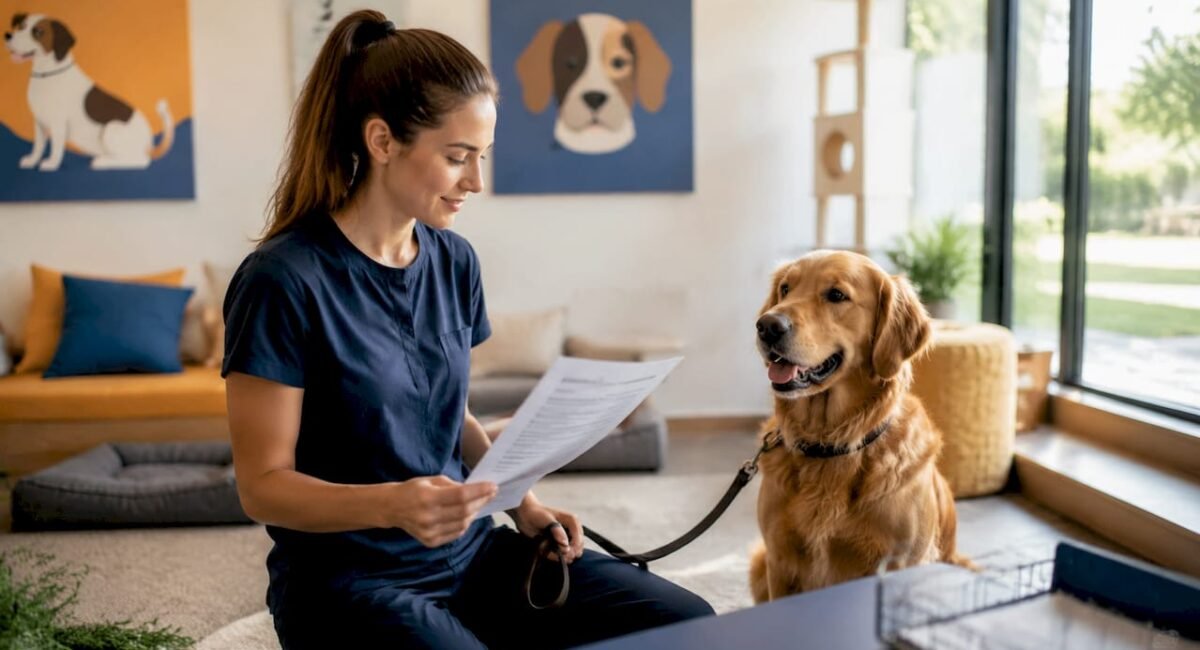
Adoption matchmaking is defined by two parallel assessments: one of the adopter, one of the pet. Matching inputs include home type, household composition, activity level, work schedule, existing pets, and the adopter’s experience with animals. On the pet’s side, staff evaluate temperament, energy, medical needs, behavioral history, and how the animal interacts with people, children, and other animals. When both profiles are built, a counselor identifies candidates where the two sides fit.
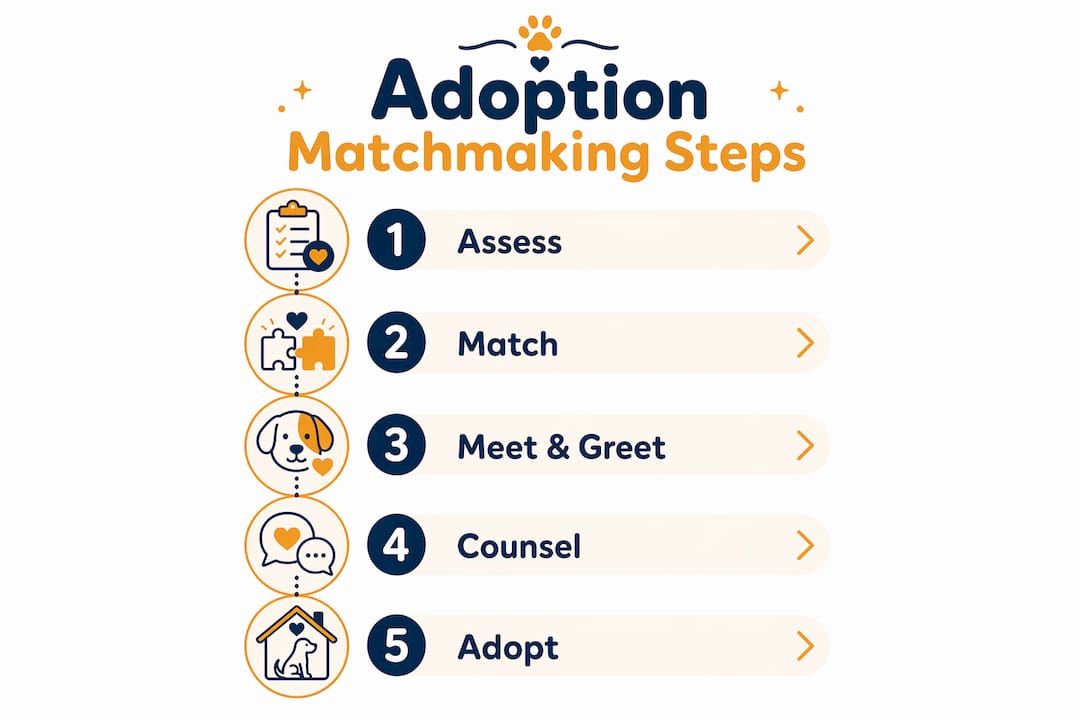
The process at most shelters follows a recognizable sequence:
- Application or intake interview. You fill out a questionnaire or speak with an adoption counselor about your daily routine, living space, and what you want in a pet.
- Pet profile review. Staff match your profile against animals currently available, filtering by energy, size, socialization needs, and any special requirements.
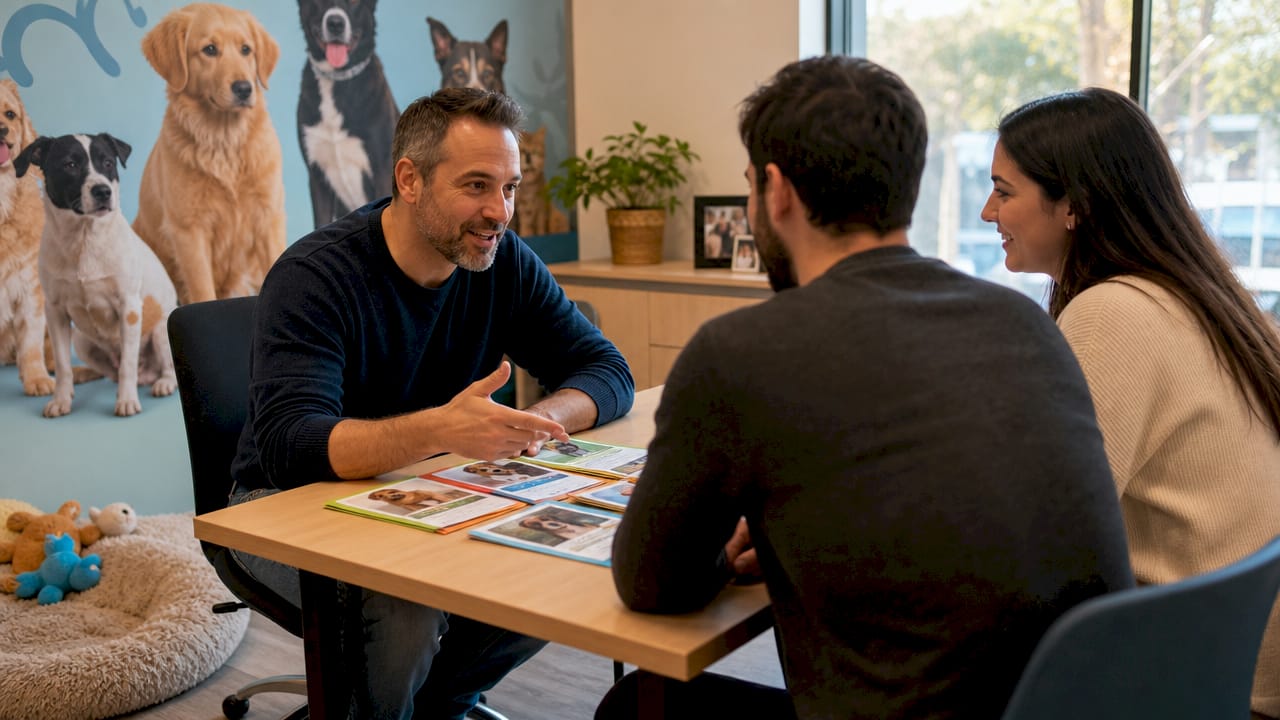
- Counselor consultation. An adoption counselor walks you through compatible candidates, explains each animal’s history, and flags any considerations like medical costs or training needs.
- Meet-and-greet outside the kennel. MSPCA keeps kennels closed and arranges introductions in quieter spaces so dogs show their real personality rather than stress-induced behavior.
- Structured interaction. ASPCApro recommends reward-based training preparation and enriched settings during meet-and-greets to give pets the best chance of making a genuine connection.
- Decision and paperwork. If the meeting goes well, adoption staff complete the application review and finalize placement.
Best Friends Animal Society counselors go further by addressing specific concerns during the meeting, such as how a cat with a chronic condition fits into a busy household, or whether a high-energy dog suits a first-time owner. This human-centered approach is what separates adoption counselors as matchmakers from a simple browse-and-choose experience.
Pro Tip: Ask the adoption counselor to describe the pet’s behavior in three different situations: with strangers, during feeding, and when left alone. Those three scenarios reveal more about long-term compatibility than any single meet-and-greet.
What benefits does adoption matchmaking provide?
Adoption matchmaking reduces the single biggest cause of adoption failure: mismatch between what an adopter expects and what a pet actually needs. MSPCA-Angell guides busy adopters toward senior pets that are already house-trained and lower-energy, rather than letting someone with a demanding schedule take home a young, high-drive dog that will develop behavioral problems from under-stimulation. That kind of proactive filtering prevents returns before they happen.
The benefits extend well beyond avoiding bad fits. Here is what a well-run adoption matchmaking process delivers:
- Lower return rates. Pets placed through structured matching are less likely to be surrendered because the adopter understood what they were committing to before signing paperwork.
- Stronger long-term bonds. Compatibility built on lifestyle alignment, not appearance, produces relationships that last. Behavioral preparation and adopter visibility during meet-and-greets significantly influence how quickly that bond forms.
- Better outcomes for special-needs pets. Animals with medical conditions or behavioral histories that require patient, experienced owners get placed with people who are specifically prepared for those challenges.
- Increased adopter confidence. When a counselor explains why a specific pet fits your home, you walk away with a clear picture of what to expect. That clarity reduces post-adoption anxiety.
- Reduced impulsive decisions. Conversation-based matchmaking by shelter staff slows down the process enough to replace impulse with informed choice.
“The goal isn’t to find you a pet you love at first sight. It’s to find you a pet you’ll still love two years from now when the novelty has worn off and real life has set in.” — Best Friends Animal Society adoption philosophy
The benefits of adopting dogs are well documented across emotional, physical, and social dimensions. Matchmaking amplifies those benefits by making sure the animal you bring home is genuinely suited to your world.
How do AI and technology influence adoption matchmaking today?
Technology has entered the adoption matchmaking process in a meaningful way, and the most prominent example is Amazon’s AI-powered adoption hub, built in partnership with Best Friends Animal Society. The tool uses natural language processing to interpret queries like “low-energy dog for apartments” and returns personalized pet recommendations drawn from Best Friends centers across the country. This means an adopter in a city studio can describe their situation in plain language and receive a curated list of compatible animals, complete with animated videos and detailed behavioral profiles.
Here is how AI tools compare to traditional matchmaking methods:
| Feature | Traditional counselor-led matching | AI-powered matching |
|---|---|---|
| Speed | Requires scheduled appointment | Instant, available 24/7 |
| Depth of assessment | Deep, conversation-based | Query-based, surface-level |
| Behavioral nuance | High, informed by direct observation | Limited to profile data |
| Geographic reach | Local shelter inventory only | Multi-shelter, national reach |
| Personalization | Tailored to individual conversation | Algorithmic, based on input keywords |
The table makes one thing clear: AI expands reach and accessibility, but it does not replace the judgment of an experienced adoption counselor who has watched a dog interact with a dozen different people. The two approaches work best together. An adopter might use an AI tool to identify candidates across multiple shelters, then work with a local counselor to conduct the actual meet-and-greet and final assessment.
Pro Tip: If you use an AI adoption tool to find candidates, print or screenshot the pet profiles before your shelter visit. Counselors can use that list to quickly cross-reference which animals are still available and schedule introductions efficiently.
What practical steps can adopters take to maximize the matchmaking process?
Preparation is the factor most adopters underestimate. Showing up to a shelter or adoption event without a clear picture of your own lifestyle produces vague answers to counselor questions, which leads to vague matches. The adoption matchmaking process works best when you arrive as an informed participant, not a passive browser.
These steps will help you get the most from any adoption match service:
- Audit your daily routine honestly. How many hours is the pet alone each day? Do you run, or do you prefer evenings on the couch? A high-energy breed placed with a sedentary owner creates problems for both parties.
- List your household specifics. Note the ages of children in the home, whether you rent or own, your yard situation, and any existing pets. Counselors use every one of these details.
- Prioritize behavior over breed and looks. Breed appearance is an unreliable predictor of temperament. Focus on how the individual animal behaves, not what it looks like or what its breed is supposed to be like.
- Prepare ranked pet choices for events. SPCA Westchester recommends arriving at mobile adoption events with first, second, and third pet choices already identified, since meet-and-greet slots are time-limited and popular animals go quickly.
- Ask specific questions during the meet-and-greet. “How does this dog behave when left alone?” and “Has this cat lived with other cats before?” produce more useful answers than general impressions.
- Expect the process to take time. Structured meet-and-greets typically run about 30 minutes per session. Rushing that window to get to paperwork faster defeats the purpose of the process.
Reviewing a pet adoption guide for families before your first shelter visit gives you a concrete framework for what questions to ask and what to observe during your time with each animal. Avoiding common adoption mistakes is far easier when you know what they are before you walk through the door.
Key takeaways
Adoption matchmaking works because it replaces appearance-based impulse decisions with structured, behavior-focused compatibility assessments guided by trained counselors and supported by technology.
| Point | Details |
|---|---|
| Core definition | Adoption matchmaking pairs adopters with pets based on lifestyle, household, and behavioral compatibility. |
| Counselor role | Adoption counselors at shelters like MSPCA-Angell and Best Friends act as trained matchmakers, not just administrators. |
| AI as a complement | Tools like Amazon’s AI hub expand reach but require human counselor follow-through for accurate placement. |
| Behavior over breed | Observable behavior and adopter capacity matter more than breed appearance in predicting a successful match. |
| Adopter preparation | Arriving with ranked pet choices, honest lifestyle details, and specific questions produces better matchmaking outcomes. |
Why deliberate matchmaking beats love at first sight
I have watched enough adoption stories play out to know that the ones that go wrong almost always share the same origin: someone picked a pet because it was beautiful, or because it reminded them of a childhood dog, or because it was the first one that ran up to them. None of those are bad feelings. They are just incomplete criteria for a 10 to 15 year commitment.
What I find genuinely underappreciated about the adoption matchmaking process is how much it protects the adopter, not just the animal. Counselors at organizations like Best Friends Animal Society are not gatekeepers trying to make adoption harder. They are people who have seen what happens when a high-anxiety rescue dog goes to a chaotic household, or when a senior cat that needs quiet ends up with three young children. They are trying to prevent a painful return for both sides.
The technology angle is real and worth taking seriously. Amazon’s AI tool is not a gimmick. It makes the discovery phase faster and more accessible for people who do not live near a large shelter. But I would caution against treating an algorithm as the final word on compatibility. A dog’s profile says “medium energy.” What that means in a 600-square-foot apartment versus a house with a yard is completely different, and only a counselor who asks the right follow-up questions can close that gap.
My honest advice: treat the adoption counselor as a partner, not an obstacle. Tell them things you might feel embarrassed to admit, like that you travel for work two weeks a month, or that your landlord has a weight limit on dogs. That information does not disqualify you. It helps the counselor find the animal that actually fits your real life, not the idealized version of it.
— Taylor
Find your next pet with Greenfieldpups
Greenfieldpups connects prospective pet owners with listings, breeder profiles, and practical resources across the United States. Whether you are exploring adoption or researching responsible acquisition, the platform gives you the tools to make an informed decision. Start by reading Greenfieldpups’ guide on responsible dog breeding practices to understand what ethical sourcing looks like from the breeder side. For adopters weighing their options, the pet adoption benefits guide breaks down the health, emotional, and social advantages of bringing a shelter animal home. Greenfieldpups also covers choosing a responsible breeder for those who decide that a specific breed from a vetted source is the right path. Every good placement starts with the right information.
FAQ
What is adoption matchmaking in simple terms?
Adoption matchmaking is the process shelters use to pair a prospective adopter with a pet whose temperament, energy, and needs fit the adopter’s lifestyle and home. It replaces random selection with a structured compatibility assessment guided by trained counselors.
How long does the adoption matchmaking process take?
The timeline varies by shelter, but structured meet-and-greet sessions typically run about 30 minutes per animal. The full process from application to placement can take anywhere from one day to several weeks depending on the shelter’s intake and the adopter’s specific requirements.
Does adoption matchmaking work for cats as well as dogs?
Yes. Best Friends Animal Society uses adoption counselors to match cats with families by evaluating the cat’s social history, medical needs, and personality alongside the household’s composition and activity level. The same compatibility principles apply to both species.
How does AI improve the adoption matchmaking process?
Amazon’s AI-powered adoption hub uses natural language processing to interpret adopter queries and return personalized pet recommendations from shelter databases. It improves the discovery phase by expanding access to compatible animals across multiple locations, though final placement still benefits from in-person counselor assessment.
What should I bring to an adoption matchmaking appointment?
Bring a written list of your household details, daily routine, and any existing pets, plus a ranked list of animals you want to meet. SPCA Westchester recommends preparing first, second, and third choices before mobile adoption events to make the most of limited meet-and-greet time.
Leave a Comment