

Questions to Ask Breeders: Your Puppy Buyer’s Guide
The best questions to ask breeders focus on four areas: health testing, puppy environment, breeder experience, and post-sale support. These categories, recognized by authorities like the American Kennel Club (AKC) and Embark, most directly determine whether a puppy comes from an ethical, responsible source. Knowing the right breeder interview questions before you visit or call protects you from impulse decisions and helps you identify red flags that less prepared buyers miss entirely.
1. What health and genetic testing questions should you ask breeders?
Health testing is the single most verifiable indicator of a responsible breeder. Ask specifically which breed-relevant tests have been completed on both parents, including OFA hip and elbow evaluations, cardiac screenings, and DNA panels for inherited conditions common to the breed. Vague answers like “we test our dogs” without documentation are a red flag.
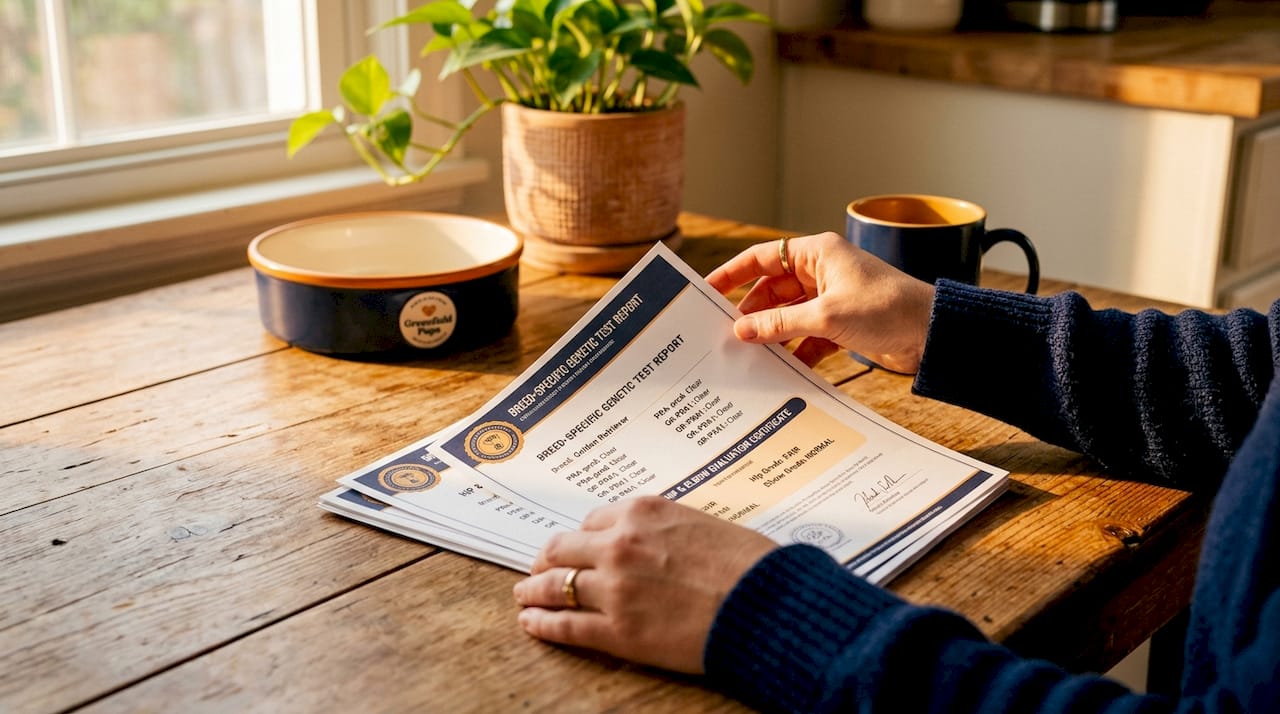
Proof of health clearances should be requested before you put down any deposit. Ask to see actual certificates, OFA registration numbers, or Embark DNA reports, not just verbal assurances. A breeder who hesitates to share these documents is not operating transparently.
The most useful proof goes beyond confirming that tests occurred. Genetic test results are most valuable when breeders use them to guide ongoing puppy care rather than just marketing claims. Ask the breeder how they applied the test results to their breeding decisions and what the results mean for your puppy’s long-term health management.
- Ask which specific tests were run on both the sire and dam
- Request OFA registration numbers or Embark report links you can verify independently
- Ask whether the whole litter was tested, not just the parents
- Confirm the breeder will share a written summary of results with you at pickup
Pro Tip: Search the OFA database at ofa.org using the parent dog’s registered name to independently verify hip, elbow, and cardiac clearances before your visit.
2. How do questions about the puppy’s environment reveal breeder quality?
A puppy’s first eight weeks shape its temperament, stress response, and social adaptability for life. Visiting the puppy’s mother, father if available, and the raising area gives you direct evidence of the conditions your puppy has experienced. A breeder who refuses visits without a legitimate health protocol reason deserves serious scrutiny.
Ask about the socialization routines in place. Responsible breeders expose puppies to a range of sounds, surfaces, scents, and handling experiences during the critical developmental window between three and twelve weeks. Programs like the Puppy Culture protocol and the AKC S.T.A.R. Puppy framework are recognized benchmarks for early neurological stimulation.
Evaluate what you see during a visit. Clean, spacious whelping areas, calm mother dogs, and puppies that approach visitors with curiosity rather than fear are all positive indicators. Overcrowded or unsanitary conditions, regardless of what the breeder claims on paper, tell you everything you need to know.
- Ask whether you can visit before committing to a puppy
- Ask what socialization protocol the breeder follows and at what ages
- Ask if puppies are raised in a home environment or in a kennel
- Ask whether puppies are exposed to children, other animals, and household sounds
Pro Tip: Observe the mother dog’s temperament closely. Fearful or aggressive behavior in the dam is a strong predictor of similar tendencies in her offspring, regardless of how well the puppies appear to be socialized.
3. Which breeder experience and screening questions help ensure ethical practices?
Breeder experience is not measured in years alone. Ask how many litters the breeder produces per year and how many concurrent litters they manage at one time. Breeders producing fewer litters annually tend to provide more individual attention to each puppy, which directly affects early development and temperament.
Ask whether the breeder participates in breed clubs, conformation shows, or working dog competitions. Involvement in organizations like the AKC Parent Club for a specific breed signals that the breeder is accountable to a community of peers with established standards. Breeders who operate in isolation from these networks have no external accountability.
A responsible breeder screens prospective owners thoroughly rather than accepting deposits immediately. If a breeder asks you detailed questions about your household, work schedule, previous dog ownership, and training plans, that is a positive signal. A breeder who skips this process is prioritizing the sale over the puppy’s welfare.
- Ask how many years the breeder has worked specifically with this breed
- Ask how many litters they produce annually and how many are active right now
- Ask whether they participate in breed clubs or AKC events
- Ask for references from a veterinarian and at least two previous buyers
- Ask whether they would take the puppy back if your circumstances changed
4. What questions about contracts and post-sale support should you ask?
A written contract is not optional with a responsible breeder. It is the document that defines your rights and the breeder’s obligations. Contracts should detail health guarantees, medical history, feeding schedules, and vaccination records, along with clear terms for what happens if a hereditary condition is diagnosed within a defined period.
Ask whether the contract includes a spay or neuter requirement and at what age. Many responsible breeders require this for pet-quality puppies to prevent indiscriminate breeding. Ask what the return policy is if you can no longer care for the dog. A breeder who requires you to return the dog to them rather than rehome it independently is demonstrating genuine commitment to that animal’s future.
Breeder availability for emergencies after adoption is a critical measure of responsible breeding. The AKC frames it this way: if you would not feel comfortable calling the breeder at midnight with an urgent health question, reconsider the relationship. That standard cuts through paperwork and reveals true ongoing commitment.
| Contract element | What to ask |
|---|---|
| Health guarantee | What conditions are covered and for how long? |
| Return policy | Are you required to return the dog to the breeder? |
| Spay/neuter clause | Is it required, and at what age? |
| Medical records | Are vaccination and deworming records included at pickup? |
| Post-sale support | Will the breeder answer questions after you bring the puppy home? |
5. How to interpret and compare breeder answers to make a confident choice
Comparing breeders requires a consistent framework, not just gut feeling. After each conversation or visit, score the breeder on four dimensions: health documentation, environment quality, experience and accountability, and post-sale commitment. A breeder who scores well on three but refuses visits entirely is not a responsible choice, regardless of how impressive their paperwork looks.
Red flags are specific and recognizable. Watch for breeders who cannot provide OFA numbers, who have more than three or four concurrent litters, who pressure you toward a deposit before answering your questions, or who have no references from veterinarians or previous buyers. Inconsistent regulatory enforcement means buyers cannot rely on licensing alone to verify compliance. Direct questioning is your primary tool.
Prioritize transparency over convenience. A breeder two hours away who answers every question thoroughly, welcomes visits, and screens you carefully is a better choice than a local breeder who ships puppies without a meeting. Distance is a logistical problem. A breeder who hides information is a permanent one.
Pro Tip: Take written notes during every breeder conversation and compare them side by side afterward. Memory distorts impressions, but notes reveal patterns. A breeder who gave vague answers on health testing but was charming in person will look very different on paper.
Key takeaways
Asking the right questions to evaluate breeders requires covering health documentation, puppy environment, breeder experience, contract terms, and post-sale support because no single factor alone predicts responsible breeding.
| Point | Details |
|---|---|
| Health documentation first | Request OFA numbers and DNA panel results before placing any deposit. |
| Visit the puppy’s environment | Observe the mother, living conditions, and socialization quality in person. |
| Bidirectional screening matters | A breeder who interviews you back is prioritizing the puppy over the sale. |
| Contracts define accountability | Confirm health guarantees, return policies, and post-sale support in writing. |
| Red flags are specific | Refusal to visit, no references, and high litter volume are disqualifying signals. |
What I’ve learned from interviewing breeders firsthand
I’ve spoken with dozens of breeders across breeds ranging from Golden Retrievers to French Bulldogs, and the single most revealing moment in any conversation is not the health certificate. It’s what happens when you ask a breeder a question they weren’t expecting.
The breeders I trust most pause before answering. They think about it. They sometimes say, “That’s a great question, let me pull up the records.” The ones who answer every question instantly with polished, rehearsed responses often turn out to have the thinnest documentation. Fluency is not the same as honesty.
The second thing I’ve learned is that the breeder relationship does not end at pickup. The breeders who check in six months later, who ask how the puppy’s first vet visit went, who remember your dog’s name when you call with a question two years in. Those are the breeders whose puppies consistently turn out healthy and well-adjusted. That ongoing relationship is not a bonus feature. It’s evidence of how seriously they took the breeding decision in the first place.
My honest advice: trust your instincts alongside your checklist. If something feels off during a visit, even if the paperwork looks clean, that feeling is data. You are about to commit to a living animal for a decade or more. The questions you ask breeders today are the foundation of that entire relationship.
— Taylor
Find trusted breeders through Greenfieldpups
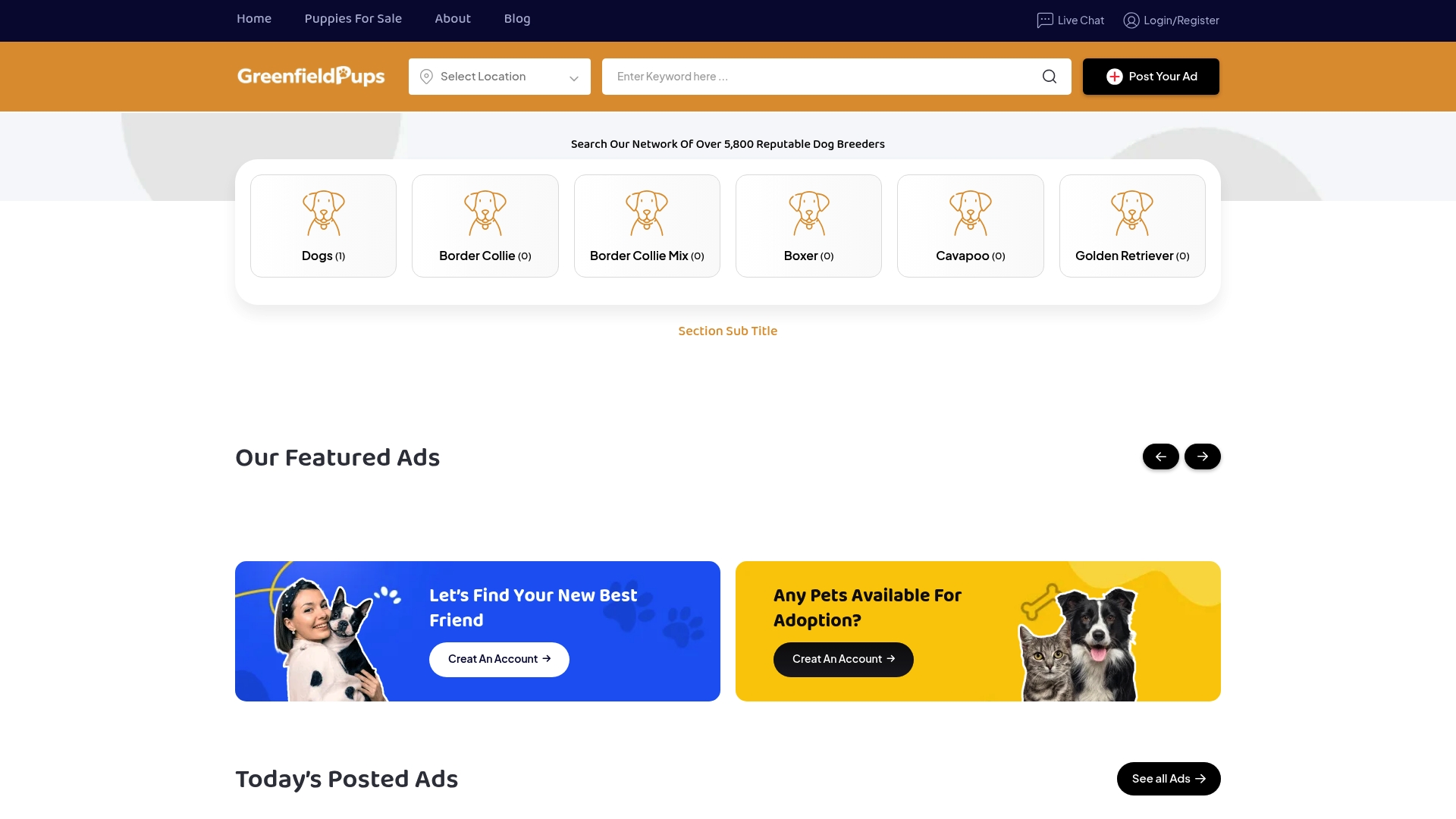
Greenfieldpups connects prospective dog owners with breeders across the United States who list their dogs, practices, and contact information openly on the platform. Before you reach out to any breeder, Greenfieldpups offers guides on responsible breeding practices and types of dog breeders to help you understand exactly what you are evaluating. You can browse breed-specific listings, read about ethical breeder roles, and use the platform’s resources to build your own breeder interview questions checklist before your first conversation. Start your search at Greenfieldpups and go into every breeder meeting prepared.
FAQ
What health tests should I ask breeders about?
Ask for OFA hip and elbow evaluations, cardiac screenings, and breed-specific DNA panels for both parents. Request verifiable certificate numbers or Embark report links you can confirm independently before placing a deposit.
How do I know if a breeder is responsible?
A responsible breeder welcomes visits, screens buyers with detailed questions, provides written health documentation, and offers post-sale support. The AKC identifies bidirectional screening as one of the clearest signs of an ethical breeder.
Can I visit the puppy before buying?
Yes, and you should. Visiting the puppy’s environment, meeting the mother, and observing living conditions directly is one of the most reliable ways to assess breeder quality and early socialization standards.
What red flags should I watch for when picking a responsible breeder?
Refuse any breeder who cannot provide OFA numbers, declines visits without a clear health protocol reason, manages more than three or four concurrent litters, or pressures you toward a deposit before answering your questions.
Why does the contract matter when buying a puppy?
A written contract defines health guarantees, return policies, spay or neuter requirements, and post-sale support obligations. It is the document that holds the breeder accountable if a hereditary condition appears after you bring the puppy home.
Leave a Comment